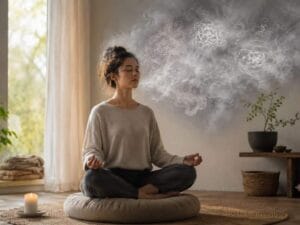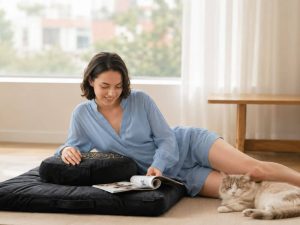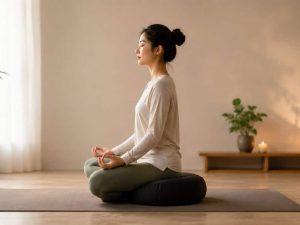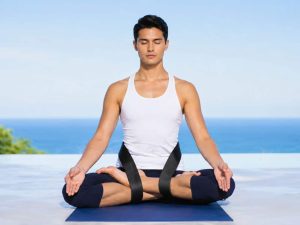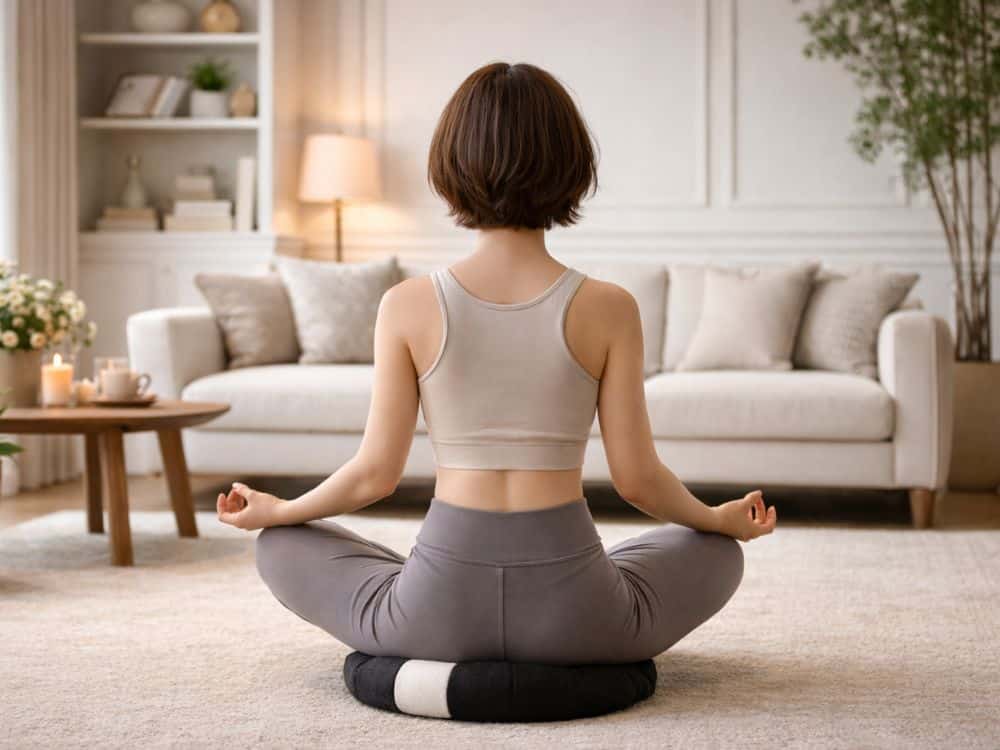
A zafu meditation cushion is a firm seat cushion used for floor sitting, especially during meditation, breathwork, or quiet practice. Its main job is not to feel plush like a couch pillow, but to raise your seat so sitting can feel more stable and easier to settle into.
If your hips feel tight, your knees start complaining, or your lower back gets distracting after a few minutes on the floor, a zafu may help make the position more workable. This guide explains what a zafu is, what it is used for, how it supports better sitting comfort, and when another type of meditation support may make more sense.
- What a zafu meditation cushion actually does
- How it differs from an ordinary pillow or floor pad
- Who a zafu tends to help most
- When a zafu alone may not be enough
Quick answer
Zafu terms to know
- Zafu
A firm meditation cushion used as the main seat for floor sitting. It usually raises your hips slightly so the sitting position can feel more stable.
- Zabuton
A flat padded mat placed underneath the body during floor meditation. It supports the knees, ankles, and feet rather than acting as the main seat.
- Round zafu
The classic circular zafu shape. It gives a centered seat and is commonly used for cross-legged meditation.
- Crescent zafu
A curved zafu shape that leaves more open space around the legs. Some people prefer it when a round cushion feels too closed-in.
- Buckwheat hull fill
A firm, adjustable fill made from buckwheat hulls. It tends to feel structured rather than soft and plush.
- Kapok fill
A traditional plant-based fill that usually feels firm and steady. It is often used in more traditional-style meditation cushions.
What a zafu is used for
- It raises your seat A zafu gives your hips a little lift, so your sitting position does not feel as low or cramped on the floor.
- It creates a firmer base Instead of sinking into a soft pillow, you sit on a more stable surface that can make floor meditation feel steadier.
- It can reduce constant shifting When the base feels more supportive, some beginners find it easier to stay with the posture instead of readjusting every minute.
- It supports a repeatable routine Using the same cushion in the same place can make seated meditation feel more intentional and easier to return to. If you are thinking about the broader floor-seating setup around the cushion, this guide to Japanese floor pillows can help you compare zafu-style seating with other low, quiet home seating options.
A zafu can make floor sitting feel more workable, but it is not the right fix for every knee, hip, or back issue. If sitting on the floor already feels painful or distracting from the start, use this as a sign to compare broader support options before buying; this guide to choosing the right meditation cushion for your body is the better next step.
How to know if a zafu is right for you
- Your sitting styleA zafu makes the most sense if you already prefer cross-legged floor meditation or want to make that position feel more supported.Look forA cushion that gives you a steady seat without forcing your legs into one fixed positionAvoidChoosing a zafu just because it looks traditional if cross-legged sitting feels wrong for your body
- Your hip comfortThe main benefit of a zafu is lift. If a slightly raised seat makes your hips feel less cramped, a zafu may be a useful starting point.Look forEnough height and firmness to keep your seat from sinking too lowAvoidVery soft pillows that collapse under your weight and make the position less stable
- Your knees and anklesA zafu supports the seat, but it does not fully cushion every point where your lower body touches the floor.Look forA setup that keeps knees, ankles, and feet from feeling sharp floor pressureAvoidExpecting the seat cushion alone to solve discomfort that comes from the floor underneath
- Your session lengthShort meditation sessions may only need a simple zafu, while longer sits often reveal whether you need extra padding, a different height, or another posture.Look forSupport that still feels workable after the first few minutesAvoidBuying only for appearance before testing how your body feels over time
- Your setup preferenceA zafu is best for people who want a compact meditation cushion. If you want a wider, flatter, or more supported base, another setup may fit better.Look forA cushion style that matches how much floor support you actually wantAvoidForcing yourself into a minimal setup when your body clearly needs more support
If you are new to floor sitting, cushion height can matter more than the shape at first. Use this meditation cushion height guide for beginners to understand how much lift may feel workable before comparing zafu styles.
Round vs crescent zafu: what changes?

- Round zafu A round zafu is the classic centered option. It can work well if you want a simple meditation cushion and your legs settle comfortably around it. If you are choosing this shape, use the round meditation pillow guide to compare height, fill, firmness, and sitting style before buying.
- Crescent zafu A crescent zafu leaves more open space around the legs. Some people prefer this shape when a round cushion feels too closed-in for cross-legged sitting.
- Zabuton A zabuton is not the main seat. It is the floor pad underneath, used to soften pressure on the knees, ankles, and feet.
- Bench or chair If cross-legged floor sitting still feels wrong, a meditation bench or chair may be more practical than trying to force a zafu to work.
A zafu supports the seat, but it does not fully pad the floor under your knees, ankles, or feet. If knee pressure is the main reason sitting feels hard, start with this guide to choosing a meditation cushion for knee pain before deciding whether you need only a zafu, a zabuton, or a fuller setup.
Examples of common zafu styles

This is an example of a crescent-shaped buckwheat zafu. It is useful to compare if you want to understand how a more open shape may feel different from a classic round meditation cushion.
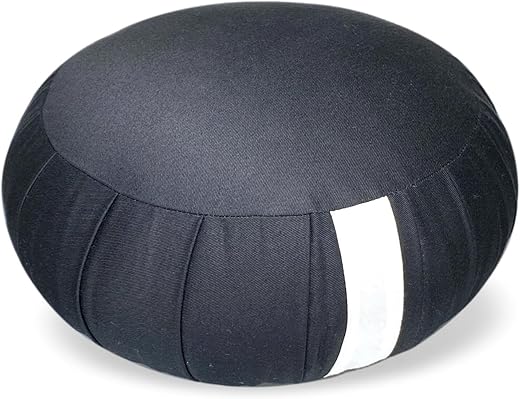
This is an example of a firmer kapok-filled zafu with a more traditional sitting feel. It is useful to compare if you want to understand how a steady, less plush cushion differs from a buckwheat crescent style.
If you already understand what a zafu does and want help comparing real options, see this guide to meditation cushions for better posture and less pain.
FAQ
What is a zafu meditation cushion?
A zafu meditation cushion is a firm seat cushion used for sitting on the floor during meditation, breathwork, or quiet practice. Its main purpose is to raise your seat slightly and create a more stable base than sitting directly on the floor.
What is a zafu used for?
A zafu is used to make seated floor meditation feel more supported and easier to maintain. It can help some people sit with less shifting, especially when cross-legged sitting feels too low, cramped, or unstable.
Is a zafu good for beginners?
Yes, a zafu can be a good starting point for beginners who want a simple meditation cushion for floor sitting. It is especially useful if a folded blanket or ordinary pillow feels too soft, uneven, or distracting. If you are still comparing beginner-friendly options, this guide to meditation cushions for beginners may be a better next step.
Do you need a zabuton with a zafu?
Not always. A zafu supports the seat, while a zabuton pads the floor under the knees, ankles, and feet. If those contact points feel uncomfortable, pairing a zafu with a zabuton may make more sense than using a zafu alone.
Is a zafu the same as a meditation pillow?
A zafu is one type of meditation pillow, but the term meditation pillow is broader. A meditation pillow can refer to many cushion shapes, while a zafu usually means a firmer seat cushion designed for seated floor practice.
A zafu is the cushion you sit on, while a zabuton is the padded layer underneath your knees, ankles, and feet. If you are unsure whether your meditation setup needs one or both, read this simple zafu vs zabuton comparison before choosing.
So, is a zafu worth using?
- Choose a zafu if you want a compact seat cushion for floor meditation.
- Compare round and crescent styles if leg space or hip comfort matters.
- Consider a zabuton or another setup if floor pressure is the real problem.
A zafu meditation cushion is worth considering if you want floor sitting to feel more stable, supported, and repeatable. It works best as a firm seat cushion that raises your sitting position, not as a soft pillow or a cure-all for discomfort. If your main issue is pressure under your knees, ankles, or feet, you may need floor support as well as seat support. Once the seat feels workable, you can make it part of simple daily rituals instead of treating meditation setup as a one-time product decision.