The safest stain-removal method is rarely one magic cleaner. It is a calm sequence: contain the spill, lift what you can, blot instead of rubbing, identify both the stain and the surface, then test before doing more.
This playbook is a starting map for everyday marks on clothing, rugs, carpet, upholstery, table linens, and other household fabrics. The aim is not to attack every stain immediately. It is to make the next safe decision without turning a small accident into permanent damage.
- The gentle rules that protect most fabrics
- What to do during the first five minutes
- How the surface changes the cleaning decision
- First responses for coffee, berries, oil, protein, and lingering fragrance
- Common mistakes that can set stains or damage fibers
- When care means stopping and calling a professional
Begin With the Rules That Protect the Fabric
A table does not become less cared for because people eat around it, and a rug does not fail because someone eventually spills a drink. These surfaces belong to a home that is being lived in. Stain removal begins with respecting that life – and respecting the material enough not to panic.
Six safe starting principles
These principles do not promise that every mark will disappear at home. They create a safer starting point while you decide whether the item can tolerate another step.
What to Do in the First Five Minutes
A calm first-response sequence
-
Pause before reaching for a cleaner
Notice what spilled, whether it is still spreading, and what kind of surface it touched. Do not spray, scrub, or heat it yet.
-
Protect the surrounding area
Place clean white cloths or plain paper towels around a moving spill so it does not travel farther across the surface.
-
Lift away solids
Scoop up food, fruit, sauce, mud, or other thick material with a spoon or dull edge. Work without pressing downward.
-
Blot the remaining liquid
Press a white cloth onto the wet area, hold briefly, then lift. Repeat with clean sections until less moisture transfers.
-
Check the care label and construction
Identify whether the item is washable, dry-clean-only, lined, layered, backed, delicate, or made from a fiber that needs limited moisture.
-
Add water cautiously
If the surface permits it, dab with a small amount of cool water. Avoid flooding upholstery, carpet backing, structured garments, and rugs.
-
Test before adding cleaner
Use a hidden area to check for dye transfer, texture change, fading, or a visible ring before treating the main stain.
-
Air-dry before deciding what comes next
A mark may become less visible while wet and return during drying. Reassess it before repeating treatment or introducing heat.
Slow decisions are often faster than repairing damage caused by scrubbing, soaking, or using the wrong cleaner.

Match the Stain to the Surface
Washable cotton can often tolerate staged rinsing and another wash cycle. Wool, silk, upholstery, carpet backing, lined garments, and layered rugs usually require more restraint. A method that is mild for one surface can still distort, fade, shrink, roughen, or overwet another.
Knowing how different home materials respond to everyday use makes stain decisions easier. Absorbency, fiber structure, backing, dye stability, and drying time all affect what the surface can handle.
Before treating a visible mark, ask four questions:
- Is the item washable, spot-clean-only, or dry-clean-only?
- Is the surface natural fiber, synthetic fiber, or a blend?
- Does it contain backing, lining, padding, adhesive, or internal structure?
- Would color loss or texture change be harder to live with than the stain?
A care label does not identify every possible stain treatment, but it establishes useful boundaries. If testing produces dye transfer, fading, stiffness, puckering, or a change in pile direction, stop before moving to the visible area.

Gentle First Steps for Common Stain Situations
Coffee and tea
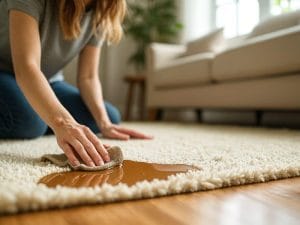
Coffee and tea contain plant-based color that can move quickly through absorbent fibers. Lift anything resting on the surface, then blot the liquid with a clean white cloth. If the material permits water, apply a small amount of cool water and blot again rather than pouring directly onto the stain.
Wool holds moisture differently from ordinary synthetic carpet, so removing coffee from a wool rug calls for lighter application, patient blotting, and careful drying. Repeatedly adding cleaner without removing the previous solution can leave residue or a visible ring.
Allow the area to dry naturally before deciding whether another treatment is necessary. Keep foot traffic, furniture, and direct heat away from a damp rug until the fibers and backing have dried.
Fruit, juice, and berries
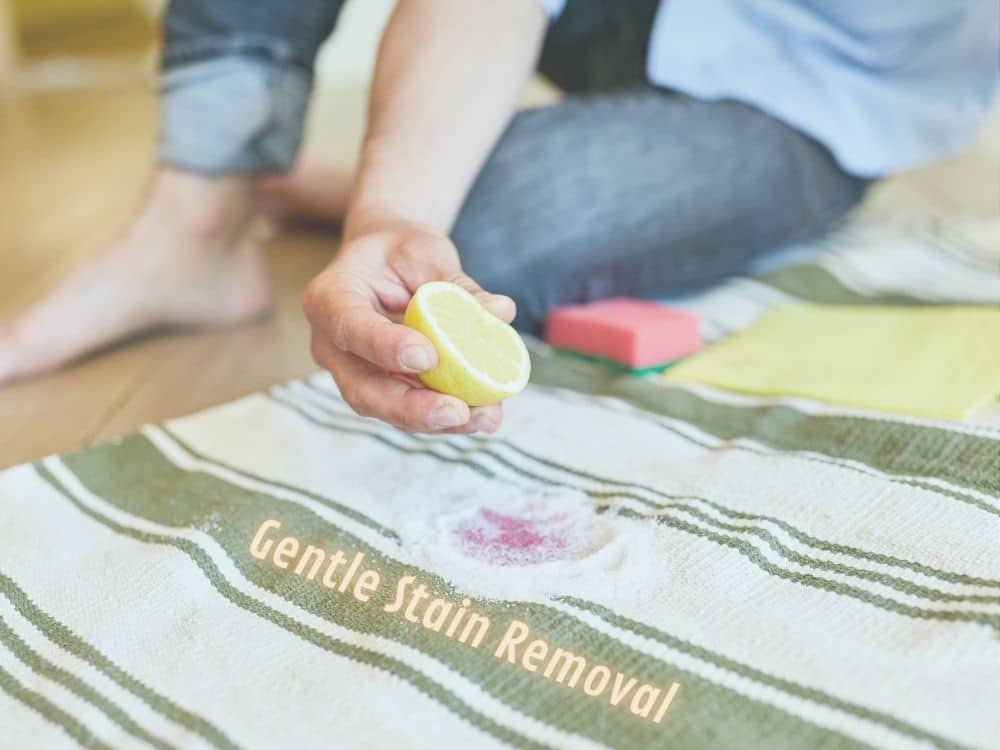
Begin by lifting skins, seeds, pulp, and fruit pieces without pressing them into the surface. Blot the transferred color with clean sections of a white cloth, working from the outer edge toward the center so the visible area does not expand.
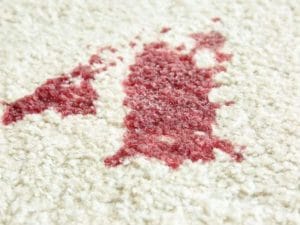
Dark fruit pigment can travel beyond the first visible spot, which is why blackberry stains in carpet need controlled moisture rather than repeated soaking. Add cool water only in small stages, blot between stages, and avoid heat while color remains.

Protein-based stains
Blood, milk, egg, and other protein-containing spills should generally begin with cool water when the care label permits washing. Heat can make protein residue harder to release. Blot or rinse gently, use only a small amount of suitable detergent if needed, and check again after air-drying.
On mattresses, upholstery, rugs, and other surfaces that cannot be rinsed freely, moisture control becomes especially important. Cleaning the visible top while saturating the layers underneath can exchange one problem for a lingering damp odor.
Oil, lotion, and makeup
Oil does not always respond to water alone. First lift any excess without smearing it across a larger area. A small amount of detergent may help on washable fabrics, but more product is not necessarily more effective. Follow the care label, rinse thoroughly, and do not place the item in a dryer while a darker oily area remains.
Delicate fibers, leather, suede, lined garments, and valuable upholstery deserve an earlier stopping point. Repeated experiments can produce a larger change in color or texture than the original mark.
Lingering fragrance and odor
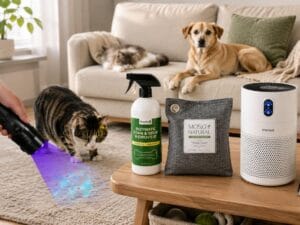
An odor-only problem needs a different response from a colored stain. Begin with airflow when appropriate, and avoid covering the existing fragrance with scented detergent, fabric softener, essential oils, or another spray. Layering scents can make the item more difficult to assess.
For washable garments, the aim is to remove strong perfume smell from clothes rather than disguise it. A fragrance-free wash, adequate rinsing, and air-drying allow you to judge what remains before repeating the process.

Mistakes That Can Make a Stain Harder to Remove
Four habits worth reconsidering
Heat can make some protein, pigment, and odor problems harder to reverse.
Begin cool unless the care label and identified stain clearly support a warmer treatment.
Excess cleaner can remain in the fibers, attract soil, stiffen fabric, hold odor, or form a ring.
Use a restrained amount and remove residue before deciding whether another application is needed.
Aggressive movement can spread the mark, distort pile, roughen fibers, or change the surface texture.
Begin with pressing, lifting, and gentle blotting. Escalate only when the material safely permits it.
Moisture can temporarily hide discoloration, rings, residue, and texture changes.
Air-dry the area fully and inspect it in ordinary light before adding heat or repeating treatment.
Know When to Stop
Stop treating the item when:
- The care label requires professional cleaning.
- Dye transfers during testing or the test area changes shade.
- The fibers become rough, stiff, flattened, fuzzy, or distorted.
- The item remains damp, develops a musty smell, or contains backing and padding that cannot dry freely.
- The stain is unknown or may involve ink, dye, paint, chemicals, or another substance requiring specialized treatment.
- Several previous treatments have already left residue, rings, fading, or texture changes.
- The item is valuable, handmade, vintage, structured, or personally irreplaceable.
Before contacting a professional, note what caused the stain, when it happened, and everything already applied to it. That history can be more useful than making one final untested attempt.

Gentle stain removal is a decision process
- Control the spill before reaching for a cleaner
- Match every treatment to both the stain and the surface
- Lift and blot before adding more moisture
- Test first and remove cleaner residue between attempts
- Air-dry before judging the result or introducing heat
- Stop when the material begins to show stress
A stain can make an ordinary moment feel urgent, but urgency does not have to become aggression. Slow down long enough to identify what spilled, understand what it touched, and choose the mildest reasonable next step. The goal is not only to remove the mark. It is to preserve the fabric, rug, carpet, or household object that remains after the mark is gone.