Meditation knee straps can help some sitters feel more stable, but they are not the first fix for knee pain, numb legs, or a difficult floor-sitting posture.
A strap works best after the basics are already reasonable: your hips are lifted, your knees are not being forced down, and your floor support is not creating pressure. Think of this as a troubleshooting guide, not a shopping list. If you are building a gentle practice from scratch, connect this decision to simple daily rituals for a calmer life instead of turning meditation into another gear project.
- What people usually mean by a meditation knee strap
- When a sitting strap may help with posture awareness or longer sessions
- Why knee pain often needs cushion height, floor support, or a bench instead
- How to compare knee support options without overbuying
A strap is a secondary support, not the main solution
Knee pressure, tight hips, and posture instability are different problems, so identify what your body is reacting to before choosing a cushion, bench, or strap.
What people mean by meditation knee straps
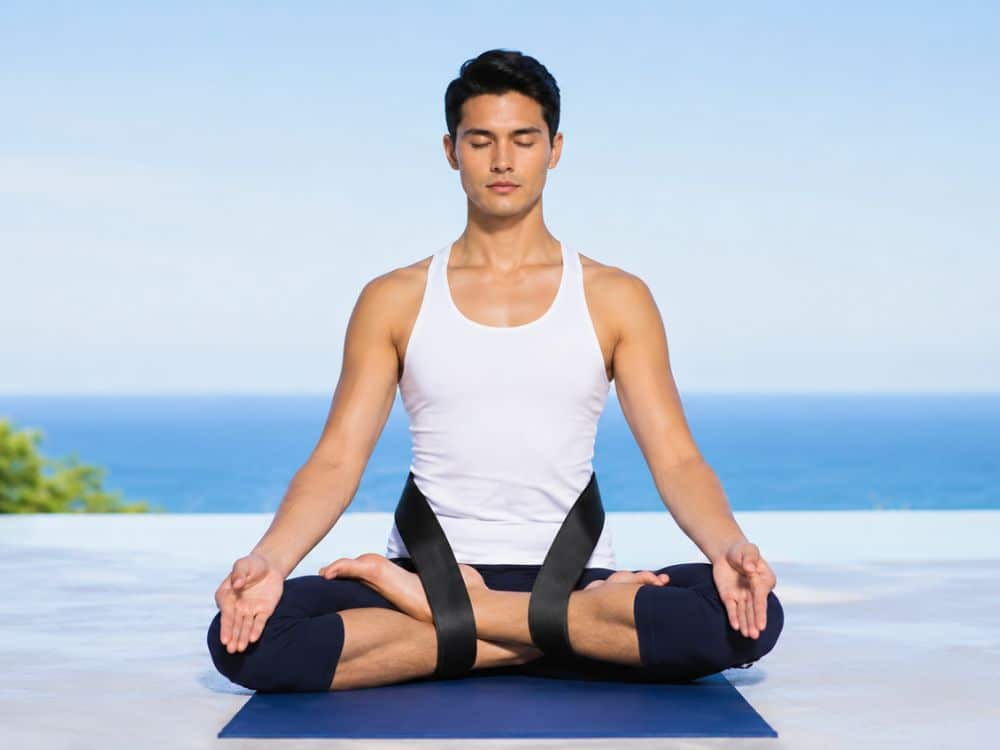
Meditation sitting strap
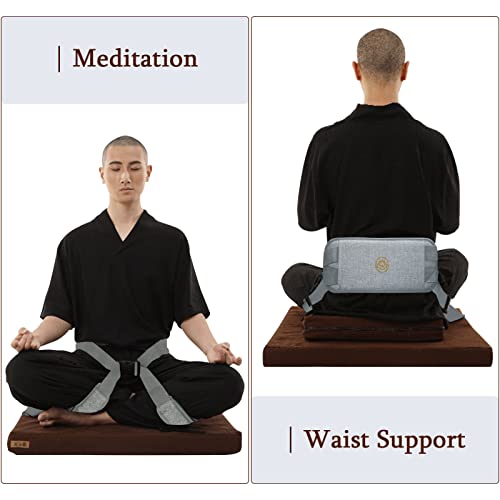
A long strap or belt that wraps around the body and legs to help some sitters feel more contained in cross-legged posture. This is the main product type this article discusses.
Yoga strap
A simple adjustable strap normally used for stretching. Some people use one to test seated support before buying a meditation-specific belt.
Patella knee strap
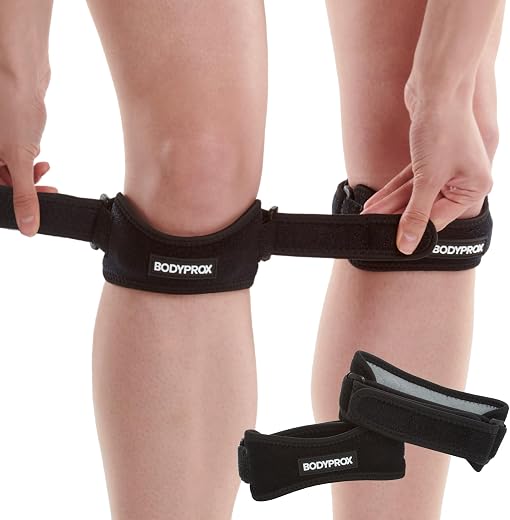
A sports-style strap worn around the knee area. It is not the same as a meditation sitting strap and should not be treated as a posture tool for floor sitting.
Zafu
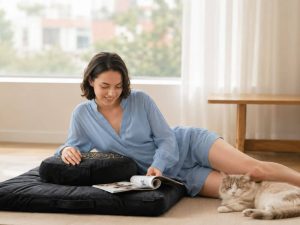
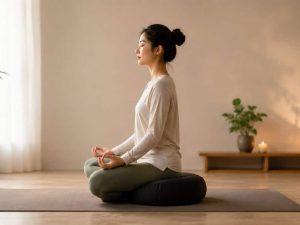
A seat cushion that lifts the hips. If you are comparing zafu vs zabuton, the zafu is mainly the height support.
Zabuton
A larger mat that cushions knees, ankles, and shins against the floor. It often matters more than a strap when the problem is floor pressure.
Meditation bench
A kneeling support that changes the leg position. It can be more useful than a strap when cross-legged sitting repeatedly causes knee or back strain.
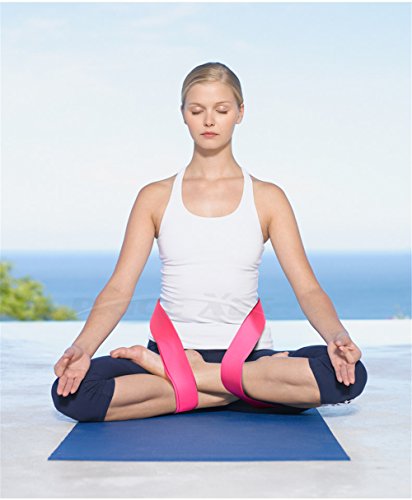
What a meditation knee strap can and cannot do
A sitting strap may help some people reduce posture drifting, but it does not guarantee that legs will stop going numb.
Numbness can come from pressure, leg angle, hip position, or sitting longer than your body is ready for. If numbness is your main issue, start with how to sit longer in Vipassana without your legs going numb.
Seat height, floor padding, and leg position should come first.
If your knees are hurting because the floor is hard or your hips are too low, a strap may only hold you in a bad setup for longer.
It may give posture feedback, but it does not replace a workable cushion height or relaxed leg angle.
Good alignment starts with the support under you. A strap can be an addition, not the foundation.
Beginners can test one gently, but they should not use it to force a pose that already feels painful.
A beginner-friendly setup should reduce unnecessary struggle, not turn sitting into a posture contest.
Check these before using a strap
-
Test whether your hips are high enough
If your hips sit too low, your knees may float and your back may round. Start with the meditation cushion height guide before assuming a strap is missing.
-
Separate knee pain from floor pressure
If knees, ankles, or shins hurt where they touch the ground, a strap may not help. You may need floor support instead.
-
Notice whether the legs drift after 30–45 minutes
A strap becomes more relevant when your setup is already decent but your posture starts drifting during longer sessions.
-
Do not pull the knees downward
A strap should not be used to force tight hips into a neat-looking pose. If the knees resist, adjust the seat, shape, or posture.
-
Compare with a pillow or cushion test
If you are still using household support, this Vipassana cushion vs regular pillow guide can help you tell the difference between real support and soft compression.
The goal is to decide whether the strap solves a real remaining problem. If the cushion height, floor support, or posture is wrong, the strap may simply make the wrong setup feel more locked in.

When a meditation knee strap may be worth testing
If your knees hurt, a strap may miss the real problem
- Low hips can overload the kneesWhen the hips sit too low, the knees may have to work harder to settle. That is a height problem before it is a strap problem.Look forA cushion height that lets the knees drop naturally.AvoidUsing a strap to pull the knees down.
- Hard floors create pressure pointsKnees, ankles, and shins often need padding underneath. A sitting strap does not cushion the floor-contact points.Look forA zabuton, folded blanket, or mat under the lower body.AvoidAdding a strap while ignoring floor pressure.
- Tight hips need room, not restraintTight hips usually need a better hip angle or a more suitable cushion shape before a strap makes sense.Look forA seat shape and height that let the thighs settle without force.AvoidUsing the strap to hold a pose the hips cannot comfortably enter.
- Short sitters may need smaller adjustmentsShorter sitters can run into problems when the seat is too high or the support does not match their proportions.Look forAdjustable height and gentle floor support.AvoidAdding more tools before checking whether the seat is too tall or too low.

A sports-style knee strap and a meditation sitting strap solve different problems. If you have sharp pain, a past knee injury, or symptoms that worsen during sitting, do not treat a meditation strap as a fix. Start with a safer setup and read this guide to choosing a meditation cushion for knee pain before adding restraint.
When a bench or chair is a better answer than a strap
-
Cross-legged sitting keeps becoming the whole practice
If your attention is constantly pulled into knee strain or back tension, the posture may need to change rather than be strapped in place.
-
The knees feel stressed even with better height
When a higher cushion does not solve the problem, compare posture options instead of adding more pressure to the same shape.
-
You need kneeling support instead of leg containment
A bench changes the leg position. That can be more useful than a strap for people comparing meditation bench vs cushion for knee pain.
-
You are preparing for longer Vipassana sits
For product-focused setup choices, use the best meditation cushion for Vipassana guide after you know whether the real issue is height, knees, hips, numbness, or posture.
A strap should make a workable posture feel more supported. It should not be used to make an unworkable posture last longer.

A no-overbuying order for meditation knee support
Start with the simplest support that matches the problem you actually feel. Test seat height first, then floor pressure, then a basic strap, and consider a bench only when changing the leg position makes more sense. A consistent quiet sitting corner for rest and reflection can make these comparisons easier to repeat without turning them into a shopping routine.
- Start with the seat
Check whether the hips are lifted enough and whether the cushion stays stable.
- Then check the floor
Support knees, ankles, and shins before blaming the legs themselves.
- Then test a simple strap
Use a strap gently as posture feedback, not as a way to pull the knees down.
- Then consider a meditation belt
A more specific sitting belt may help if longer sessions still feel unstable.
- Change posture if pain remains
Bench, chair, or a different cushion shape may be more useful than adding restraint.
The goal is to make the practice simpler and less product-dependent. If adding more equipment is becoming the focus, return to calming rituals that don’t require buying anything.
FAQ
Do meditation knee straps actually help?
They can help some sitters feel more contained, especially during longer sessions when posture starts drifting. They are most useful after your cushion height, floor support, and leg position are already reasonable. They are not a guaranteed fix for knee pain or numb legs.
Are meditation knee straps good for knee pain?
Not as a first solution. Knee pain during meditation often comes from low hips, tight hips, hard floor pressure, or forcing cross-legged posture. A strap may make a poor position feel more locked in, so start with seat height and floor support first.
Is a meditation knee strap the same as a knee brace?
No. A meditation sitting strap usually wraps around the body and legs to support seated posture. A knee brace or patella strap is worn around the knee for a different purpose and should not be confused with a sitting belt.
Can a strap stop my legs from going numb during Vipassana?
A strap may reduce some posture shifting, but it does not guarantee that numbness will stop. Numbness can come from pressure, angle, circulation, or sitting longer than your body is ready for. Troubleshoot numb legs with seat height, floor padding, and posture changes before relying on a strap.
Should beginners use a meditation strap?
Beginners can test a simple yoga strap gently, but they should not use it to force a pose. If you are still asking whether you need any dedicated support, read do you need a meditation cushion first and solve the basic sitting setup before adding a strap.
What is better for bad knees: a strap, zabuton, or bench?
If the knees hurt against the floor, a zabuton or folded blanket is usually more relevant than a strap. If cross-legged sitting itself keeps stressing the knees, a bench or chair may be better. A strap is more of a posture-support cue than a knee-pain solution.
Do short people need a meditation knee strap?
Not automatically. Meditation equipment for short people is usually about correct height, not adding more restraint. A cushion that is too tall or too low can create problems, so test seat height before testing a strap.
Can I use a yoga strap instead of a meditation knee strap?
A simple yoga strap can be a useful way to test the idea before buying a meditation-specific belt. Use it gently and make sure it can be removed easily. If it increases pressure, numbness, or joint discomfort, stop and adjust the sitting setup instead.
Use a strap only after the sitting setup makes sense
- A meditation knee strap may help with posture awareness during longer sits.
- It should not be the first fix for knee pain, numb legs, or tight hips.
- Seat height, floor support, and posture choice matter more than the strap itself.
- A bench, chair, zabuton, or better cushion can be the wiser answer when the body is being forced.
Meditation knee straps can be useful, but only in the right order. First check whether your hips are high enough, whether the floor is supported, and whether cross-legged sitting is actually workable for your body. Then test a simple strap gently. If it helps you feel steadier without pulling the knees into pain, it may be a helpful secondary tool. If it makes the posture feel trapped, the better answer is a different setup, not a tighter strap.