If your knees hurt during meditation, the best meditation cushion for bad knees is not always the thickest or softest one. The right support depends on what is causing the strain: low seat height, hard floor contact, collapsing fill, or a sitting posture your body cannot comfortably hold.
This guide helps you choose a meditation cushion for knee pain by matching the support to the problem first. If your knees sit higher than your hips, you may need more lift. If the floor feels harsh, you may need a zabuton or targeted padding. If cross-legged sitting keeps aggravating your knees, a bench may make more sense than another cushion. For broader options beyond knee pain, compare our best meditation cushions for better posture and less pain.
- How to tell whether knee pain comes from height, floor pressure, compression, or posture mismatch
- When a zafu, zabuton, crescent cushion, bench, or targeted knee support makes the most sense
- What to avoid if sharp pain, instability, or post-sitting pain is involved
- How to choose support without buying products your body does not actually need
This guide is about choosing meditation support for knee pain caused by setup problems: low seat height, hard floor contact, collapsing fill, or a posture mismatch. If your knee pain feels sharp, unstable, sudden, or continues outside meditation, stop and treat it as a health issue rather than a cushion problem. If you are unsure whether support is even the next step, read this guide on when you don’t need a meditation cushion yet before buying anything new. If part of the struggle is feeling like you have to force yourself through discomfort, this guide on letting go of self-imposed pressure may be a better next step than buying more support.
Quick diagnosis: why your knees hurt during meditation
Start with the pattern you notice first. The best support is the one that removes knee load, not the one with the most padding.
What to fix first when meditation hurts your knees
- Seat heightStart with height if your knees sit higher than your hips or your lower back rounds as soon as you settle. More lift can reduce knee load by letting the pelvis tilt forward instead of forcing the knees to carry the posture.Look forEnough cushion height to keep the hips slightly above the kneesAvoidAdding knee pads before checking whether the seat itself is too low
- Floor supportCheck floor support if the knee or ankle contact point feels sore even when the sitting height seems reasonable. In that case, the seat may be doing its job, but the floor is still too hard for long sitting.Look forA zabuton, mat, or targeted pad under the knees and anklesAvoidBuying a taller cushion when the real issue is hard floor contact
- Compression over timeLook at compression if your knees feel fine at first but start hurting after 15–30 minutes. The cushion may be slowly flattening, dropping your effective height, and shifting load back into the knees.Look forFirmer fill that holds shape through longer sitsAvoidVery soft cushions that feel comfortable at first but collapse during practice
- Sitting postureConsider a different posture if cross-legged sitting always irritates your knees no matter how much padding you add. A bench can be more useful when the joint angle itself is the problem.Look forA bench or kneeling setup when cross-legged posture feels forcedAvoidForcing the knees wider just because the posture looks traditional
Fix the base before choosing a product. If height is the issue, start with this meditation cushion height guide. If your knees and ankles dislike the floor, compare zafu vs zabuton before buying more seat height. If pain appears later because your cushion sinks, this guide to buckwheat meditation cushions for long sitting explains why fill structure matters.
Choose support by the way your knee pain shows up
-
If your hips are tight and your knees lift up
Start with seat height. A higher, firmer cushion can reduce knee load by letting the hips sit above the knees instead of forcing the legs down.
-
If your legs go numb first, then your knees hurt
Check circulation and pressure points before blaming the knees alone. Compare the best sitting positions for knee pressure and numb legs before assuming the knees are the only problem. Softer floor support, better seat height, or a wider shape may help if numbness appears before pain.
-
If pain appears after 15–30 minutes
Look for compression. Your cushion may feel fine at first but slowly flatten, lowering the hips and shifting pressure back into the knees.
-
If one knee hurts more than the other
Start with small targeted support before replacing the whole setup. One-sided pain often points to uneven pressure, hip asymmetry, or a base that is not level.
-
If cross-legged sitting always hurts
Consider changing the posture instead of adding more padding. A meditation bench can be a better direction when the joint angle itself is the problem.
If numbness comes before knee pain, this guide on how to sit longer without your legs going numb can help you separate circulation issues from knee strain. If cross-legged sitting keeps aggravating your knees, compare meditation bench vs cushion for knee pain before buying another zafu. If tight hips or thigh pressure are part of the problem, a crescent meditation cushion may give the legs more room than a narrow round seat.
Best meditation support options for knee pain
Adjustable zafu cushion


Choose this type of zafu if your knees hurt because your seat is too low or your hips need more lift. The buckwheat fill can help the cushion hold a steadier shape than soft floor pillows, which matters when knee pain shows up after the first few minutes.
- Helps lift the hips above the knees
- Buckwheat fill can hold shape better than soft foam
- Good first step for tight hips and low-seat posture
- Does not cushion the knees against the floor
- Too much height can feel unstable
- May still need a zabuton for long sits
Zabuton meditation mat
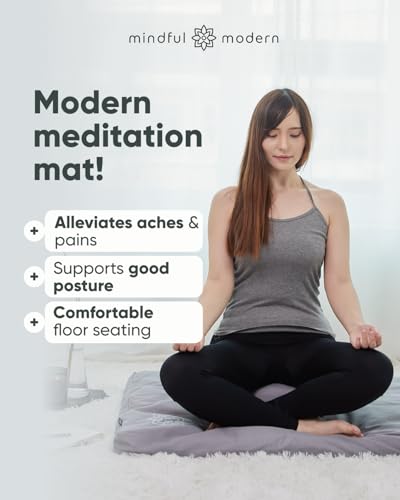

Choose a zabuton if your cushion height feels fine but the floor still creates pressure under your knees, ankles, or feet. It works under a zafu, bench, or kneeling setup, and it is often the simplest fix when the pain comes from hard contact points rather than seat height.
- Softens knee, ankle, and foot contact points
- Works with zafus, benches, and kneeling setups
- Useful on hard floors such as wood or tile
- Does not raise the hips by itself
- Adds bulk to the setup
- May be more support than short sits require
Crescent cushion
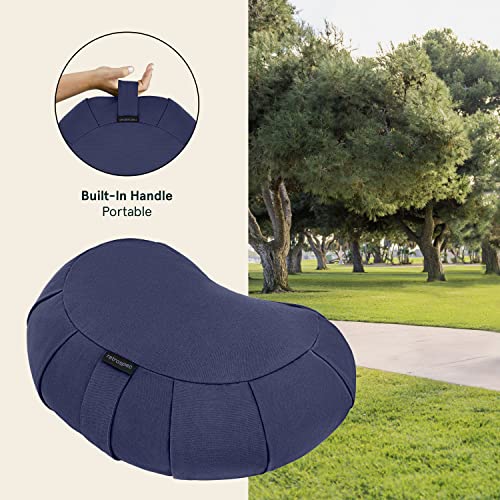

Meditation cushion crafted from 100% cotton with natural buckwheat hull filling, designed to support proper posture and all-day comfort. Adjustable, eco-friendly, and easy to carry, it’s perfect for meditation, workouts, or relaxing anywhere.
- Gives the heels more room than many round cushions
- Can reduce thigh pressure during cross-legged sitting
- Helpful when tight hips make the knees feel unsupported
- Does not replace floor padding for knee contact
- Shape may feel unfamiliar at first
- Not as compact as a simple round zafu
Seiza meditation bench

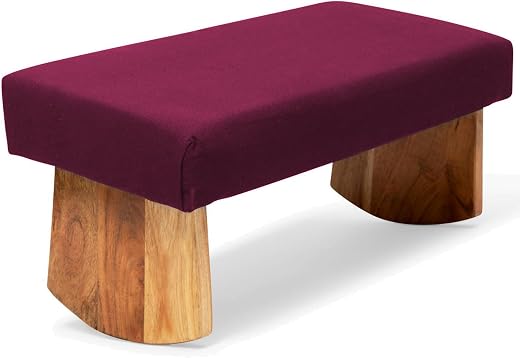
Meditation bench made from sustainable acacia wood, featuring gently rounded, angled legs that help you find a natural and balanced posture. Ideal for practitioners up to 6 feet tall, it reduces discomfort and supports longer, more relaxed meditation sessions.
- Changes the sitting posture instead of forcing cross-legged sitting
- Can reduce strain from hip and knee rotation
- Often feels more stable for people with tight hips
- Kneeling may bother sensitive knees or ankles
- Requires adjustment if you are new to seiza
- Still may need a mat underneath
Targeted knee or ankle support pillow
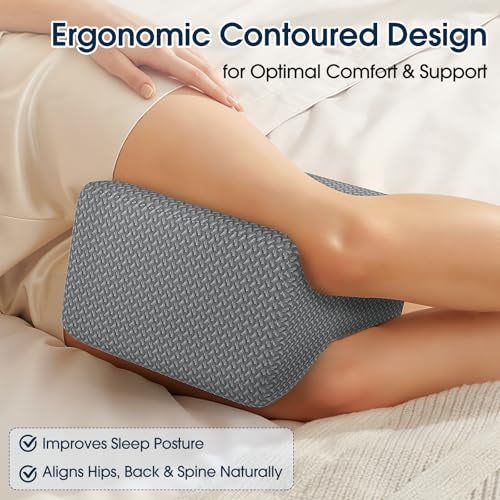

Ergonomic knee pillow made from high-density memory foam, designed to support proper spine and hip alignment while reducing pressure on knees and joints. Soft, breathable, and easy to clean, it enhances comfort and promotes better sleep for a wide range of users.
- Adds support exactly where one pressure point needs it
- Easy to combine with an existing cushion or mat
- Useful when one side feels more sensitive than the other
- Not a full meditation seat solution
- Can shift if positioned poorly
- Does not fix low seat height or posture mismatch
What to check before buying a meditation cushion for knee pain
- Check height before padding If your knees sit higher than your hips, start with seat height. Adding soft padding under the knees may feel nicer, but it will not fix a base that is too low.
- Check floor contact before replacing your cushion If the knee or ankle contact point hurts against the floor, a zabuton or mat may help more than buying another zafu. If the problem is hardwood, tile, or another firm surface, compare the best zabuton for meditation on hard floors before replacing the seat cushion.
- Check compression if pain appears later If your cushion feels fine at first but knee pain shows up after 15–30 minutes, the fill may be collapsing and lowering your effective seat height.
- Check posture if cross-legged sitting always hurts If your knees dislike the cross-legged angle no matter how much support you add, a bench or different sitting posture may be more useful than another cushion. If you are considering a strap for this pattern, read do meditation knee straps help first so you do not use a strap to force a posture your knees already dislike.
- Check whether a smaller adjustment is enough If only one knee or ankle hurts, targeted support may solve the pressure point without replacing your entire meditation setup.
If the setup still feels wrong after you adjust height, floor support, and posture, the issue may be shape or sitting style rather than the cushion alone. For the broader framework, use this guide on how to choose a meditation cushion before buying another support piece.
FAQ
What is the best meditation cushion for bad knees?
The best meditation cushion for bad knees depends on what is causing the pain. If your knees sit higher than your hips, start with a higher or adjustable zafu. If your knees hurt from floor contact, a zabuton mat may help more. If cross-legged sitting itself causes pain, a meditation bench may be the better direction.
How do I choose a meditation cushion for knee pain?
Start by checking your sitting angle. If your hips are too low, choose more height. If the floor feels hard under your knees or ankles, add floor support. If pain appears later in the sit, look for a firmer fill that does not collapse as quickly.
Can the wrong meditation cushion height cause knee pain?
Yes. When the seat is too low, the knees often carry more load and the lower back may round. A cushion that lifts the hips slightly above the knees can reduce that strain for many sitters, as long as the height does not feel unstable.
Is a zabuton good for knee pain during meditation?
A zabuton can be very helpful when the pain comes from hard floor contact. It cushions the knees, ankles, and feet, but it does not raise the hips by itself. If your seat is too low, you may still need a zafu or another cushion on top.
Is a meditation bench better than a cushion for knee pain?
A meditation bench can be better if cross-legged sitting keeps irritating your knees. It changes the sitting posture instead of forcing the hips and knees open. However, it may not be ideal if kneeling bothers your knees or ankles.
Should I keep meditating if my knees hurt?
Do not push through sharp, unstable, or worsening knee pain. Mild setup-related discomfort may improve with better support, but sharp pain should be treated differently. Change position, stop the sit, and get medical guidance if pain continues outside meditation.
Choose the support that removes knee load first
- Start with seat height when your knees rise above your hips
- Use a zabuton when floor contact is the main problem
- Choose firmer fill when pain appears after 15–30 minutes
- Try a bench when cross-legged posture keeps irritating your knees
- Use targeted support only after the main sitting base is close to right
The best meditation cushion for bad knees is the one that solves the actual source of strain. If your hips sit too low, start with height. If the floor hurts your knees or ankles, add a zabuton. If your cushion sinks over time, choose firmer support. If cross-legged sitting itself keeps hurting, a meditation bench may be more useful than another cushion.