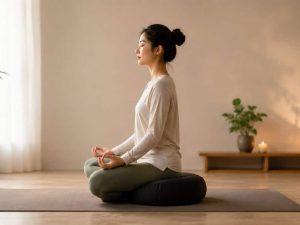
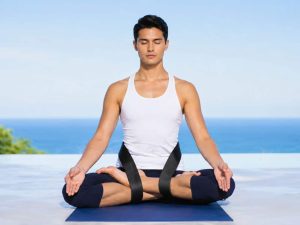
The right meditation cushion height should make sitting feel steadier, not more forced. For most beginners, the goal is a seat that supports posture without creating knee pressure, lower-back rounding, or a perched feeling.
Many beginners blame tight hips or weak focus when sitting feels uncomfortable. Often, the setup is easier to fix: the cushion height does not match the way your body settles on the floor. This guide shows you how to estimate a better starting height by posture, flexibility, body size, and a simple towel test before buying anything new.
- How to tell whether your cushion is too low or too high
- Why knee pressure, back rounding, and instability point to different setup problems
- How to test cushion height at home before choosing a cushion
How high should a meditation cushion be?
- Start with hips slightly above knees For most beginners, the best starting height lets the hips sit a little higher than the knees without forcing the spine upright.
- Too low often creates collapse If your knees stay high, your lower back rounds, or knee pressure appears quickly, your cushion may not be giving you enough lift. If the height seems close but numbness keeps returning, compare meditation sitting positions for numb legs before adding more lift.
- Too high can feel unstable If you feel perched, wobbly, or over-arched in the lower back, reduce the height or choose a more grounded setup.
- Firmness changes real height A soft cushion can compress under your weight, so the height listed on the product page may not be the height your body actually feels.
- Test before buying Use folded towels under your hips to estimate a better cushion height before replacing your current setup.
Use these signs as a starting point, then fine-tune by posture, body size, and how pressure shows up during the sit.
Why meditation cushion height matters for posture and comfort
A cushion that is too low can let the pelvis roll backward and make the lower back round quickly. If back discomfort is your main problem, use this guide to choosing a meditation cushion for back pain alongside the height test below.
Choose cushion height by what your body is telling you
- Your knees sit higher than your hipsThis usually means the seat is too low for your current flexibility or posture.Look forMore lift under the hips until the knees can drop without forcing them downAvoidPushing the knees toward the floor or copying someone else’s cushion height
- Your lower back rounds quicklyYou may need more height, firmer support, or both. This pattern often starts when the pelvis rolls backward instead of settling into a neutral base.Look forA seat that lets the pelvis tilt slightly forward without strainAvoidBuying only a softer cushion when the real issue is support angle
- You feel perched or unstableThe cushion may be too high, too narrow, or too firm for the way your body settles.Look forA lower or more grounded setup that still keeps the hips supportedAvoidAdding more height just because sitting upright feels difficult
- Knee pressure appears firstMore lift may help, but knee discomfort can also mean the floor, ankles, or lower legs need better support.Look forSeat height plus support under the knees, ankles, or lower legsAvoidTreating knee pain as only a flexibility problem
- You have a shorter frameShorter sitters do not always need the lowest cushion, but many standard cushions can feel too tall, too wide, or unstable. The goal is a height that supports the hips without making the seat feel perched or forced.Look forA stable seat height with enough lift but no perched feelingAvoidChoosing a tall cushion only because it works for taller meditators
A higher seat can reduce knee pressure for some beginners, but it may not solve everything if your knees, ankles, or lower legs need support from the floor. If knee discomfort is your main issue, use this guide to choosing a meditation cushion for knee pain before you compare cushion shapes.
How your meditation posture changes the height you need
- Cross-legged sitting
Most beginners need enough lift for the hips to sit slightly above the knees. If the knees stay high or the lower back rounds, the cushion is usually too low. If the seat and floor layer are both part of the problem, a zafu and zabuton setup gives you a clearer way to separate hip lift from knee and ankle padding.
- Half-lotus or lotus
These postures change the angle of the hips and legs, so the right height depends more on hip openness. Some people need less lift, while others still need support to avoid collapsing backward.
- Kneeling or seiza
In kneeling, the goal is less about hips-above-knees and more about reducing pressure through the knees, ankles, and lower legs while keeping the torso upright.
If seiza or kneeling creates pressure under your knees, ankles, or lower legs, cushion height may not be the only thing to adjust. Learning what a zabuton is can help you understand why a padded floor layer often matters for kneeling comfort.
A simple towel test to estimate your cushion height
-
Sit in your usual meditation posture
Start on the floor in the posture you actually use, such as cross-legged sitting, half-lotus, or kneeling. Notice whether your knees sit higher than your hips, your lower back rounds, or you feel unstable.
-
Add folded towel layers under your hips
Place one folded towel under your seat, then add or remove layers gradually. The goal is to raise the hips without making the seat feel perched or forced.
-
Stop when the hips feel supported
For most beginners, the best starting point is when the hips sit slightly above the knees and the spine feels easier to stack without effort.
-
Check pressure after a few minutes
Stay for a short sit and notice what appears first: knee pressure, hip pinching, lower-back rounding, or wobbling. Those signals tell you whether the height still needs adjustment. If you are doing this test before a silent course, use it as one part of how you prepare your body before a 10-day Vipassana retreat, not as a reason to keep changing gear at the last minute.
-
Use the towel stack as your buying reference
Once you find a towel height that feels more stable, use that thickness as a practical reference when comparing cushion height and firmness. If you are trying to keep the first setup small and affordable, use this guide to build a meditation setup under $100 before buying more support than the towel test says you need.
The towel test does not need to find a perfect number. It gives you a safer starting range before choosing a meditation cushion. If you are doing this test because a retreat is coming up, use it as one small part of deciding what to pack for a 10-day Vipassana retreat, not as a reason to keep changing gear at the last minute.
Cushion height vs firmness: why listed height is not enough
A soft cushion can start at the right height but compress lower once you sit on it. If you are comparing support types, this guide to buckwheat vs memory foam meditation cushions explains why fill changes stability, compression, and effective height. If you want to see how adjustable buckwheat height works in a specific cushion, read the Florensi Meditation Cushion review before choosing.
What to adjust before choosing a cushion
- Start with height Use the towel test to find the range where your hips feel supported and your knees are not carrying extra pressure.
- Check stability next If you feel perched or wobbly, the cushion may be too high, too narrow, or not grounded enough for your body.
- Account for firmness If the cushion compresses too much, its effective height may drop during longer sits even if the listed height looks right. If this happens because the cushion cannot hold your body weight, compare the best meditation cushions for heavy people before choosing another soft or low-support cushion.
- Add floor support when needed If knees, ankles, or lower legs complain first, the floor setup may matter as much as the seat height.
- Match the cushion to your body fit A cushion should support your posture without forcing your frame into a shape that feels too tall, wide, or unstable.
Use this checklist before comparing products so you know whether you are solving a height, firmness, floor-support, or body-fit problem.
Once you know whether your main issue is height, firmness, knee pressure, lower-back rounding, or body fit, comparing cushions becomes much easier. If your cushion still feels wrong after changing height, use this guide to troubleshoot why your meditation cushion still feels wrong before replacing it. For a broader shortlist, see our guide to the best meditation cushions for better posture and less pain. If standard cushions often feel too tall, too wide, or unstable for your frame, compare smaller-frame options in our guide to the best meditation cushion for short people.
FAQ
What is the right meditation cushion height for beginners?
The right height lets your hips sit slightly above your knees without making you feel perched or unstable. Most beginners should start with posture and comfort signals rather than a fixed number.
How do I know if my meditation cushion is too low?
A cushion is probably too low if your knees stay higher than your hips, your lower back rounds quickly, or knee pressure builds early in the sit.
Can a meditation cushion be too high?
Yes. If you feel perched, wobbly, or over-arched in the lower back, the cushion may be too high for your posture, flexibility, or body size.
Is a higher meditation cushion better for knee pain?
Sometimes. More height can reduce knee pressure by helping the hips sit above the knees, but some people also need floor support under the knees, ankles, or lower legs.
What cushion height is best for short people?
Shorter sitters often need to avoid cushions that feel too tall, wide, or unstable. The best height is the one that supports the hips without making the seat feel perched or forced.
Does firmness affect meditation cushion height?
Yes. A soft cushion may compress under your weight, lowering the effective height during the sit. Firmer fills usually hold their shape better for longer sessions. If you are testing height with a household pillow, this regular pillow vs meditation cushion height test can help you separate real hip lift from soft compression.
Final take
There is no single perfect meditation cushion height for every beginner. A good starting point is the height that lets your hips feel supported, your knees settle with less pressure, and your lower back stay neutral without forcing the posture. Test that range with folded towels first, then fine-tune for firmness, floor support, and body fit before buying a new cushion. For a complete buying framework beyond height alone, read our guide on how to choose a meditation cushion. Once the support feels right, place it in a quiet sitting corner for rest and reflection so the setup becomes easier to return to.