

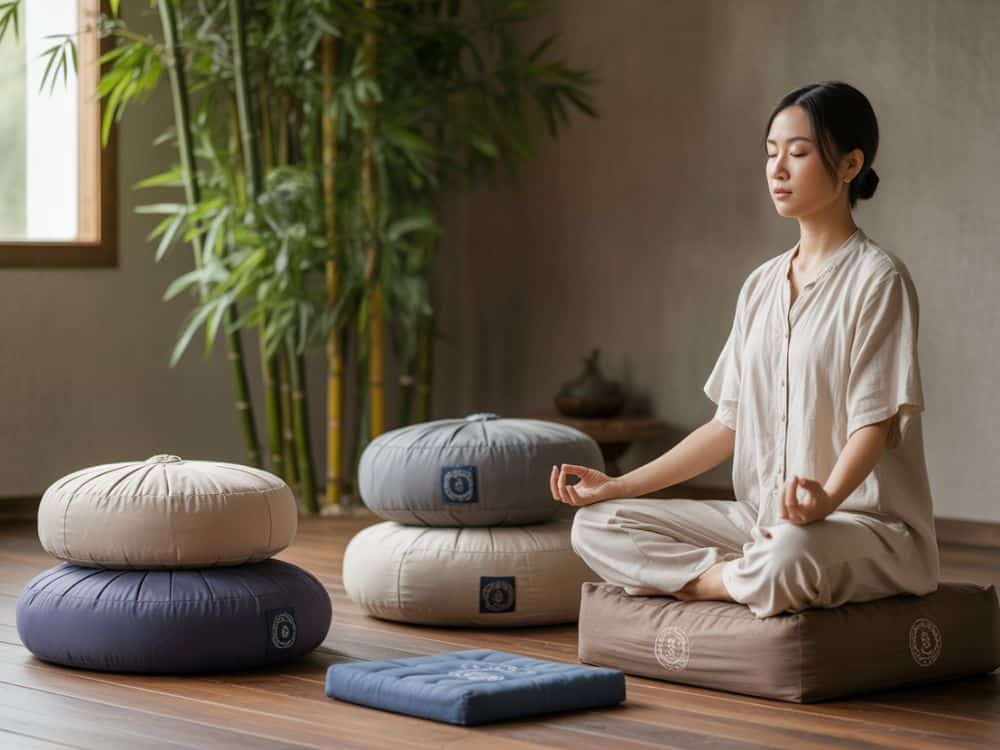
The best meditation cushion for Vipassana is not simply the softest cushion. It is the cushion that keeps your posture stable when the body has to stay still long enough for numb legs, bad knees, hip compression, or lower-back strain to show up.
For long Vipassana sits, the right support depends on your posture, comfort needs, and the first pain point that interrupts your practice. A good Vipassana cushion should lift the hips slightly above the knees, resist collapse, and reduce pressure where stillness usually becomes difficult. This article stays focused on Vipassana, while our best meditation cushions for sitting comfort cover broader everyday needs.
The best meditation cushion for Vipassana by pain point
- If your legs go numb Start with a crescent shaped zafu or wider cushion support. Better pressure distribution can reduce thigh compression during long still sits, a central issue when trying to prevent numb legs in Vipassana.
- If your lower back tightens Choose a firm, adjustable zafu that keeps the hips slightly higher than the knees without letting the pelvis roll backward.
- If your knees ache first Use a zabuton under the knees and ankles, or consider a meditation bench if cross-legged sitting keeps forcing painful joint angles.
- If your hips feel tight A meditation bench may work better than a taller cushion because it avoids forcing the hips into a cross-legged position.
- If posture collapses over time Prioritize firmness and height over softness. For Vipassana, the best cushion is the one that holds structure after 45–60 minutes, not just the first five. A cushion is only one part of preparing for a 10-day Vipassana retreat; clothing, hygiene, sleep, phone-free timing, and arrival details also shape the experience.
Best meditation cushions for Vipassana by need
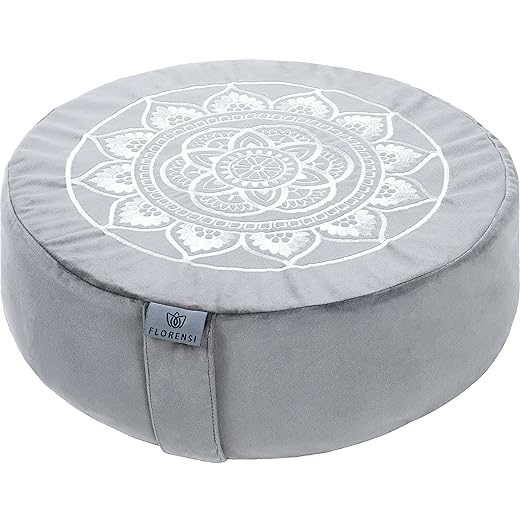


For Vipassana, a cushion that feels plush for five minutes can still fail after a long sit if it lets the hips sink or the pelvis roll backward. The best meditation cushion for Vipassana should hold enough structure to support a stable sitting angle instead of collapsing under still body weight. Height, firmness, shape, and sitting style all matter when choosing a meditation cushion for your posture.
Height, firmness, and shape matter most for Vipassana
- HeightHeight sets the pelvic angle. For long Vipassana sits, the cushion should lift your hips slightly above your knees so the spine can stack with less effort.Look forEnough elevation to keep the pelvis from rolling backwardAvoidLow cushions that leave the knees higher than the hips
- FirmnessFirmness determines whether support holds after the first few minutes. A good Vipassana cushion should resist collapse instead of slowly flattening under still body weight.Look forStructured fill, adjustable support, and steady lift over 45–60 minutesAvoidPlush cushions that feel soft at first but compress unevenly
- ShapeShape changes how pressure spreads through the hips, thighs, knees, and ankles. Round zafus, crescent cushions, zabuton mats, and benches each solve different posture problems.Look forA shape that matches your first pain point: numb legs, tight hips, bad knees, or back strainAvoidChoosing only by appearance or tradition without testing your sitting angle

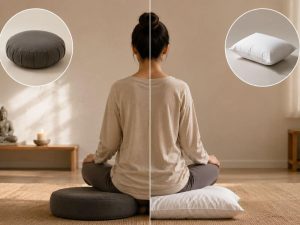
Use the image above as a posture reference, not a strict measurement. For Vipassana, the cushion should help your spine stack naturally while your hips stay supported through a long sit. Keeping the hips higher than the knees can support a more natural spinal position, although the angle should still feel sustainable rather than forced. Adjustable buckwheat fill can also preserve structured support as a cushion settles during longer sessions.
Cushion types: Zafu, zabuton, crescent zafu, or meditation bench?
Zafu
A raised sitting cushion that lifts the hips and helps the pelvis tilt forward. Stable hip lift also matters when choosing a meditation cushion for back pain, because a seat that collapses can let the pelvis roll backward during longer sits.
Zabuton
A flat floor mat placed under the body to cushion the knees, ankles, and feet. It does not replace a zafu; it supports the lower joints during long still sits. Floor support becomes especially important when choosing a meditation cushion for bad knees, because hip lift alone does not protect the joints from pressure against a hard floor.
Crescent zafu
A wider, curved cushion shape that can spread pressure across the hips and upper thighs. It is often easier for people whose legs go numb on narrow round cushions.
Meditation bench
A kneeling seat supports seiza-style sitting and changes the leg position instead of merely raising the hips. The bench-versus-cushion decision for knee pain matters when cross-legged posture repeatedly creates knee strain, hip compression, or forced joint angles.
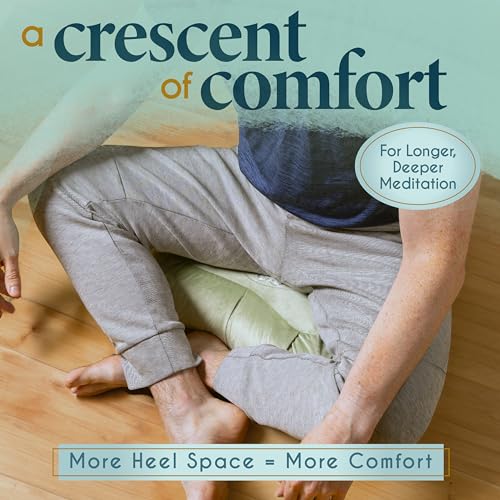
A zafu and zabuton serve different roles: the zafu raises the pelvis, while the zabuton cushions the knees, ankles, and feet against the floor. A crescent-shaped zafu leaves more room near the heels and spreads support across the hips and upper thighs, which can reduce concentrated pressure during still sitting.
How these Vipassana cushion picks were chosen
The products below are matched to common posture and comfort needs during Vipassana practice, not ranked by softness alone. The goal is to recommend the best meditation cushions based on posture support, pressure relief, and whether the setup can stay useful through longer sits.
- Posture support
Each pick needed a clear role in helping the pelvis stay supported, the spine stack more naturally, or the sitting position feel less forced during stillness.
- Pressure relief
Cushion shapes and support styles were matched to common long-sit problems such as numb legs, thigh compression, knee pressure, ankle discomfort, and lower-back strain. Posture can still drift after cushion height and floor support are close; meditation knee straps provide a different form of stabilization before the entire cushion setup is replaced.
- Adjustability and structure
Priority went to cushions or seats that can hold their shape better over time, especially buckwheat-filled or structured designs that are less likely to collapse during a long sit.
- Retreat practicality
A good Vipassana cushion should make sense beyond a short home session. Support, breathability, durability, and portability all matter when sitting periods repeat across a retreat day. Preparing for a 10-day Vipassana retreat also involves packing, home logistics, and realistic expectations beyond the cushion itself.
This is a buyer-focused selection framework, not a lab test or medical recommendation.
This article focuses on cushion support rather than meditation instruction. The Dhamma.org Code of Discipline outlines the daily rhythm and repeated sitting periods of a traditional 10-day course. Those repeated periods are why stable height, pressure relief, and support that does not collapse matter more than plush softness.
A closer look at each Vipassana cushion pick
Florensi Meditation Cushion – Best overall for long still sits

Florensi is the most practical starting point if you want a familiar zafu-style cushion with adjustable buckwheat support. It makes the most sense for long still sits where posture stability, hip lift, and lower-back support matter more than plush softness.
- Adjustable buckwheat fill
- Good starting zafu shape
- Supports steady hip elevation
- Useful for longer sitting practice
- Not ideal for forced cross-legged posture
- May feel too firm for plush-cushion buyers
- Knees may still need a zabuton
The Florensi Meditation Cushion review examines the adjustable fill, firmness, and limitations of this round zafu in greater detail.
Hugger Mugger Zafu Meditation Cushion – Best for repeated long sits

Hugger Mugger is the better choice if you want a classic zafu that feels more purpose-built for repeated sitting practice. It suits Vipassana practitioners who care less about plush comfort and more about steady lift, shape retention, and a stable base over time.
- Stable classic zafu shape
- Good for repeated practice
- Supports upright sitting posture
- Better for structure-first buyers
- Less forgiving than softer cushions
- May need a zabuton for knees
- Not ideal for tight hips
Retrospec Sedona Crescent Zafu – Best for numb legs and thigh pressure

Retrospec Sedona Crescent is the pick to consider if a regular round zafu feels too narrow or leaves your legs going numb during longer Vipassana sits. The crescent shape gives the heels more room and spreads support across a wider area under the hips and upper thighs.
- Wider crescent sitting base
- More space near the heels
- Helpful for thigh pressure
- Good alternative to round zafus
- Not as compact as a round cushion
- May feel unfamiliar at first
- Still may need floor padding
Buckwheat Zafu and Zabuton Set – Best for knee and ankle comfort
This zafu and zabuton set makes the most sense if your Vipassana cushion needs to solve more than hip elevation. The zafu helps lift the pelvis, while the zabuton protects the knees, ankles, and feet from long pressure against the floor.
- Supports hips and lower joints
- Better for hard floors
- Useful for knee pressure
- More complete sitting setup
- Bulkier than a single cushion
- Less portable for travel
- May be more setup than beginners need
Mindful Modern Folding Meditation Bench – Best alternative to cross-legged sitting

Mindful Modern Folding Meditation Bench is the option to consider when a thicker cushion is not solving the real problem. By supporting a kneeling seiza-style posture, it can reduce the need to force tight hips or painful knees into a cross-legged position during long Vipassana sits.
- Avoids forced cross-legged posture
- Good option for tight hips
- Helpful for knee-sensitive sitters
- Folding design is retreat-friendly
- Not a traditional cushion feel
- Kneeling may bother sensitive ankles
- Requires adjustment if new to seiza
Which Vipassana cushion should you choose?
- Choose Florensi if you want one safe starting point Florensi is the best overall choice if you want an adjustable buckwheat zafu for posture support, lower-back stability, and general Vipassana sitting comfort.
- Choose Hugger Mugger if durability matters most Hugger Mugger makes more sense if you already sit regularly and want a classic zafu that feels structure-first for repeated long sits.
- Choose Retrospec Sedona Crescent if your legs go numb Retrospec Sedona Crescent is the better pick if narrow round cushions create thigh pressure or make your legs go numb during meditation.
- Choose the zafu and zabuton set if your knees need floor support The Buckwheat Zafu and Zabuton Set is best if you need hip lift plus padding for the knees, ankles, and feet on hard floors.
- Choose Mindful Modern Bench if cross-legged sitting feels forced The Mindful Modern Folding Meditation Bench is the better alternative if bad knees, tight hips, or forced joint angles make cushion-based sitting painful.
For most readers, the best meditation cushion for Vipassana is not the most expensive or the softest option. Choose Florensi for a balanced zafu, Retrospec Sedona Crescent for numb legs, the zafu-and-zabuton set for knee and ankle pressure, and the Mindful Modern bench when cross-legged sitting itself is the problem. Comparing a Vipassana cushion with a regular pillow also clarifies when dedicated support is worth buying at all.
Choose the cushion that solves your first sitting problem
- Choose by posture and pain point, not softness alone
- Prioritize height and firmness before appearance
- Use crescent support for thigh pressure or numb legs
- Use a zabuton or bench when knee pain is the limiting factor
The goal is not a perfectly traditional-looking posture. It is a stable, repeatable setup that lets attention return to the practice instead of spending the entire sit negotiating with the cushion.

im quite short but my hips are really tight and my knees stay way above the floor. should i get a 4 inch or 6 inch cushion?
Your height alone does not decide the cushion height. The more useful clue is what happens to your knees and lower back when you sit.
If your knees remain well above your hips and your lower back rounds on a 4-inch cushion, the 6-inch option may give your pelvis enough lift to tilt forward more naturally. An adjustable buckwheat cushion is helpful here because you can remove some filling if six inches feels too high.
Before buying, try folding a firm blanket to roughly four inches and then six inches. Sit on each height for 20–30 minutes and notice whether your knees settle lower, your back stays upright without effort, and there is less pressure beneath your thighs. Choose the lowest height that gives you those three things. Too much height can create a different problem by putting extra pressure on the knees and ankles.