
The Florensi Meditation Cushion is worth considering if you want a firm, adjustable zafu for everyday practice, but it is not the right answer for every sitting problem. Its round shape works best when cross-legged sitting already feels workable and the main need is steadier hip elevation.
The round Florensi cushion measures 16 inches in diameter and 5 inches high. It combines adjustable natural buckwheat hulls with a layer of foam padding, a removable velvet cover, an accessible inner pouch, and an integrated carrying handle.
This review examines the round model first, then considers when Florensi’s crescent cushion, zabuton, bench, bundle, or bolster may fit better. Broader meditation cushion options for sitting comfort provide more useful comparisons when the decision is not limited to the Florensi range.
Florensi meditation cushion quick verdict
- Best overall use The round Florensi cushion suits everyday meditation when you can sit cross-legged comfortably but need more hip elevation and a steadier base than an ordinary floor pillow.
- Best fit It fits sitters whose current cushion feels too low or loses useful height after the body settles, especially when a firmer and more adjustable sitting base is needed.
- Adjustable fill is the main advantage The accessible inner pouch lets you add or remove buckwheat hulls, allowing the seat height and firmness to be adjusted instead of accepted exactly as delivered.
- Main limitation The round cushion raises the hips but does not pad the knees, ankles, or feet. A zabuton or bundle makes more sense when discomfort begins where the lower joints meet the floor.
- Choose another shape when A crescent cushion may provide more thigh and heel space, while a meditation bench changes the sitting position when cross-legged posture itself feels forced.
Bottom line: Florensi is a practical adjustable cushion for everyday meditation, but its value depends on whether the round shape fits your sitting position – not merely on its softness or appearance.
Florensi Round Meditation Cushion: the model reviewed

The Florensi Round Meditation Cushion combines adjustable natural buckwheat hulls with foam padding beneath them. Its removable velvet cover and accessible inner pouch make routine cleaning and small fill adjustments practical, while the round shape works best for sitters who can already maintain a reasonably comfortable cross-legged position.
- Adjustable buckwheat fill
- Firm support for upright sitting
- Better structure than soft floor pillows
- Useful for daily meditation practice
- Removable cover makes care easier
- May feel too firm at first
- Not enough for knee-floor pressure alone
- Round shape may not suit numb legs
- Requires small fill adjustments for best fit
What matters most in this Florensi meditation cushion review
- SupportFlorensi starts at approximately 5 inches high, but the useful support is the height that remains after the buckwheat hulls settle under body weight. The cushion should hold the pelvis steadily without making the sitter feel sunken or perched.Look forSteady hip elevation after 15–20 minutes of sittingAvoidJudging the support only during the first minute
- AdjustabilityA zipper provides access to the inner pouch so buckwheat hulls can be added or removed. Small changes affect both height and surface firmness, making gradual adjustment more useful than trying to reach the final fit in one attempt.Look forEasy access to the inner pouch and room for small fill changesAvoidRemoving a large amount of fill before testing smaller changes
- Sitting fitThe round Florensi model works best when cross-legged sitting is already reasonably comfortable and the missing element is greater hip elevation. It cannot provide floor padding or change a leg position that feels mechanically forced.Look forSupported hips with the knees descending comfortably toward the floorAvoidExpecting the round cushion to replace a zabuton or meditation bench
- Cover and careFlorensi has a removable velvet outer cover that the manufacturer allows to be hand-washed or machine-washed on a delicate setting. The buckwheat-filled inner pouch requires separate handling and must remain dry.Look forA fully dry outer cover before the cushion is reassembledAvoidWashing or soaking the buckwheat-filled inner pouch
Do not judge the Florensi cushion only by how soft it feels during the first minute. Its buckwheat hulls shift and settle under body weight, while the foam layer remains beneath them. The behavior of adjustable buckwheat fill during longer sitting matters because removing hulls lowers the seat as well as softening its surface, while adding too many can make the cushion feel high or rigid. Test small changes through a full sitting session before deciding that the cushion is too firm or too low.
Florensi Round Meditation Cushion specifications

| Shape | Round zafu |
| Diameter | 16 in (40 cm) |
| Height | 5 in (12 cm) |
| Fill | Adjustable natural buckwheat hulls over foam padding |
| Cover | Removable velvet cover with embroidered mandala |
| Carry feature | Integrated handle |
| Fill access | Zippered inner pouch |
| Cover care | Hand wash or machine wash on delicate |
| Listed colors | Grey, Blue, Sage Green, Pale Blue, Ocean Abyss, and Purple; availability varies |
How to adjust the Florensi buckwheat fill

-
Start with the factory fill level
Sit for one full session before changing anything. The first few minutes can be misleading because buckwheat settles as your body weight spreads through the cushion.
-
Remove a small amount if the cushion feels too high
Remove one small handful when the seat feels unusually high, the knees cannot descend comfortably, or the cushion makes you feel perched. Close the inner pouch and test that single change before removing more.
-
Restore hulls if the cushion becomes too low
Return some of the hulls previously removed when the hips begin to sink too low or the seat no longer provides useful elevation. Add them back gradually rather than restoring the entire amount at once.
-
Test each change for 15–20 minutes
Let the hulls settle under your normal sitting position before judging the result. Notice whether the hips remain supported, the knees can relax downward, and any concentrated pressure appears as the session continues.
-
Save the extra hulls
Keep removed buckwheat hulls in a sealed, dry container. They may be needed later if the cushion feels too low, the fill settles further, or an earlier adjustment needs to be reversed.
The Florensi cushion is at a workable height when the hips remain supported without feeling perched and the knees can settle downward without being forced. For many cross-legged sitters, the basic principle behind meditation cushion height for beginners is to raise the pelvis slightly above the knees while preserving a position that feels stable and repeatable. Removing hulls lowers the seat and changes its firmness at the same time, so adjust gradually rather than chasing one supposedly perfect measurement.
How Florensi should feel when the fit is right

Lower-back discomfort during floor sitting does not automatically mean the body needs a softer cushion or a backrest. The fit of a meditation cushion for back pain depends on seat height, pelvic stability, leg position, and where pressure develops as the session continues. Florensi is most relevant when adjustable hip elevation improves the sitting base; it cannot correct discomfort caused by a forced cross-legged position or unsupported knees against the floor.
How to care for the Florensi meditation cushion

-
Remove the outer cover before washing
Remove the velvet outer cover without opening the inner pouch. Set the filled cushion aside in a dry place before cleaning the fabric.
-
Wash the cover gently
Hand-wash the cover or use a delicate machine setting, following the manufacturer’s care instructions. Let it dry completely before placing it back over the inner cushion.
-
Do not wash the buckwheat hulls
Keep the buckwheat hulls and inner pouch away from water. Moisture can remain trapped inside the fill, so neither part should be soaked or placed in a washing machine.
-
Redistribute the fill when it feels uneven
Gently shake and reshape the cushion when a hollow or firm ridge develops in the usual sitting area. This redistributes the hulls without requiring the inner pouch to be opened.
-
Store it somewhere dry
Store the cushion away from damp floors and humid enclosed spaces. Do not leave heavy objects on it for long periods, because prolonged compression can distort how the fill is distributed.
Florensi add-ons and alternatives to consider
The choice among Florensi’s round cushion, crescent cushion, zabuton, bench, bundle, and bolster begins with the type of support that is missing. Choosing a meditation cushion requires separating seat-height problems from thigh compression, floor pressure, and a sitting position that feels forced. A different Florensi product is useful only when it changes the part of the setup causing the difficulty.
Florensi Crescent Meditation Cushion

The Florensi Crescent Meditation Cushion uses a curved sitting base that leaves more open space toward the front than the round model. It is the more relevant option when thigh placement and heel room are the main concerns, while floor pressure beneath the knees or ankles may still require a zabuton.
A crescent meditation cushion changes the space available around the thighs and heels, but numbness can also involve seat height, concentrated pressure, and leg position. Reducing numb legs during longer Vipassana sits therefore requires evaluating the entire sitting setup rather than expecting the curved shape alone to solve the problem.
Florensi Zabuton Meditation Mat

The Florensi Meditation Mat provides a broad padded surface beneath a zafu or bench. Its role is to reduce direct contact with a hard floor rather than raise the pelvis, so it works as an additional floor layer and not as a substitute for the round or crescent cushion.
Florensi Meditation Bench

This backless bamboo bench measures 18 × 7 × 6 inches and uses locking magnetic hinges so the legs can fold for storage or transport. The seat has a removable velvet cushion and a 5-degree forward tilt. A travel bag is included, although kneeling posture still needs to feel comfortable at the ankles and knees.
Florensi Cushion and Zabuton Bundle
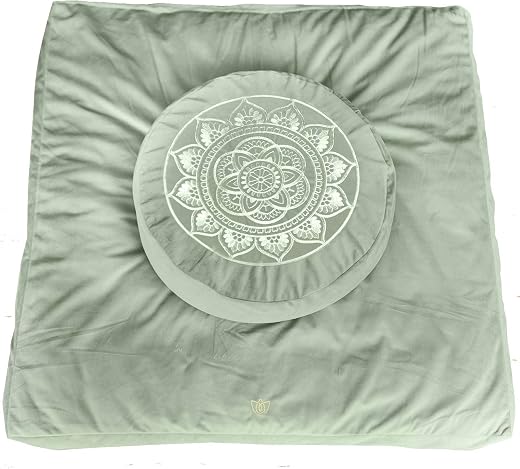
The set pairs Florensi’s adjustable round cushion with a cotton-filled zabuton. The cushion raises the pelvis, while the wider mat pads the knees, ankles, feet, and lower legs against the floor. Both pieces have removable velvet covers, although the full setup requires more floor space and storage than the cushion alone.
Florensi Rectangular Yoga Bolster
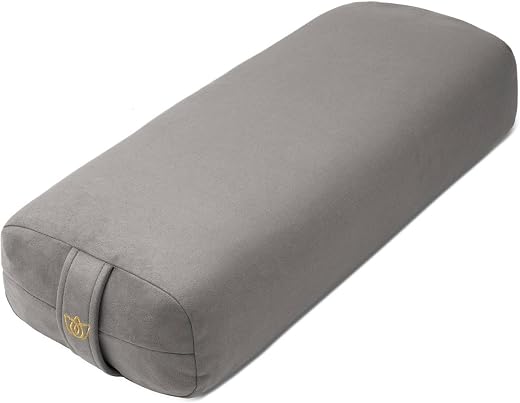
The Florensi Yoga Bolster measures 26 × 11 × 5.5 inches and has a removable, machine-washable velvet cover. Its rectangular shape is intended for yoga and restorative support rather than functioning like an adjustable round zafu, so it should be treated as a secondary prop instead of the main meditation seat.
The Florensi products solve different parts of the sitting setup: a zafu or crescent cushion raises the pelvis, a zabuton pads the knees and ankles against the floor, and a bench changes the leg position. The distinction between zafu and zabuton matters because adding more seat height cannot replace missing floor protection. Repeated long, still sessions place additional demands on pressure distribution and shape retention, which are considered separately when choosing a meditation cushion for Vipassana.
FAQ
Is the Florensi meditation cushion worth it?
The Florensi Meditation Cushion is worth considering when you want an adjustable round zafu for everyday practice and cross-legged sitting already feels workable. Its main advantages are accessible buckwheat fill, a removable velvet cover, and a structured 16-inch sitting base. It is less suitable when the real problem is floor pressure, restricted thigh space, or a leg position that feels forced.
Who is the Florensi meditation cushion best for?
The round Florensi cushion best fits people who can sit cross-legged comfortably enough but need greater hip elevation or more structure than an ordinary floor pillow provides. It also suits buyers who want to experiment with seat height by adding or removing small amounts of buckwheat hulls.
Can you adjust the firmness of the Florensi meditation cushion?
Yes. A zipper provides access to the inner pouch so small amounts of buckwheat hulls can be removed or returned. Removing hulls generally lowers and softens the sitting surface; returning them restores some height and firmness. The foam layer beneath the hulls remains fixed.
Does the Florensi meditation cushion contain only buckwheat?
No. Florensi describes the round cushion as adjustable natural buckwheat hulls placed over a layer of foam padding. The hulls create the moldable upper surface and can be added or removed, while the foam layer remains part of the underlying construction.
How should the Florensi cushion feel when the height is right?
After the hulls settle, the cushion should retain useful height without making you feel perched or unstable. The knees should be able to descend comfortably, the torso should remain balanced, and you should not need to keep reshaping the sitting surface during the same session.
Is the Florensi cushion good for Vipassana meditation?
It may suit Vipassana practice when the round shape fits your body and adjustable hip elevation is the main need. Longer still sitting also exposes thigh pressure, knee-floor contact, and forced leg positions, so the round Florensi cushion should be tested through a realistic session rather than judged during the first few minutes.
Do I need the Florensi zabuton with the cushion?
A zabuton is unnecessary when the knees, ankles, feet, and lower legs already feel comfortable against the floor. It becomes relevant when the round cushion provides adequate hip elevation but does not protect those lower contact points. The cushion and mat perform different jobs.
Can the Florensi meditation cushion be used for yoga or floor sitting?
Yes. Florensi markets the round cushion for meditation, yoga, relaxation, and general floor sitting. Its compact round shape is still designed primarily as a raised seat; the rectangular bolster is better suited to restorative poses that require a longer support surface.
How do you clean the Florensi meditation cushion?
Remove the velvet outer cover and hand-wash it or use a delicate machine setting according to Florensi’s care instructions. Let the cover dry completely before reassembly. The inner pouch, buckwheat hulls, and foam padding should remain dry and must not be machine-washed.
Is the Florensi meditation cushion worth it?
- The round model fits cross-legged sitting that already feels workable but needs adjustable hip elevation
- Adjust the buckwheat hulls gradually and test each change after the sitting surface settles
- Add a zabuton only when pressure against the floor remains after the seat height feels correct
- Use the crescent shape for additional thigh space and the bench when the cross-legged position itself is the problem
The Florensi Meditation Cushion is worth considering when you want a structured round zafu whose buckwheat layer can be adjusted instead of a fixed-height floor pillow. Its removable velvet cover, accessible inner pouch, and 16-inch sitting base make it practical for everyday use. The purchase makes less sense when floor pressure, restricted thigh space, or an uncomfortable cross-legged position is the real problem, because those needs call for a zabuton, crescent cushion, or bench rather than further adjustment of the round model.