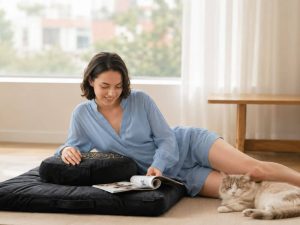
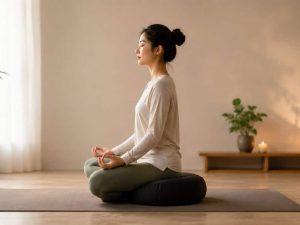
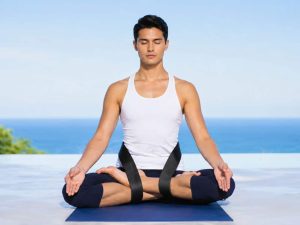
Choosing between a zafu and a zabuton is easier when you start with the discomfort you feel first: low hips, poor posture, knee pressure, ankle pressure, or general sitting comfort.
This guide explains the zafu vs zabuton difference, then helps you match the right meditation cushion setup to your body, practice style, and comfort needs. You will also see quick product picks near the top and review-backed pros and cons for each ASIN later in the article.
- How a zafu and a zabuton support different parts of the body
- When to choose a zafu, a zabuton, or both
- Best meditation cushion options by sitting comfort need
- What to consider for beginners, short people, vipassana, bad knees, and back discomfort
Zafu vs Zabuton: What You Need to Know
Best Meditation Cushions for Sitting Comfort


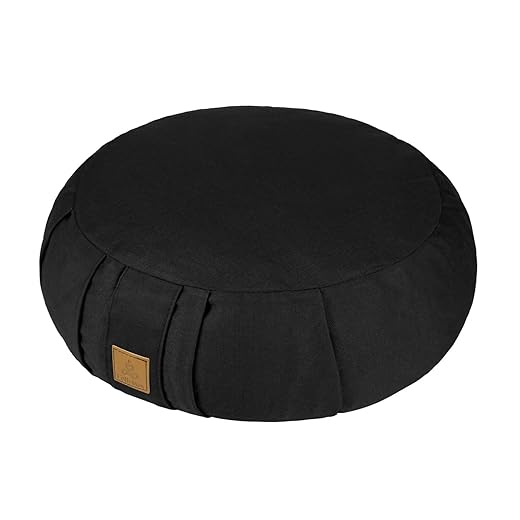
If you want to compare actual product picks beyond the zafu vs zabuton difference, see our guide to the best meditation cushions for better posture and less pain.
What’s the Difference Between a Zafu and a Zabuton?
- Zafu
A zafu is the raised meditation cushion you sit on. It is most relevant when your hips feel too low, your posture collapses, or the seat itself never feels settled. For the full role, see what a zafu meditation cushion is.
- Zabuton
A zabuton is the padded floor mat underneath your sitting position. It is most relevant when your knees, ankles, feet, or lower legs feel pressure from the floor. For more detail, see what a zabuton is.
- Zafu + zabuton setup
A full setup combines seat lift with floor cushioning. It makes sense when you need help from both directions: better support where you sit and a softer layer under the parts of your body touching the floor. If you are comparing meditation-specific cushions with broader low seating options, this guide to Japanese floor pillows can help you understand the wider floor-seating category.
How to Choose: Zafu, Zabuton, or Both
- Seat height and postureStart with a zafu when the main problem is that your hips feel too low, your posture collapses, or your sitting position never feels stable.Look forA meditation cushion that raises the seat and helps you settle into a repeatable sitting positionAvoidExpecting a flat floor mat to fix seat height or posture by itself
- Knee, ankle, and floor pressureStart with a zabuton when the first discomfort comes from your knees, ankles, feet, or lower legs pressing into the floor.Look forA padded floor layer that supports the contact points underneath your bodyAvoidBuying only a raised seat cushion if floor pressure is the main reason you stop sitting
- Both problems at onceUse both when your seat feels unsupported and the floor also bothers your knees, ankles, or feet during the same session.Look forA zafu for seat lift paired with a zabuton for floor cushioningAvoidForcing one cushion to solve two different comfort problems
- Practice styleFor vipassana, zazen, or longer seated sessions, prioritize a setup that feels stable enough to return to without constant adjustments.Look forStable support that matches your sitting style and does not require frequent shiftingAvoidChoosing only by appearance, tradition, or the setup that looks most complete
- Body size and beginner comfortBeginners, short people, and people with sensitive knees should start with the first discomfort their body notices rather than copying someone else’s cushion setup.Look forA cushion height and floor layer that match your body instead of a one-size-fits-all recommendationAvoidAssuming taller, thicker, or more expensive automatically means more comfortable
Use our guide on how to choose the right meditation cushion before buying, especially if your sitting comfort depends on cushion height, shape, firmness, or body size.
Best Meditation Cushions by Posture and Comfort Need
Mindful & Modern Zabuton Meditation Mat – Best for Floor Support
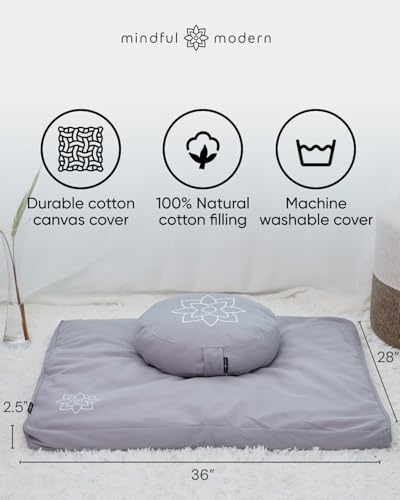

Choose this mat when your main discomfort comes from the floor rather than from seat height. Amazon review themes point to a wide, cotton-cushioned mat with a removable cover, while also noting that the padding can compress under body weight.
- Wide enough for cross-legged sitting
- Removable cover mentioned in reviews
- Cotton-filled cushioned mat
- Useful for floor-based sitting or kneeling
- Padding can compress when sitting
- May still feel close to the floor
- Does not lift the hips like a zafu
Retrospec Sedona Crescent Zafu – Best for Adjustable Sitting Comfort


Choose this cushion when your main issue is the seat itself: comfort, posture support, and a more settled cross-legged position. Amazon review themes point to comfort, support, and quality, with mixed feedback on firmness and size.
- Comfortable for cross-legged meditation
- Supportive for seated posture
- Quality fabric and sewing noted
- Fill can be adjusted to preference
- Firmness gets mixed feedback
- Some users find it too hard
- Size may feel small for mobility issues
Japan Made Zafu Meditation Cushion – Best Traditional Pick for Vipassana
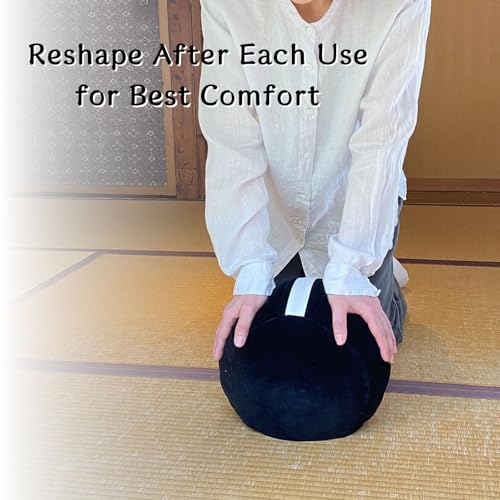
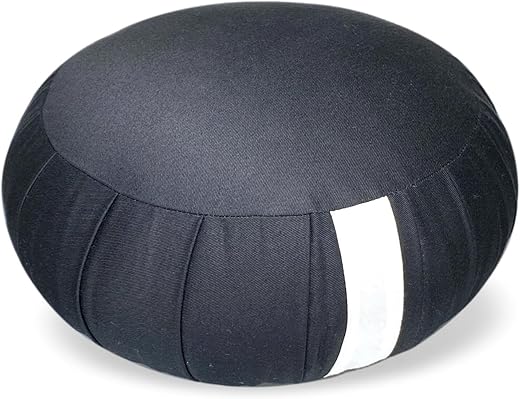
Choose this cushion if you want a firm, Japan-made zafu with a traditional feel. Amazon review themes point to strong craftsmanship, kapok-filled support, useful elevation, and good shape retention, while also noting the higher price and limited cleaning flexibility.
- Firm support for seated posture
- Good elevation for cross-legged sitting
- Handmade feel and neat stitching
- Kapok fill holds shape well
- Sewn handle makes it easy to move
- Higher price than basic zafus
- No removable cover for washing
- May feel too firm for plush-seat users
- Can need reshaping after use
- Some reviews mention slight odor or lumpiness
Round Zafu Meditation Cushion – Best Simple Seat Lift

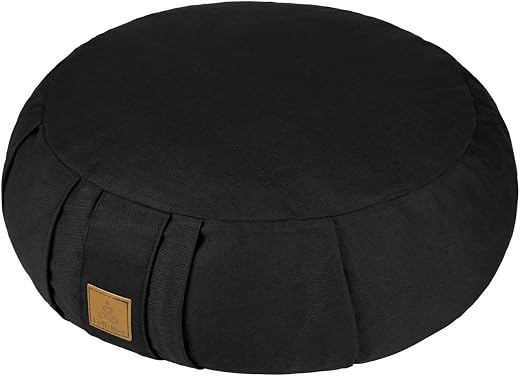
Choose this cushion if you want a straightforward round zafu with buckwheat fill, seat-height support, and practical adjustability. Amazon review themes point to comfort, posture support, washable cover convenience, and good value, with mixed feedback on size and firmness.
- Comfortable for meditation and floor sitting
- Helps some users sit straighter
- Adjustable buckwheat fill
- Removable cover for washing
- Sturdy fabric and construction
- Good value versus pricier zafus
- Some users find it small
- Can feel firm before adjusting fill
- May feel too high until hulls are removed
- Not ideal for every adult body type
- May not suit very long sitting for everyone
How We Matched These Picks
These picks were matched by cushion function first, then checked against Amazon review themes where product-specific pros and cons were used. The goal is to help you choose by comfort need, not by appearance alone.
Zafu picks were evaluated for the role they play in raising the seat, supporting posture, and helping the sitting position feel more stable.
Zabuton-style support was treated separately because it solves a different problem: pressure under the knees, ankles, feet, and lower legs. For readers who already have both pieces, the next step is learning how to set up a zafu and zabuton so seat lift and floor padding work together.
Pros and cons were written from Amazon customer-review themes for each ASIN, especially repeated comments about comfort, firmness, size, cover care, support, and value.
Each pick was assigned to a specific reader need, such as sitting comfort, vipassana-style sitting, beginner setup, floor pressure, or simple seat lift.
Individual pain-related reviews were not treated as medical claims. If your question is whether a strap can help hold the legs in place, read about meditation knee straps for seated posture instead of treating cushion reviews as proof that one setup fixes every body. When reviewers disagreed on size, firmness, or comfort, those trade-offs were kept visible instead of smoothed over.
Which Setup Fits Your Body Best?
-
For short people
Do not assume a taller cushion is automatically better. Start with a zafu height that lets your hips feel supported without forcing your knees too far down or making the seat feel unstable.
-
For bad knees or sensitive knees
Prioritize floor pressure first. A zabuton or padded floor layer is usually more relevant than a seat cushion if your knees, ankles, or feet feel the floor before your posture becomes the problem. If hard flooring is the main trigger, compare the best zabuton for meditation on hard floors before choosing a full zafu-and-zabuton setup.
-
For back discomfort
Start by checking seat height and hip position. A zafu may help you sit more upright, but avoid treating any cushion as a medical fix; choose based on whether it helps your position feel stable and repeatable. If you are still using a pillow to test that lift, compare a regular pillow vs zafu for long sitting before assuming you need a full zafu-and-zabuton setup.
-
For vipassana or zazen practice
Look for a setup that stays stable without constant adjustment. A traditional zafu, a supportive round zafu, or a zafu-plus-zabuton setup may make sense depending on whether your issue is seat height, floor pressure, or both. If you are choosing support for a longer silent course, first clarify what you actually need for a Vipassana retreat so a full cushion setup does not crowd out simpler basics.
-
For beginners
Start with the first discomfort your body notices. If the seat feels wrong, compare zafus first; if the floor feels harsh, compare zabutons first; if both happen quickly, consider a full setup. For low-table meals instead of meditation, use the same logic when comparing Japanese dining pillows: start with sitting height, floor pressure, and how easy the setup feels to use.
-
For grandparents or limited mobility
Choose comfort and ease of getting up over tradition. A thicker floor layer, a stable seat height, or even a meditation bench may be more practical than copying a low floor setup.
Use this section as a fit check, not a medical diagnosis. If pain is sharp, persistent, or related to an injury, choose a safer sitting option and consider professional advice.
FAQ
What is the difference between a zafu and a zabuton?
A zafu is the raised cushion you sit on, so it mainly affects seat height, hip position, and posture. A zabuton is the padded mat underneath, so it mainly affects floor pressure under the knees, ankles, feet, and lower legs.
Do beginners need a zafu, a zabuton, or both?
Beginners should start with the first discomfort they notice. If the seat feels too low or unstable, start with a zafu. If the floor bothers your knees, ankles, or feet first, start with a zabuton. If both happen quickly, a full zafu-and-zabuton setup may make more sense.
What meditation cushion is best for bad knees?
If your knees are the first problem, prioritize floor cushioning rather than seat height alone. A zabuton or padded floor layer is usually the more relevant support because it sits under the knees, ankles, feet, and lower legs. Avoid treating any cushion as a medical fix if knee pain is sharp or persistent.
What cushion is best for vipassana meditation?
For vipassana or zazen-style sitting, look for stable support that lets you return to the same position without constant adjustment. A firm traditional zafu, a supportive round zafu, or a zafu plus zabuton setup can all work depending on whether your issue is seat height, floor pressure, or both.
What meditation equipment works best for short people?
Shorter sitters should not assume that a taller cushion is always better. The better choice is a cushion height that supports the hips without making the knees feel forced downward or the seat feel unstable. If floor pressure is also a problem, pair a lower zafu with a zabuton instead of chasing more height.
Zafu, Zabuton, or Both?
- Zafu: best when the seat position is the problem
- Zabuton: best when floor pressure is the problem
- Both: best when sitting comfort depends on support from above and below
- Product choice: use review-backed trade-offs, not just the setup that looks most complete
The right meditation cushion depends on where your discomfort starts. Choose a zafu when your seat feels too low or your posture needs support. Choose a zabuton when your knees, ankles, feet, or lower legs feel the floor. Choose both when you need seat lift and floor cushioning in the same setup. Once the setup feels simple and usable, you can place it within one of your cozy corners at home instead of treating meditation support as a separate, complicated space.