A beautiful material can make a room feel inviting on the first day. A well-chosen material keeps making life easier long after the room stops looking newly finished.
Floors, fabrics, rugs, wall finishes, and everyday textiles quietly shape how a home feels, how it ages, and how much care it asks from the people living there. They also help determine whether a room feels demanding or whether it can become one of the comfortable places you naturally return to. The goal is not to find one perfect material for every home. It is to understand what each space must carry, then choose something beautiful enough to enjoy and practical enough to live with.
Match the Material to the Pressure It Will Carry
- Moisture exposureKitchens, bathrooms, entrances, and areas near open windows experience very different levels of water, humidity, and drying time.Look forA material, finish, installation method, and care routine suited to the amount of moisture the area actually receives.AvoidAssuming that a material described as natural, sealed, or water-resistant can tolerate standing water or repeated dampness.
- Stains and ordinary messFood, drinks, soil, pet hair, body oils, skincare, and children’s activities all leave different kinds of marks.Look forClear cleaning instructions and a surface you can care for without turning every spill into an emergency.AvoidChoosing a pale, porous, or delicate finish when the room’s normal use will make you afraid to touch it.
- Friction and daily wearChair legs, shoes, pet claws, repeated sitting, laundering, and furniture movement can change a material long before age alone does.Look forConstruction and surface texture that suit the room’s actual traffic and the people or animals using it.AvoidRelying only on words such as durable without asking what kind of wear the claim refers to.
- Sunlight and fadingDirect light can alter color, dry some materials, and make uneven wear more visible over time.Look forCare guidance that addresses sunlight, rotation, curtains, protective finishes, or expected color change.AvoidExpecting every textile, wood tone, or surface finish to age evenly in a bright room.
- Realistic maintenanceThe best material for your home is one you can care for with the time, tools, and attention you genuinely have.Look forCleaning, drying, repair, and replacement requirements that fit your ordinary week.AvoidChoosing something that remains beautiful only through a routine you already know you will resent.
When furnishing a first apartment with only the essentials, choosing fewer materials that are easy to live with matters more than completing every room at once. Begin with what the body touches and daily life depends on. Rugs, extra layers, decorative finishes, and matching accessories can wait until the space reveals what it truly needs.
Choose Materials Room by Room
Kitchen: Plan for Moisture, Movement, and Long Hours
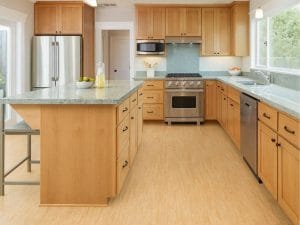
Cork can feel warmer and slightly more forgiving underfoot than some harder surfaces, which may appeal to someone who spends a long time standing at the counter. But cork is not one single performance profile. The product, finish, seam protection, installation, and response to moisture all matter.

Those tradeoffs help explain why cork flooring can work in a kitchen without making it the automatic answer for every household. Ask what happens after a spill, how the manufacturer expects the floor to be cleaned, and whether damaged sections can be repaired.
Tile, sealed wood, engineered flooring, and other materials carry their own compromises in hardness, temperature, moisture tolerance, sound, and maintenance. The right kitchen floor is the one whose compromises fit the way you cook and clean.
Dining Room: Choose for the Meal, Not Only the Photograph
Wall-to-wall softness may look warm, but the practical disadvantages of dining-room carpet become harder to ignore when food settles into fibers and every tipped glass feels consequential.
A hard surface can simplify routine cleanup, while a removable area rug can add warmth without committing the entire room to carpet. Yet an area rug still needs an honest care plan. Pattern, fiber, pile, edge construction, chair movement, and cleaning instructions matter more than whether it looks forgiving from across the room.
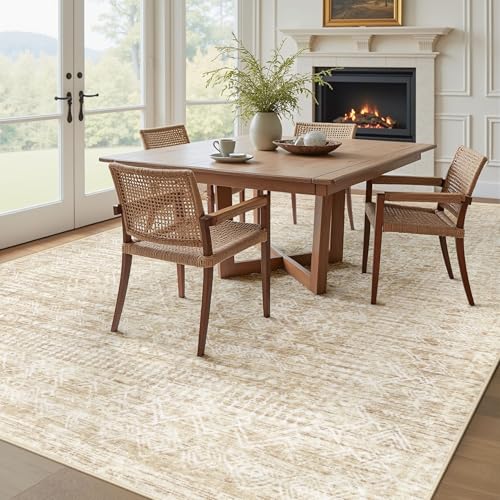
The dining room should invite people to remain at the table. A material that makes every meal feel dangerous may be beautiful, but it is not supporting the life the room was made to hold.
Living Room: Let the Floor, Rug, and Sofa Work Together
A rug begins to ground the room when its size connects the main pieces of furniture. That is why how far a rug extends beneath the sofa matters as much as its fiber, weave, or color.
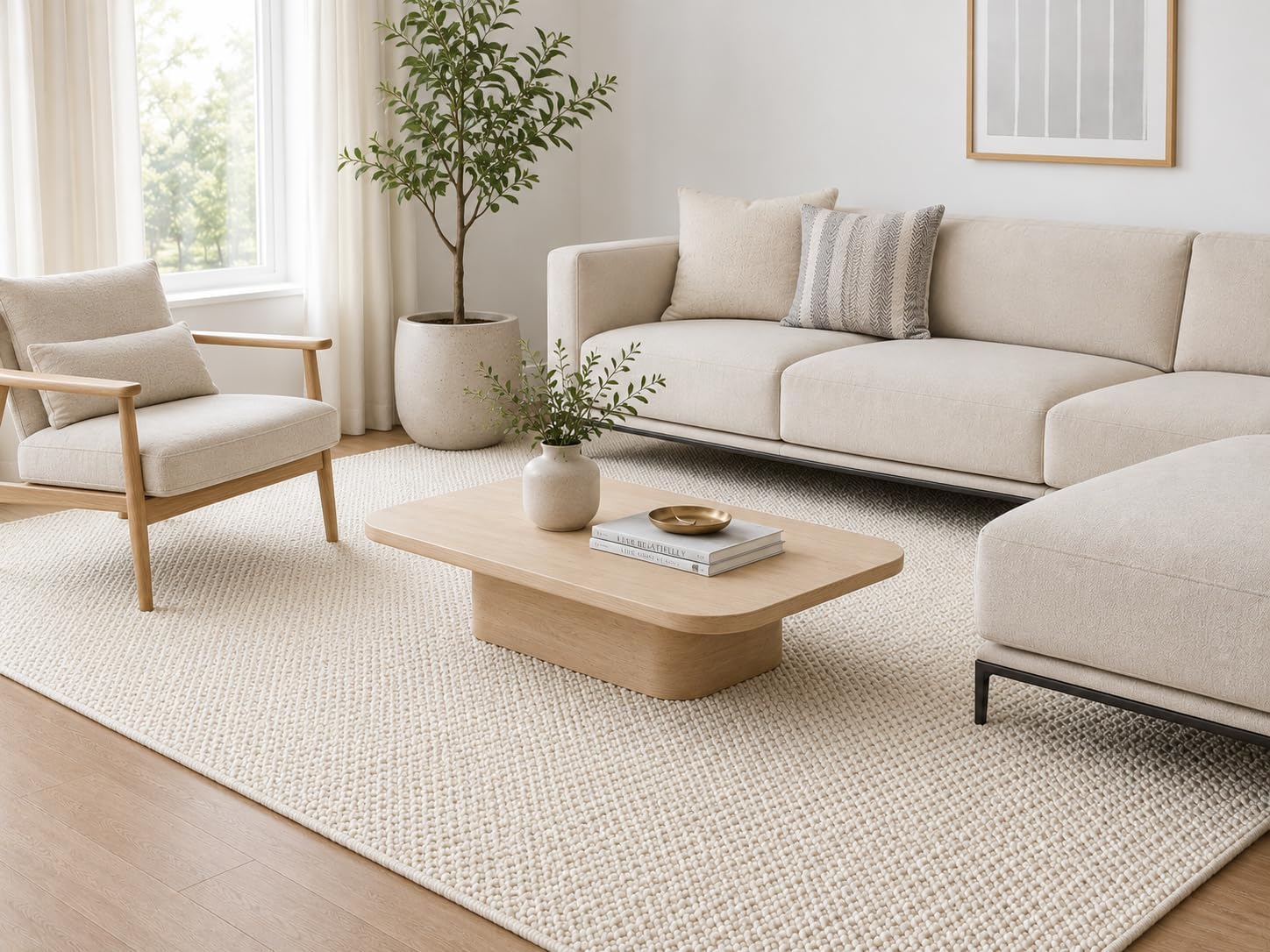
Before choosing a rug, consider whether shoes are worn indoors, whether children play on the floor, how often pets cross the room, and whether professional cleaning would be realistic. A natural fiber can feel lovely while still requiring more careful stain handling than a washable or synthetic alternative. Neither choice is morally superior. One may simply fit your household better.
The sofa carries a different kind of wear: repeated sitting, body oils, snacks, fur, sunlight, and the occasional claw. In homes with pets, relaxation depends partly on choosing couch materials that can live with dogs without making every strand of fur or small mark feel like an emergency.
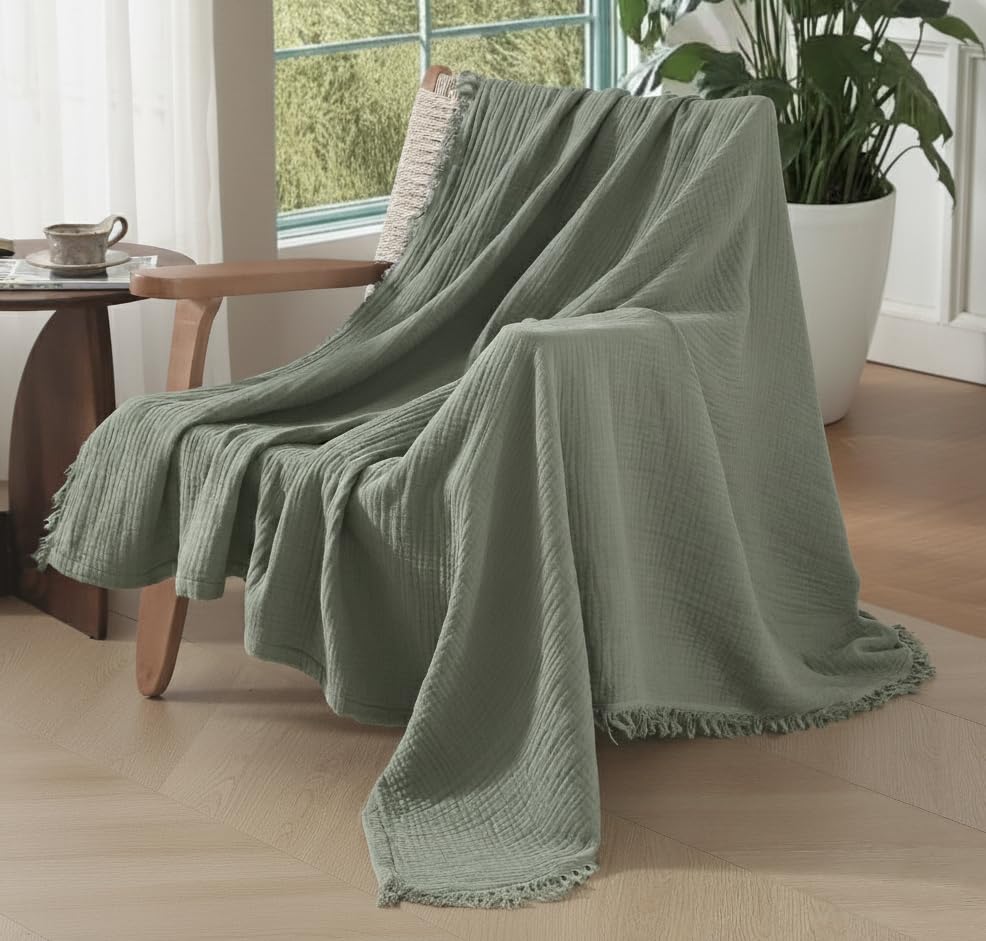
Look beyond fiber names alone. Weave density, removable covers, color variation, cleaning codes, and the way a fabric shows wear may matter just as much. A throw can add warmth and protect one often-used place, but it should remain a layer you enjoy rather than a disguise for a sofa you are afraid to use.
Bedroom: Notice What Lives Closest to the Body
Cotton, linen, and blended bedding can all work well, but they do not feel or behave identically. Some people enjoy linen’s visible texture and gradual softening; others prefer a smoother cotton weave or a blend that wrinkles less. The right answer depends on touch, climate, laundering, budget, and how you feel about an intentionally relaxed bed.

Read the full fiber content and care label instead of relying on a front-facing word such as natural, cooling, luxury, or breathable. Notice whether the item can be washed and dried in the way your household already handles bedding. A beautiful cover that waits indefinitely for special care may not bring much peace to the bedroom.
Bathroom: Think Beyond the First Touch
A towel can feel soft in the hand yet remain damp longer than your room comfortably allows. Another may dry quickly but feel lighter than you prefer. Fiber content, weave, towel weight, airflow, washing instructions, and the number of people sharing the bathroom all affect whether a towel remains pleasant in daily use.

Labels that mention bamboo often describe viscose made from bamboo rather than a piece of bamboo fiber in its original form. Read the complete material breakdown and care instructions. The practical question is not whether one fiber sounds greener or more luxurious; it is whether the finished towel feels right, dries adequately, and survives the laundering your home requires.
Walls: Consider What Comes With the Pattern
Paint offers flexibility, but sheen changes how easily a wall can be cleaned and how visibly it shows imperfections. Wallpaper adds pattern and texture, yet removable does not mean consequence-free. Compatibility with the wall, adhesive composition, ventilation, humidity, and removal instructions still matter.
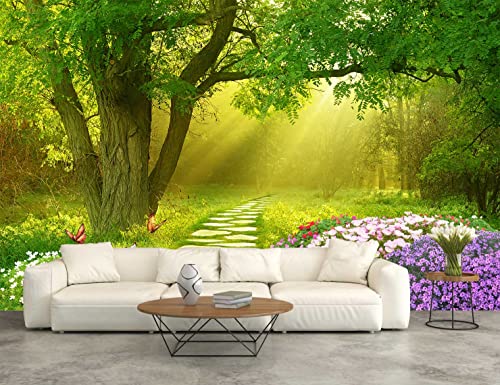
A removable finish becomes part of the room’s air and daily touchpoints, so peel-and-stick wallpaper with more carefully considered materials deserves attention beyond pattern alone. Look for specific disclosures, certifications, and installation guidance rather than accepting non-toxic as a complete explanation.
Test a small hidden area before covering a room. A sample can reveal color in the home’s actual light, texture at close range, adhesion, and whether the finish behaves well on the existing wall.
Natural Does Not Automatically Mean Practical
Natural describes origin more readily than it describes exposure, processing, adhesives, dyes, coatings, allergens, or suitability for a particular person.
Look for specific composition and testing information. A clear disclosure tells you more than a comforting word used on its own.
VOC labels can be useful, but they do not describe every compound a product may contain or emit.
The U.S. Environmental Protection Agency explains that low-VOC or no-VOC labels do not automatically guarantee that one household product is safer than another. Read the broader composition, follow label precautions, and ventilate as directed.
Environmental attributes do not tell you how a finished floor, rug, fabric, or wall covering should be cleaned, protected, or repaired.
A material can have meaningful environmental advantages and still need careful installation or maintenance. Decide whether those needs fit your household before committing.
Durability must refer to a particular kind of pressure, such as abrasion, moisture, sunlight, repeated washing, impact, or staining.
Ask what the material resists, under which conditions, and what maintenance preserves that performance.

Ask What Happens After the First Stain
Before buying a rug, sofa, bedding set, towel, or wall finish, find the actual care instructions. Can the material be spot-cleaned? Must the whole item be washed? Does it tolerate water, or does the manufacturer require a dry method? Can one damaged section be repaired or replaced?
The first response should follow the fiber and finish rather than panic. A gentler approach to stains on fabrics, rugs, and carpet begins by identifying what was spilled and what the material can safely tolerate – not by reaching automatically for the strongest cleaner in the cupboard.
Be cautious with universal maintenance schedules. A floor, fabric, leather finish, rug, or wall coating should be cared for according to its own instructions and condition. “Clean regularly” is useful only when regularly still means the right method for that particular surface.
Use a Five-Minute Material Match Before Deciding
-
Name the exact location
Do not stop at kitchen, bedroom, or living room. Notice whether the material will sit beside a sink, under a sunny window, near an entrance, beneath a dining table, or where a pet sleeps.
-
Notice what will touch it
Think about shoes, bare feet, chair legs, food, skin, body oils, claws, children’s hands, cleaning tools, and direct sunlight.
-
Imagine the most likely mess
Choose the ordinary accident, not the dramatic one: a coffee drip, damp towel, muddy paw, food crumb, skincare mark, or glass of water.
-
Read the care instructions
Check whether the routine requires machine washing, air drying, spot cleaning, special products, professional care, resealing, rotation, or immediate attention.
-
Picture how it will age
Decide whether fading, wrinkles, patina, small scratches, flattened pile, or softened texture will feel acceptable or endlessly irritating.
-
Ask whether part of it can be repaired
Replaceable covers, removable rugs, repairable wood, spare wallpaper panels, and modular flooring may make ordinary damage less final.
The goal is not to predict every accident. It is to choose a material whose ordinary future you can live with.
Choose the Material You Can Keep Living With
- Match the material to moisture, wear, sunlight, stains, and the maintenance you can realistically provide.
- Evaluate the finished product, care instructions, and installation – not only the fiber or material name.
- Let beauty include the way something ages, recovers, and remains usable in ordinary life.
The right material does not ask you to become a more careful person than you really are. It meets the life already happening in the room, carries its share of the work, and grows familiar without making every mark feel like failure.