There is a quiet kind of tiredness that does not always come from doing too much. Sometimes it comes from holding too tightly – to an expectation, an old hurt, a standard, or a version of life that has not arrived.
Letting go rarely looks like the brave final scene of a movie. More often, it is a small decision to stop squeezing one part of life so hard. Not because it no longer matters, but because carrying it this way has begun to cost too much.
Start with the weight that feels closest
When the weight is hard to name, a gentle list of things people sometimes carry can help one honest sentence rise to the surface.
The first task is not to decide how quickly the feeling should disappear. It is simply to notice what kind of pressure is present.
Some pressure comes from an outcome that has not matched the picture in the mind. Some comes from personal rules that never allow anything to feel finished. Some belongs to a wound that still reacts when the day becomes quiet.
Letting go is not the same as giving up
Care can remain even when the struggle to control the outcome begins to soften.
The distinction becomes clearer in the difference between letting go and giving up: one releases the grip, while the other may abandon what still matters.
Acceptance can mean acknowledging what is already true before deciding how to respond.
It helps to separate acceptance from resignation. Seeing reality clearly does not require liking it, excusing it, or becoming passive.
A boundary, decision, or responsibility can remain firm without being carried with constant inner strain.
Letting go may change the way something is carried, even when the practical choice stays exactly the same.
Letting go also does not require forgiveness, reconciliation, renewed contact, or pretending that an experience was harmless. Sometimes it means keeping the boundary and releasing the endless internal trial that continues long after the decision has been made.
What are you holding too tightly?
- Expectations
The quiet rules about how people, relationships, timing, or life itself should unfold. Letting go of expectations begins by finding the rule hidden inside disappointment.
- Self-imposed pressure
The inner laws that say everything must be handled well, alone, and without visible struggle. Releasing self-imposed pressure means separating genuine care from the tension used to prove it.
- Emotional wounds
What still hurts, repeats, or keeps the heart slightly guarded even when daily life looks ordinary. Healing the heart offers a broader path when the heaviness reaches beyond one expectation or habit.
These layers can overlap. An old wound may create an expectation. An unmet expectation may turn into pressure to try harder. Self-pressure may make rest feel unsafe precisely when emotional care is most needed.
There is no need to untangle all three today. Choose the layer that creates the most tension when it is named. That is usually enough of a beginning.
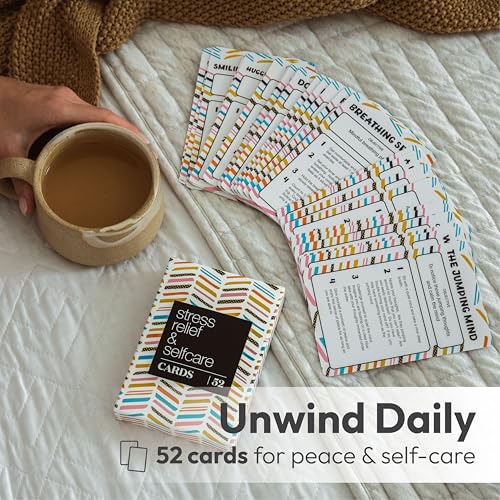
A prompt is only a doorway. The useful part is not answering perfectly, but noticing which question creates a small pause instead of another argument.
When the weight is expectation
Find the rule inside the disappointment
Disappointment often contains an unwritten sentence:
They should have understood.
Life should look different by now.
After everything I did, this should have worked.
The expectation may not be unreasonable. Wanting care, fairness, progress, or honesty is human. The pressure grows when the hope becomes an invisible condition for peace: this outcome must happen before the body is allowed to relax.
Some expectations are directed toward other people. Others turn inward and become standards about age, success, healing, appearance, parenting, relationships, or how quickly difficult feelings should pass. These expectations placed on yourself can sound responsible while quietly making every ordinary day feel behind.
Try completing one sentence without correcting it:
I am hurting because I thought __________ should happen.
The blank does not have to reveal a grand truth. It might contain something as simple as “they would call,” “I would feel better by now,” or “this effort would finally be enough.”
Keep the hope, soften the demand
Letting go of an expectation does not always mean abandoning hope. It can mean changing the sentence that wraps around it.
This must happen for me to be okay can become:
I still hope for this, but I do not need to hold myself tight while the outcome remains uncertain.
The softer sentence does not erase disappointment. It simply removes one extra layer of suffering: the demand that reality immediately match the picture in the mind.
Name the expectation. Separate the hope from the demand. Then ask what remains within your hands today – a conversation, a boundary, a decision, or simply the choice to stop rehearsing the same outcome for the next hour.
When the pressure comes from inside
Notice when responsibility turns into constant tension
Wanting to do things well is not the problem. Wanting to be dependable is not the problem either. The strain begins when care quietly takes on a second job: keeping the body and mind in permanent readiness.
- Nothing feels finished A completed task is immediately replaced by the next thing that should already have been done.
- Rest feels earned Pausing is allowed only after every visible responsibility has been handled—an event that rarely arrives.
- Small mistakes linger The practical consequence passes, but self-criticism keeps reopening the moment.
These signs do not mean responsibility has gone too far in every situation. They are invitations to notice how much tension is being used to carry it.
Pressure often speaks in reasonable sentences:
If I loosen my grip, everything will fall apart.
I can rest later.
I should be able to manage this without help.
Nobody else may be demanding these rules. They can become an internal rulebook followed so faithfully that rewriting it begins to feel irresponsible.
Keep the care, release the strain
Letting go here does not mean lowering every standard. It means separating the value from the tension wrapped around it.
Keep:
I want to do this with care.
Release:
I must remain tense every moment to prove that I care.
Another small shift replaces performance with presence:
I must prove that everything is under control becomes I can respond to what is actually needed, one part at a time.
Doing something with less inner strain does not guarantee that it will become easy. It may, however, leave more energy for the responsibility itself instead of spending so much of it on constant self-monitoring.
When something still hurts
Notice when a memory is taking over the present
Sometimes a memory can be observed from a little distance: it happened, it hurt, and it belongs to an earlier chapter.
At other times, the old emotion comes close again. The conversation resumes in the mind. The unsent answer becomes sharper. The body tightens before the present moment has had a chance to speak for itself.
Letting go does not require erasing the memory. The smaller task is noticing when the past has taken the chair meant for today.
When one person keeps returning to the mind long after the relationship has changed, letting go of someone you cannot stop thinking about may require releasing not only the person, but also the imagined conversation, apology, reunion, or future attached to them.
Release resentment without forcing forgiveness
Resentment can feel protective. It remembers the injustice, keeps the evidence, and refuses to let the hurt be minimized. That protective role deserves acknowledgment.
Yet resentment may also keep the other person present long after contact has ended. Their action continues receiving attention, energy, and internal conversation.
Letting go does not require declaring the behavior acceptable. It does not require reconciliation. It does not require forgiveness before the heart is ready – or at all.
The gentler possibility explored in releasing resentment without forcing forgiveness is to keep the truth and the boundary while allowing the event to occupy less of the present.
Let time change the size of the story
Time does not promise to erase pain. Some stories remain important for years. Some losses remain tender because love, trust, identity, or safety were involved.
What may change is the amount of room the story takes. At first, it can seem to fill the entire house. Later, it may still be present without occupying every room.
The reflection on how time can help pain take up less space does not ask the past to disappear. It allows life to become wider around it.
There may still be difficult anniversaries, sudden reminders, or days when an old feeling returns. A returning feeling is not proof that all progress has been lost. It is simply a difficult moment asking for care in the present tense.

A quiet activity does not replace reflection, boundaries, or support. Sometimes it simply interrupts the need to keep analyzing a feeling that has already been named.
Reflection can clarify what is being carried, but some days need an action: writing the unsent sentence, moving an object, ending a repeated conversation, changing a boundary, or choosing not to reopen the message thread. A quieter, more practical way to begin letting go offers further steps when insight alone has not changed the grip.
A seven-day practice for loosening one thing
-
Notice where you tighten
Choose one moment when a quiet “this should not be happening” appears. Notice the jaw, shoulders, chest, breath, or urge to control the next moment.
-
Name one “should”
Write one sentence beginning with “should.” Then add: “I can still care without demanding that reality change before I breathe.”
-
Find where nothing feels finished
Notice one area—work, home, relationships, or personal growth—where the goalpost keeps moving before satisfaction can arrive.
-
Rest before everything is done
Take one short pause on purpose. Five minutes counts. Notice what guilt says, without allowing it to make the decision.
-
Name one hurt without solving it
Write one honest sentence: “This still affects me.” Stop there. Recognition is enough for today.
-
Choose one small boundary
End a conversation earlier, stop rereading a thread, say no without a long defense, or step away from a topic that repeatedly reopens the same hurt.
-
Choose what to hold less tightly
Review the week and select one expectation, rule, or repeated argument that can receive a little less energy now.
This is not a challenge to complete perfectly. Missing a day does not turn letting go into another thing to fail at.
Seven days do not guarantee release. The value lies in observing the weight from several angles without demanding one dramatic answer.

The bowl is only one possible marker. Closing a notebook, washing a cup, stepping outside, or switching off a lamp can serve the same purpose: this moment of reflection is ending, and the rest of the evening does not need to continue carrying it.
Make room for what comes next
- Keep one boundary Space disappears quickly when the old conversation, obligation, or expectation is invited back without a pause.
- Give rest a regular place Rest is easier to trust when it appears before complete exhaustion rather than only after collapse.
- Choose one gentle anchor A familiar action can hold the new space without immediately filling it with another goal.
A few simple daily rituals can help protect the space that letting go creates—not by controlling life, but by giving ordinary days a softer shape.
Letting go does not require abandoning a necessary boundary, returning to an unsafe situation, forgiving before you are ready, or facing painful memories without support. Grief, fear, distress, or recurring memories that significantly affect everyday life may deserve care from a qualified mental health professional or healthcare provider.
FAQ
How do you know what to let go of first?
Begin with the thought, rule, expectation, or memory creating the most repeated tension today. The first release does not need to be the deepest issue. It only needs to create a little more room.
Can you let go and still care?
Yes. Caring and controlling the outcome are different. Love, responsibility, grief, or concern may remain even when the repeated struggle around them begins to soften.
Does acceptance mean the other person was right?
No. Acceptance acknowledges what has happened or what is currently true. It does not excuse harmful behavior, erase accountability, or remove the right to maintain a boundary.
How do you let go when there is no apology?
The absence of an apology can remain painful. Letting go may involve stopping the wait for that apology to become the condition for peace, while still honoring what happened and what protection is needed now.
What can help when the same memory keeps returning?
Name the memory, orient attention to the present room, and choose one grounded action rather than continuing the internal replay. Persistent or highly distressing memories may be easier to carry with professional support.
You only need to loosen one grip today
- Name the expectation hiding inside one disappointment.
- Separate genuine care from constant inner strain.
- Keep the boundary without carrying the argument all day.
- Allow one unresolved thing to take up a little less room.
The goal is not to stop caring. It is to make care less airless. One grip can soften while the rest of life remains unfinished.
The Rituals collection offers other gentle paths through daily rhythms, emotional healing, self-compassion, and the slower work of beginning again.