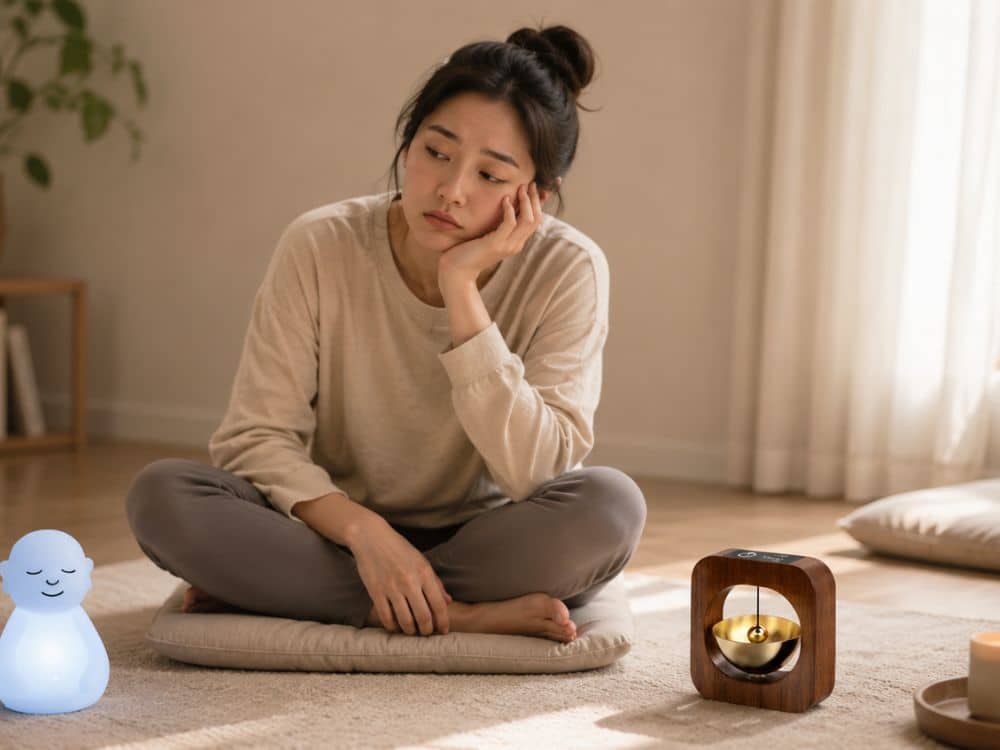
Meditation can feel boring when your mind is used to movement, stimulation, and quick feedback. That does not mean you are doing it wrong.
Boredom is often the first thing you notice when the outside noise gets quieter. The mind looks for something to solve, check, judge, or escape. This guide helps you understand what that boredom may be pointing to, how to stay with it gently, and when to adjust the practice instead of forcing yourself through it.
- Why meditation feels boring at first
- How to tell boredom from restlessness or discomfort
- What to do when time feels painfully slow
- How to make practice less dull without turning it into entertainment
- When boredom may actually be anxiety, overwhelm, or body strain

Boredom Is Usually a Signal
If boredom is mostly making you quit after a few days, start with the habit side first. This guide to building a sustainable meditation habit can help you make the practice smaller, cued, and easier to restart.
What “Boring” Often Means During Meditation
Boredom
The feeling that nothing interesting is happening. In meditation, this often appears when the mind is not getting its usual stimulation or reward.
Restlessness
A more active form of boredom. You may feel like moving, checking your phone, changing techniques, ending early, or finding something more exciting.
Unclear anchor
A practice object that feels too vague to return to. If the breath, body, or sound is not clear enough, the mind may wander because it has no simple landing point.
Result-chasing
The expectation that every session should feel peaceful, deep, focused, or meaningful. When that feeling does not appear, the practice can seem pointless.
Physical discomfort
Body strain that disguises itself as boredom. A hard floor, low hips, sore knees, or a sleepy posture can make the mind want to escape. If seat height is part of the problem, the meditation cushion height guide for beginners explains how lift changes the posture.
Underchallenged attention
The mind may feel dull because the practice is too vague or passive. A clearer anchor, shorter session, or gentle label can give attention enough structure to stay.

Find the Type of Boredom You Are Experiencing
- If your mind wants noveltyYou may be coming straight from screens, tasks, music, messages, or fast decisions. Quiet will feel boring when the mind expects a new input every few seconds.Look forA short transition before sitting, such as putting the phone away, dimming the screen, or taking three slow breaths.AvoidBlaming the practice before noticing how much stimulation you were just carrying.
- If time feels painfully slowThe session may be too long for your current attention span. A short, repeatable sit is better than a long sit that makes you dread tomorrow.Look forTwo to five minutes with a clear ending point.AvoidStarting with twenty minutes because you think a short session does not count.
- If the breath feels too dullYour anchor may need to be more specific. Instead of “watch the breath,” notice one place: the nostrils, chest, belly, hands, or the sound around you.Look forOne simple object of attention that you can return to again and again.AvoidChanging techniques every time the first minute feels flat.
- If your body keeps complainingBoredom may be the mind’s way of saying the body is uncomfortable. Knee pressure, tight hips, numbness, or slumping can make stillness feel unbearable.Look forA posture that is alert but not punishing, with enough support for your seat, knees, back, or feet.AvoidTreating pain or numbness as something to conquer.
- If the practice feels pointlessYou may need a clearer reason to sit. The reason does not have to be grand; it can be as simple as pausing before work, ending the evening gently, or learning to return when distracted.Look forA personal reason you can remember in one sentence.AvoidMeditating only because you think you should.
- If you keep judging the sessionA judging mind can make every ordinary moment feel like proof that meditation is not working. The practice is noticing that judgment and returning anyway.Look forA soft label such as “thinking,” “judging,” or “boredom,” followed by one gentle return.AvoidTurning each session into a performance review.

How to Make Meditation Less Boring Without Turning It Into Entertainment
-
Start with a smaller container
Set a short session you can finish without resentment. If five minutes feels too long, use two. The first goal is not depth; it is returning.
-
Choose one clear anchor
Pick one place to return: the breath at the nostrils, the belly rising, the hands resting, the sound in the room, or the feeling of the seat beneath you.
-
Name boredom softly
When boredom appears, label it once: “boredom,” “restlessness,” or “wanting something else.” Then return to the anchor without arguing with the feeling.
-
Notice one layer of detail
Instead of trying to make the session interesting, look more closely. Is boredom heavy, tense, sleepy, impatient, blank, or irritated? The detail becomes the practice.
-
End before you start resenting it
Stopping while the session still feels manageable makes tomorrow easier. You can sit longer later, but do not make the longest version the daily rule.
-
Repeat the same small version tomorrow
Boredom often softens when the practice becomes familiar. Repetition teaches the mind that stillness is not an emergency.
For a ready-made short format, try pairing this with a morning meditation routine for beginners instead of inventing a new practice from scratch.

When “Boring” Is Actually Discomfort, Anxiety, or Overwhelm
- Sleepy or heavy boredomIf you keep nodding off, the issue may be low energy rather than boredom. Try sitting more upright, opening your eyes slightly, practicing earlier, or shortening the session.Look forA posture that keeps you awake without becoming tense.AvoidUsing a deep sofa or bed if it turns every session into drowsiness.
- Restless boredomIf boredom feels like buzzing, fidgeting, or wanting to escape, begin with a shorter session and a clearer anchor. Some people also benefit from a brief walk or gentle movement before sitting.Look forA practice that starts small enough for your nervous system to tolerate.AvoidForcing a long sit while the body is clearly activated.
- Physical pain or numbnessSharp pain, increasing pain, or numbness is not a meditation achievement. Change your posture, raise the seat, use a chair, add floor support, or end the session early.Look forComfort that lets attention settle without ignoring body signals.AvoidMeditating through pain to prove discipline.
- Emotional overwhelmSometimes quiet makes feelings louder. If meditation brings up panic, distress, trauma memories, or a sense of losing control, use grounding, open your eyes, stop the session, and consider support from a qualified professional.Look forA safer, more grounded practice that does not flood your system.AvoidPushing deeper because you think discomfort always means progress.
- Mental health cautionIf you have a history of psychosis, schizophrenia, severe panic, or trauma symptoms, ask a qualified clinician about what kind of meditation is appropriate. Gentle, guided, grounded practices may be safer than intense unsupervised practice.Look forProfessional guidance and practices that help you stay oriented.AvoidLong silent retreats, intense breathwork, or forcing concentration when symptoms worsen.
Do not use boredom as a reason to ignore pain, numbness, panic, or emotional flooding. If the body or nervous system is clearly asking for support, adjust the posture, shorten the session, open your eyes, use a chair, or stop. If sitting comfort is the main barrier, this guide on how to choose the right meditation cushion can help you compare support options without guessing.

Common Myths About Boring Meditation
Boredom can be part of the practice. It gives you something ordinary to notice, label, and return from.
Meditation is not only about peaceful moments. It also trains the ability to stay present when the mind is underwhelmed, impatient, or looking for novelty.
The mind does not need to go blank. Thinking, judging, waiting, and boredom can all be noticed as part of the session.
A blank mind is not the goal for most beginner practice. The useful skill is recognizing what happened and returning to the anchor without turning it into a problem.
Sometimes you need a clearer anchor, not a more entertaining practice. More novelty can keep the mind chasing stimulation instead of learning steadiness.
A sound, breath point, body sensation, or short guided practice can help, but the goal is still to simplify attention, not to keep the session constantly interesting.
Longer sessions can make boredom louder if the practice is already too ambitious. A shorter session may be the wiser starting point.
Consistency usually grows from a small practice that feels safe to repeat. Once the short version feels steady, duration can increase naturally.
Discomfort is information. Some mild restlessness is normal, but pain, numbness, panic, or overwhelm are reasons to adjust.
Pushing through the wrong kind of discomfort can make meditation feel threatening instead of supportive. A kinder setup often makes the practice easier to return to.
FAQ
Why does meditation feel boring?
Meditation often feels boring because it removes the stimulation your mind is used to. Without screens, tasks, conversation, or music, the mind may label the quiet as empty. That boredom can become part of the practice if you notice it gently and return to one clear anchor.
Is boredom during meditation normal?
Yes, boredom is normal, especially for beginners. It does not mean you are failing or that meditation is pointless. It usually means the mind is meeting stillness, repetition, and simplicity before those things feel familiar.
Why is meditation so boring compared with scrolling or music?
Scrolling and music give the brain constant novelty, rhythm, emotion, and reward. Meditation gives much less input, so it can feel flat at first. That contrast is part of why a short session is often more realistic than a long one when you are beginning.
Should I stop meditating if I feel bored?
Not automatically. If boredom is mild, try labeling it softly and returning to the breath, body, or sound for a shorter session. If boredom is mixed with pain, panic, numbness, or emotional overwhelm, adjust the practice or stop rather than forcing yourself through it.
Is 5 minutes enough if meditation feels boring?
Yes, five minutes can be enough. A short session that you repeat is more useful than a long session you start avoiding. Once five minutes feels familiar, you can extend slowly if you want to.
Can meditation help concentration?
Meditation may support concentration by practicing the skill of noticing distraction and returning to an anchor. It is not instant, and it does not require perfect focus. Short, repeated sessions are usually more helpful than occasional long sessions that feel punishing.
Can meditation help stress and anxiety?
Meditation and mindfulness practices may help some people relate to stress and anxiety with more awareness, but they are not a substitute for medical or mental health care. If anxiety is frequent, intense, or worsening during practice, it is worth speaking with a qualified professional.
Is meditation good for people with schizophrenia?
People with schizophrenia, psychosis history, or symptoms that affect reality testing should be cautious and ask a qualified clinician before starting meditation, especially intensive or unsupervised practice. Some grounding practices may be appropriate for some people, but the right approach depends on the individual and their care plan.
Can meditation lower cortisol?
Meditation may support stress regulation for some people, but cortisol changes are complex and vary by person, practice type, and context. It is better to treat meditation as a supportive practice rather than a guaranteed way to change a lab marker.
Can meditation lower cholesterol?
Meditation should not be treated as a direct cholesterol treatment. It may support stress management and healthier routines, but cholesterol should be managed with evidence-based medical guidance, diet, movement, and medication when recommended by a clinician.
Let Boredom Be Part of the Practice
- Boredom is a signal, not a failure
- Short sessions are allowed
- A clear anchor helps attention return
- Discomfort should be adjusted, not endured
- The practice is returning, not feeling entertained
Meditation feels boring when the mind is no longer being fed a steady stream of novelty. That does not make the session useless. Start smaller, choose one clear anchor, notice boredom as a real experience, and adjust the setup if the body is asking for support. If you keep running into the same beginner patterns, this guide to common meditation mistakes beginners make can help you remove more friction without turning the practice into another performance.