
When every new breakout sends you back to the skincare shelf, it is easy to believe that the answer must be another product, another active, or one more step.
Eventually, I began asking a quieter question: what if acne-prone skin does not always need a more ambitious routine? What if it needs fewer moving parts, introduced slowly enough to understand?
This is not a promise of clear skin or a rulebook for avoiding every supposedly “toxic” ingredient. It is a gentle framework for building a simple routine, noticing how your skin responds, and knowing when skincare alone is not enough.
What “gentler skincare” actually means
A product is not automatically safer because its ingredients are described as natural, clean, organic, or plant-based.
Labels can sound reassuring, but natural, non-toxic, and hypoallergenic describe different things. None of those words can guarantee that a particular formula will suit every person’s skin.
More steps also create more opportunities for irritation and make it harder to identify which product is causing difficulty.
Gentler skincare is less about reaching a perfect product count and more about giving every step a clear purpose.

When a routine becomes too much for your skin
Sometimes the difficulty is not one obviously “bad” bottle. It is the way good skincare products can work poorly together when a routine becomes crowded.
A simple routine for acne-prone skin
The basic morning routine
-
Cleanse gently
Use a gentle, non-abrasive cleanser when cleansing is needed. The goal is to remove sweat, oil, and residue without scrubbing or chasing a squeaky-clean feeling.
-
Moisturize as needed
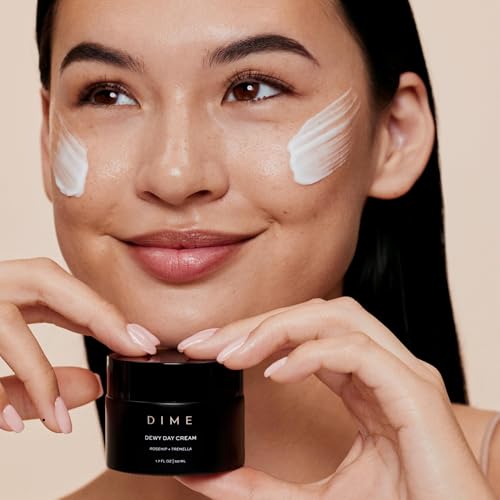
Choose a texture you can use comfortably and pay attention to the complete formula rather than one fashionable ingredient. Choosing a moisturizer for acne-prone skin is easier when hydration, texture, and your own response matter more than the word “natural” on the label.
-
Protect exposed skin
When you will be outdoors, use broad-spectrum, water-resistant sunscreen with SPF 30 or higher and follow the label directions. A product labeled non-comedogenic may be a useful starting point for acne-prone skin, although no label can predict an individual response.
If a morning routine has become difficult to maintain, begin with the essential steps instead of adding another corrective layer.
The basic evening routine
-
Remove the day gently
Cleanse away sunscreen, makeup, sweat, and the day’s residue without vigorous scrubbing. If one gentle cleanse does the job comfortably, the routine does not earn a medal for adding three more.
-
Use treatment with a clear reason
An acne treatment is different from an optional beauty step. Use it according to its directions or professional advice, and resist the urge to stack several new actives simply because progress feels slow.
-
Finish with comfortable hydration
A moisturizer can help make the routine more comfortable, particularly when an acne treatment feels drying. The right texture and frequency are personal; heavier is not automatically better, and lighter is not automatically safer.

Toner and serum should earn their place
-
Name the purpose
A product should answer a real need you can describe, not merely fill an empty space between cleansing and moisturizing.
-
Check for overlap
Before adding it, look at what the rest of the routine already does. Several exfoliating or active products can quietly turn separate “gentle” steps into one demanding routine.
-
Let optional remain optional
If your skin and routine feel easier without toner or serum, leaving one out is not a skincare failure. Empty shelf space has never filed a complaint.
Change one thing at a time
A routine does not become useful because it has more steps. It becomes easier to understand when you can follow it consistently without constantly starting over. Consistency, however, does not mean continuing through significant discomfort.
Keep the routine simple enough that you know what is already familiar to your skin before introducing something new.
Follow its directions and avoid beginning several unfamiliar products on the same day. If a reaction appears, fewer variables make the situation easier to understand.
Do not treat persistent burning, itching, swelling, or worsening irritation as proof that a cosmetic is “working.” Stop using a product that appears to cause a concerning reaction and seek appropriate advice when needed.
Acne care often needs time, but that does not require ignoring pain, severe irritation, or rapidly worsening breakouts. Patience and attention belong in the same routine.
Patch testing may help identify some reactions before wider use, but it cannot guarantee that a product will suit every face or remain comfortable over time.
Know when gentle self-care is not enough
Choosing gentler skincare does not mean rejecting evidence-based acne treatment. Sometimes the kindest routine is the one that stops asking a bathroom shelf to do a clinician’s job.
Your routine does not have to become another source of pressure
- Give every step a clear purpose.
- Introduce changes slowly enough to understand them.
- Treat labels as clues, not guarantees.
- Ask for professional help when skincare alone is not enough.
Your skin may need different products, a prescribed treatment, or more support than mine. What it does not need is panic disguised as productivity. Begin with a small routine you can understand, notice what changes, and let gentleness include the wisdom to ask for help.
You can continue exploring gentle skincare for everyday care whenever your routine needs a little more clarity.