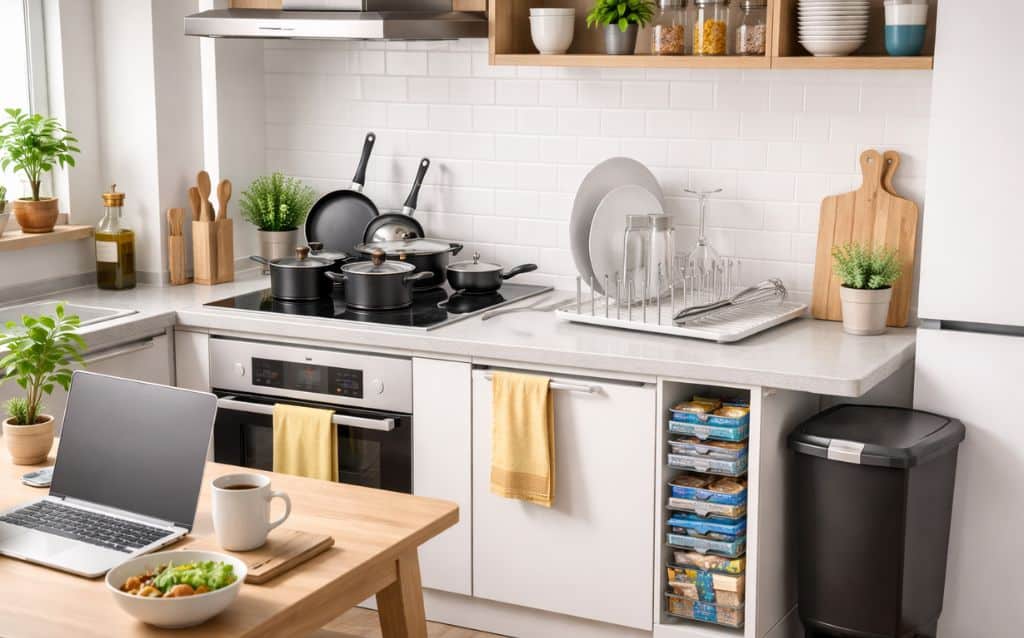
Your first apartment does not need to feel finished right away. It needs to help you cook something simple, clean up without dread, leave on time, handle small problems, and feel less overwhelmed by the everyday work of living on your own.
Starting independent life can make an empty apartment feel confusing in a way a shopping list cannot fully solve. Every room has potential, but the real question is not how to fill the space. The better question is where daily life keeps getting stuck.
A calm first apartment starts when repeated tasks have somewhere to happen and somewhere to reset. Food needs a basic flow from cooking to cleanup. Trash needs a clear route out. Keys, mail, chargers, and papers need a landing zone. Small household problems need a few basic answers before they interrupt the whole day.
This guide focuses on practical first apartment essentials for young adults who want the apartment to work before it looks polished. Products appear only where they solve a real apartment problem, not as a full starter kit you are supposed to copy.
What Makes a First Apartment Feel Calm Is Less Friction
Think of each purchase as a friction remover. If it does not make one repeated apartment problem easier, it may be an extra, not an essential.
Know the Difference Between Filling Space and Solving Friction
- Empty space
A blank wall, open corner, or bare surface can feel unfinished, but it may not be a problem yet. Empty space gives you room to learn how you actually use the apartment before buying furniture, decor, or storage that may not fit your routine.
- Friction point
A friction point is a small task that keeps becoming annoying: dishes stay wet on the counter, trash piles up near the door, mail disappears, or you cannot find a screwdriver when something loosens. These moments are better buying signals than a generic first-apartment checklist.
- Landing zone
A landing zone is one intentional place where daily items stop moving around. It can hold keys, wallet, mail, chargers, earbuds, or documents so the kitchen counter, bed, and floor do not become default storage.
- Home baseline
Your home baseline is the minimum setup that lets the apartment run: cook something simple, wash dishes, take out trash, clean a small mess, find daily items, dry towels, and handle minor household problems. Style can grow after the baseline works.
Use the First 72 Hours to Find What Actually Gets Annoying
-
Notice where you pause
Pay attention to the moments when you stop and think, “Where does this go?” or “How am I supposed to do this?” Those pauses often reveal a missing system more clearly than an online apartment checklist.
-
Track the mess that repeats
A one-time mess is normal. A repeated mess is information. If the same counter, floor area, sink, or chair keeps collecting things, the apartment may need a better landing place or cleanup path.
-
Separate discomfort from dysfunction
A blank wall may feel uncomfortable because the apartment is new. A kitchen with no way to dry dishes or a trash bag sitting on the floor is closer to dysfunction. Fix function before mood.
-
Solve one friction point at a time
Choose the most annoying repeated problem and solve that first. One useful item with a clear job is better than ten products bought because they looked like first-apartment essentials.
-
Give every solution a home
Before buying a bin, caddy, rack, tool kit, or organizer, decide where it will live. If the solution has no home, it can become another object you have to move around.
-
Let style wait until patterns appear
After a week or two, you will know where you actually cook, drop bags, open mail, clean, and unwind. That is a better time to add style than the first day, when every empty space looks louder than it really is.
The first few days are not just for unpacking. They are for learning which apartment problems are real enough to solve.
Make Food and Cleanup Easier Before Buying Kitchen Extras
- Can you make one repeatable meal?Start with the kind of meal you will actually make when you are tired: eggs, pasta, rice bowls, soup, simple vegetables, leftovers, or one-pan meals. A first apartment kitchen needs repeatability before variety.Look forBasic cookware that covers simple mealsAvoidSpecialty gadgets for meals you rarely make
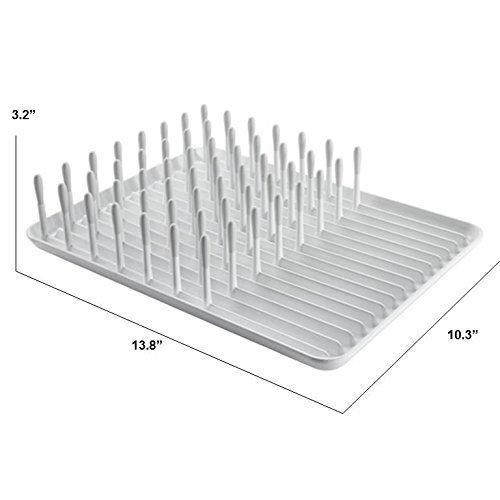
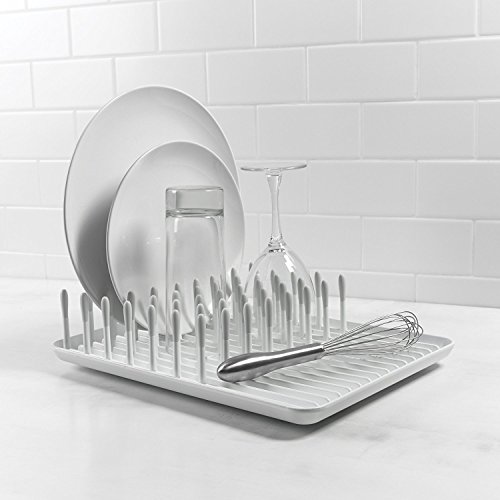
- Can you clean up without losing the counter?Cooking becomes stressful when dishes have nowhere to dry and the counter stays wet for hours. A small kitchen needs a clear ending point after food, not just tools for making the food.Look forA drying setup that fits the counterAvoidOversized racks or loose towels that take over prep space
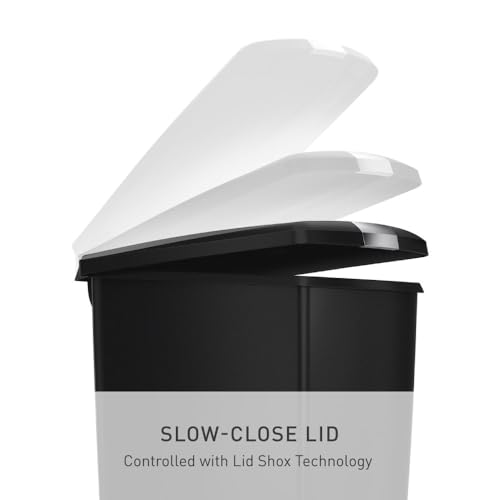
- Can packaging and food waste leave easily?Takeout containers, wrappers, produce scraps, and packaging build up quickly in a first apartment. If trash has no clear place to go, the kitchen feels messy even when the rest of the room is fine.Look forA bin that fits the kitchen routeAvoidLeaving bags on the floor because the real bin feels inconvenient
- Can the kitchen reset in ten minutes?A calm kitchen is not always spotless. It is resettable. You should be able to put food away, wash or stack dishes, wipe the counter, and remove trash without turning it into a major project.Look forSimple tools that make cleanup visibleAvoidBuying more cooking tools before cleanup works
A Basic Cookware Set Works Best When You Repeat Simple Meals


A Compact Dish Rack Helps the Kitchen Reset After You Eat
Make Trash and Cleaning Easy Enough to Actually Do
A Slim Trash Can Gives Waste a Clear Exit Path

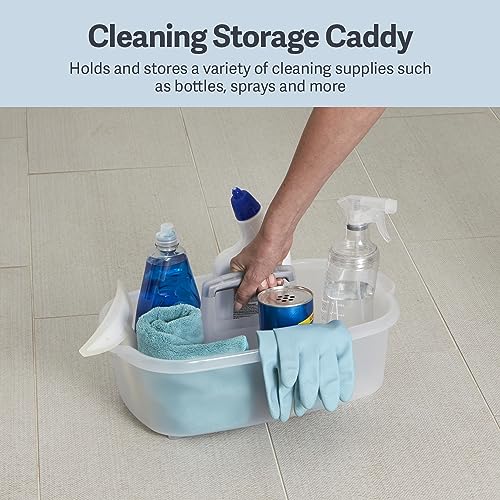
A Cleaning Caddy Keeps Small Mess Supplies From Scattering

Give Daily Clutter a Landing Place Before It Spreads
- Choose the first surface that collects everything
Look for the counter, table, chair, or floor spot where keys, mail, wallet, headphones, receipts, and chargers naturally collect. That is the place telling you it needs a decision, not more random storage.
- Separate daily carry from actual paperwork
Keys, wallet, earbuds, and chargers need quick access. Mail, lease papers, school forms, work papers, and bills need a slower decision space. Mixing both makes everything harder to find.
- Create one small landing zone near the route you use
The best landing zone is near the place where you actually enter, leave, or drop your bag. If it is too far from your natural path, you will stop using it after two days.
- Make the zone small on purpose
A landing zone should catch daily items, not become a second desk. If it can hold unlimited papers, it may turn into a pile instead of a system.
- Reset it before it becomes storage
Once or twice a week, remove old receipts, open mail, return chargers, and move documents to their real home. The goal is a temporary stop, not a permanent museum of things you meant to handle.
Daily clutter often spreads because the apartment never told it where to stop. A small landing zone can make leaving home and coming back feel less chaotic.
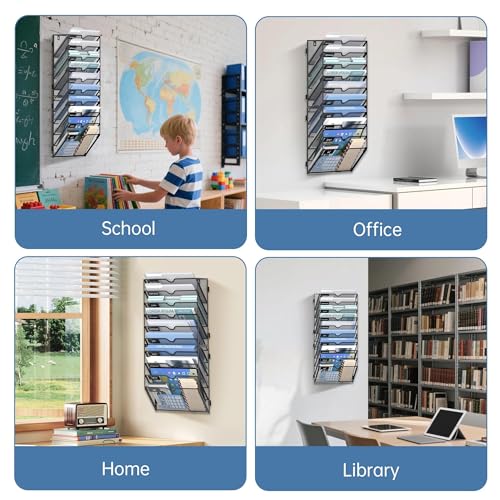
A Wall Mail Organizer Can Turn Loose Papers Into One Decision Spot

A first apartment will create small interruptions: a loose screw, a package that needs opening, a battery cover that will not move, a wobbly handle, or a basic fix you do not want to wait days to handle. You do not need a garage full of equipment. You need a small, findable baseline for ordinary household moments.
A Small Tool Kit Helps Minor Problems Stay Minor


What Not to Buy Just Because the Apartment Still Feels Empty
Some empty space is useful while you learn how the apartment works.
A corner that looks unfinished on day one may become a workout spot, plant spot, laundry fold zone, reading chair area, or simply breathing room. Wait until a real function appears before filling it.
Matching decor helps only after daily tasks have somewhere to go.
If dishes, mail, trash, shoes, and cleaning supplies are still drifting around, matching colors will not make the apartment easier to live in. Calm starts with function, then style can support it.
Storage helps only when it supports a decision you have already made.
Before buying more storage, ask what the item is, where you use it, how often you need it, and where it should return. Otherwise storage can hide clutter instead of reducing it.
Full-room solutions can create new problems when you do not yet know the apartment’s flow.
The first weeks show where food, trash, mail, tools, and cleaning supplies actually get stuck. Let those patterns guide the next purchase instead of trying to solve every room before you have lived in it. For a broader buying system, use this guide to save money on everyday essentials without overbuying.
Once the friction point is clear, Prime can be useful for practical gaps: a kitchen item you will use, a cleaning tool with a place to live, a trash solution that fits the room, or a small fix-it item you would otherwise put off. For the full membership context, read the Prime for Young Adults guide before treating Prime as part of your first-apartment setup.
Build a Home That Works Before It Looks Finished
- Solve repeated friction before filling empty space
- Make food, cleanup, trash, and papers easier first
- Use products only when they answer a real apartment problem
- Let style grow after the home baseline works
A calm first apartment is not the one that looks complete the fastest. It is the one where everyday life has fewer annoying stops: food can be made and cleaned up, trash has a route out, papers and keys have a landing place, cleaning supplies are easy to grab, and small problems do not derail the day.
Start by noticing what keeps going wrong. Then choose essentials that remove that friction. After the apartment’s real needs are clear, Prime can help with practical gaps, but the home should still be shaped by how you live. If that support feels useful, review the Prime for Young Adults offer before signing up.