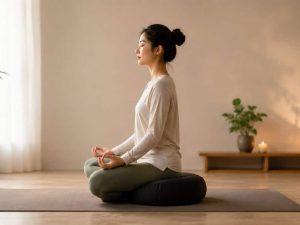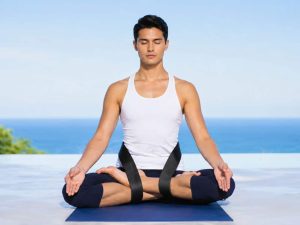
The right meditation cushion is not simply the softest one or the shape that looks most traditional. It is the support that helps your body settle with less effort.
A folded blanket, a firm household pillow, or a chair can work as practical meditation cushion alternatives while you learn what your body actually needs. The most useful meditation cushion benefits come from steady support, not from owning a special object.
- Whether height, firmness, shape, or floor pressure is causing the first discomfort
- Which cushion type changes the part of the sitting setup that needs help
- When another posture may work better than another cushion
- Where to continue once the required support is clear

Start With the First Problem You Notice
Your lower back gets tired first
More softness is rarely the whole answer. The hips usually need enough stable lift to keep the pelvis from sinking backward.
Your knees, ankles, or shins feel pressured
The seat may feel fine while the floor remains hard beneath the lower body. That calls for padding under the knees and ankles rather than another soft layer beneath the hips.
Your legs feel crowded
More height may help, but shape matters too. A crescent cushion opens the front of the seat and gives the thighs more space.
You keep shifting after a few minutes
The filling may be compressing unevenly, the seat may be too narrow, or the posture may ask more from the hips and knees than they can comfortably provide.
You feel perched or unstable
The aim is not to sit as high as possible. The aim is to find enough lift for the pelvis to feel supported without turning the cushion into a small balancing act.

Choose Height and Firmness Before Shape
Find enough lift for the hips
Many cross-legged positions feel steadier when the hips sit slightly higher than the knees. The correct amount of lift still depends on hip mobility, leg length, body proportions, and the position being used.
A folded towel or blanket can estimate a useful starting height before another cushion arrives and begins requesting cupboard space.
- A cushion is probably too low when the lower back rounds quickly, the knees remain much higher than the hips, or the hips feel compressed.
- A cushion may be too high when the body tips forward, the seat feels unstable, or the legs lose comfortable contact with the floor.
Judge firmness after the body settles
The practical difference between buckwheat and memory foam appears after several minutes: buckwheat shifts while retaining structure, whereas foam supports through compression.
Medium-firm support is often easier to evaluate because it keeps the pelvis more consistent. The surface can still have some give; it simply should not disappear beneath the body.
Change one variable at a time
A folded blanket beneath the cushion can test additional height. A mat under the knees can reveal whether floor pressure is the real problem. A wider leg position can show whether the current shape is too restrictive.
If the cushion tests well but noise, glare, clutter, or limited floor room still makes practice difficult, a calm meditation space can reduce the surrounding friction without turning the corner into a decorating project.
- Are buckwheat cushions worth it for long sessions? — See how the filling behaves after the first comfortable minutes have passed.
- Kapok cushions for lighter natural support — Compare a softer, lighter natural fill with the denser feel of buckwheat.
- Organic meditation cushions and materials — Look more closely at covers, fillings, washable parts, and organic material claims.
Understand What Each Cushion Type Changes
Round zafu: compact, centered support
A zafu meditation cushion creates a raised, compact seat beneath the hips.
- A round zafu may feel less suitable when the thighs need more room.
- The front edge may press into the legs.
- The hips may remain tight even with added height.
- Floor pressure may be the main distraction.
Crescent cushion: more room in front
A crescent meditation cushion curves around the body instead of creating a full round edge in front. The shape is useful when it solves a clear problem; it is not automatically more ergonomic for every body.
Zabuton: support where the body meets the floor
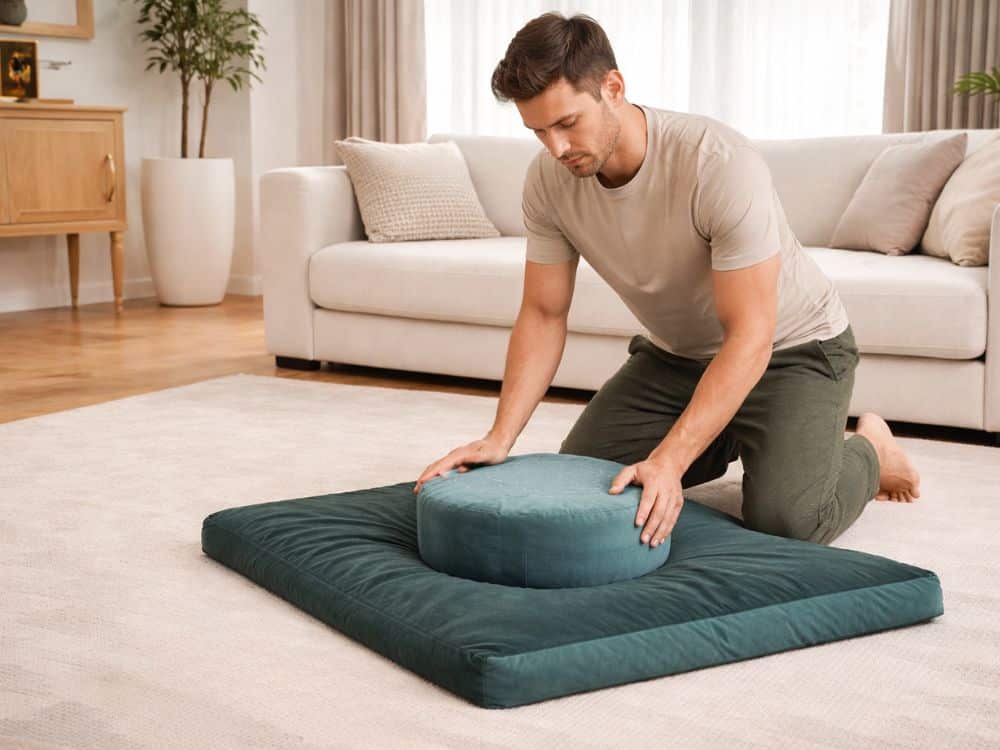
A zabuton is a larger, flatter mat placed beneath the sitting position.
The difference between zafu and zabuton is a difference in job: a zafu changes seat height, a zabuton reduces floor pressure, and using both combines hip lift with lower-body padding.
- Choose a round meditation pillow — Compare height, width, and filling details that make one zafu feel different from another.
- Set up a zafu and zabuton together — Arrange the seat and floor layer so each supports the part of the body it is meant to help.
- Choose a zabuton for a hard floor — Focus on thickness, usable area, and lower-body padding when the floor is the main source of discomfort.
Use Discomfort as Useful Feedback
The cushion still feels wrong
When a meditation cushion still feels wrong even though the height seems reasonable, the body may also need a different sitting position. A cushion cannot make every floor posture appropriate for every person.
Lower-back fatigue
Choosing a meditation cushion for back pain begins with checking whether a slightly higher or firmer seat improves pelvic stability without tipping the body forward.
Persistent or worsening pain should not be treated as a cushion-shopping problem. Changing position or seeking professional medical advice may be more appropriate.
Knee and ankle pressure
A meditation cushion for knee pain only makes sense after separating insufficient hip elevation from pressure where the knees or ankles meet the floor.
A zabuton can help with floor contact but cannot correct a seat that is too low. A taller seat may improve the hip angle but will not make a painful posture suitable.
Numb legs
Different sitting positions when the legs go numb can redistribute pressure more effectively than adding another layer of softness.
Stand, move, and allow normal sensation to return when numbness appears. Recurrent numbness, weakness, severe pain, or symptoms that continue after changing position deserve medical attention.
- Meditation bench or cushion for knee pain — Compare two different postures rather than two different kinds of padding.
- Do meditation knee straps help? — Understand what straps can support, what they cannot fix, and when they may add more pressure instead of less.
Match the Support to Your Body and Experience
Beginners
A meditation cushion for beginners can be simple and stable. A folded blanket may teach more than a full setup purchased before the body has offered useful feedback.
Shorter bodies
A meditation cushion for shorter people needs enough lift to support the pelvis without crowding the legs or tipping the body forward.
Larger or heavier bodies
A wider sitting surface, denser filling, and enough room for the chosen posture can provide stable meditation support for a heavier body after the cushion has settled under weight.
Tight hips and changing bodies
The setup can change from day to day. More floor padding, a shorter sit, or a chair may be useful when the body feels different. Good support meets the body where it is rather than forcing it to match an ideal pose.

Long Sitting and Vipassana Need Consistent Support
A household pillow can still be a useful test
The difference between a Vipassana cushion and a regular pillow becomes clearer after the filling compresses and repeated adjustments begin.
Numbness is not a test of commitment
Leg angle and pressure distribution determine whether the body can sit longer in Vipassana without numb legs.
Moving between sessions, adjusting posture, or using a chair can be more sensible than forcing stillness through pain or loss of sensation.
Compare retreat-specific cushions after the need is clear
Meditation cushions for Vipassana should be compared only after the support problem has been identified.
Cushion choice is only one part of retreat readiness. Preparing your mind and home for a 10-day Vipassana retreat also means working with expectations, silence, practical responsibilities, and the return home—not asking the cushion to carry the whole experience.
Test the Setup Before Replacing It
- Test heightFold one or more firm blankets beneath the hips and sit for several minutes. More height may help when the back rounds quickly; less height may help when the body tips forward.Look forStable lift that allows the legs to settleAvoidJudging height from the product measurement alone
- Test floor supportPlace a folded blanket or mat beneath the knees and ankles without changing the seat. A clear improvement points to floor pressure rather than seat height.Look forLess pressure where the lower body meets the floorAvoidAdding another soft layer under the hips
- Test leg positionTry an easier cross-legged position, Burmese sitting, kneeling, or a chair. The cushion should serve the posture that works.Look forA position the body can sustain without forceAvoidPreserving a posture that repeatedly creates pain
- Test durationSit long enough to notice whether the cushion compresses, the pelvis rolls backward, or one area begins carrying too much pressure.Look forSupport that remains steady after the first minutesAvoidJudging comfort from first contact
Once the support problem is clear, you can compare meditation cushions by sitting need without beginning again in a forest of shapes, fillings, and product claims.
FAQ
Should the hips be higher than the knees?
Many people find cross-legged sitting easier when the hips are slightly higher than the knees. The exact relationship depends on mobility, proportions, and sitting style. The seat should feel stable rather than perched.
Is a firm meditation cushion better than a soft one?
Firmness is useful when it holds the pelvis consistently. A cushion can have some give without collapsing. Very soft filling may feel pleasant at first but lose the height needed for longer sitting.
Do I need both a zafu and a zabuton?
Not always. A zafu raises the seat; a zabuton cushions the lower body against the floor. One may be enough when only one problem exists. Both become useful when the hips need lift and the knees or ankles also need padding.
Should meditation hurt before the body gets used to it?
Mild stiffness from an unfamiliar position is different from sharp pain, persistent numbness, weakness, or symptoms that continue after moving. Meditation does not require forcing the body through pain. Changing position or using a chair remains a valid choice.
Choose Support Before Softness
- Start with the first discomfort instead of the product shape
- Test height before buying by height
- Separate floor pressure from seat pressure
- Give the legs enough room and allow another posture to be the right answer
- Compare products only after the required support is clear
When another sitting question appears, you can explore the full collection on meditation cushions and sitting comfort without starting the search from scratch.