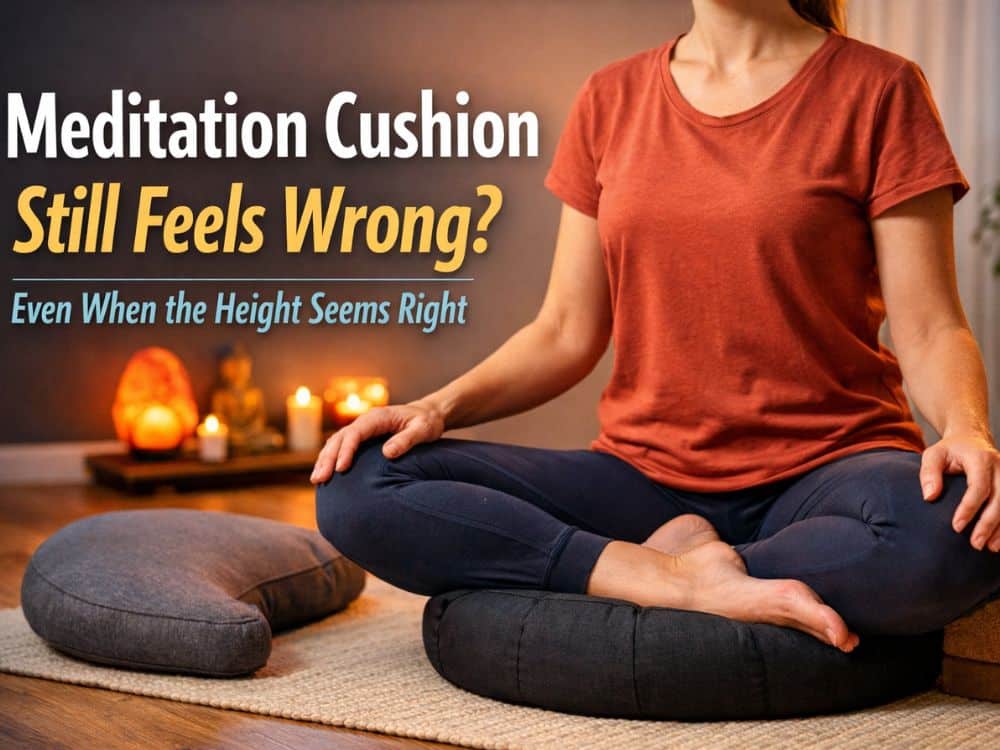
If your meditation cushion still feels wrong even when the height seems right, the problem may not be height anymore. It may be compression, cushion shape, floor support, posture effort, or the sitting position itself.
You may have already tried sitting a little higher, then a little lower, and still ended up tense, unstable, or oddly uncomfortable after a few minutes. At that point, use this meditation cushion height guide for beginners as the starting point, then move beyond height and look at what part of the setup is still working against your body.
- How to tell when height is not the real problem
- Why a cushion can feel good at first but worse later
- When shape, floor support, or posture style matters more
- What to change next without replacing everything at once
If the same discomfort keeps showing up after small height changes, stop treating cushion height as the only variable. The next clue is when the discomfort appears, where it builds, and whether the setup loses support over time.
When height is probably not the real problem
Use these clues to decide what to test next instead of replacing everything at once.
If your cushion still feels wrong because overall comfort is the real issue, compare broader options in this best meditation cushion for sitting comfort guide after you identify whether the problem is fill, shape, floor support, or posture style.
Why height tweaks do not always fix the problem
A setup can look reasonable and still fail once your body settles into it
Compression, shape mismatch, floor pressure, or hidden bracing can all make a technically acceptable setup feel wrong in practice.
Soft contact can feel good at first but still lose support during longer sits.
If the cushion sinks after your weight settles, your body may start bracing even though the first minute felt comfortable.
Constant correction can be a sign that the setup is not supporting your body well enough.
A workable meditation posture should not need constant rescue from the spine, shoulders, hips, or knees.
A better first step is to identify whether the problem is fill, shape, floor support, asymmetry, or the sitting tool itself.
Changing everything at once makes it harder to know what actually helped, and it can lead you into another cushion that still feels wrong.
If the cushion feels good at first but gets worse
- 01Notice the first-minute feeling
A soft cushion can feel pleasant when you first sit down. Do not judge the setup from that first contact alone.
- 02Wait five to ten minutes
Stay long enough for your weight to settle. If your hips slowly sink or your lower back starts working harder, the fill may not be holding shape. If your cushion keeps flattening under more body weight, compare the best meditation cushions for heavy people before replacing it with another soft seat.
- 03Watch your posture over time
If the sit starts stable but becomes fidgety, slumped, or braced, the cushion may be losing support under load.
- 04Change firmness before changing height again
If compression is the pattern, test firmer fill or a more structured cushion before assuming you need a taller or lower seat.
The real question is not whether the cushion feels soft. It is whether it keeps supporting you after your body fully settles into it.
If your cushion feels fine at first but loses support during longer sits, compare how fill behaves in this buckwheat meditation cushions for long sitting guide before blaming your posture.
If your hips feel trapped even though the height seems fine
-
Separate lift from space
Ask whether the cushion height feels roughly acceptable, but the hips or thighs still feel crowded. That points more toward shape than height.
-
Notice the front edge
If the front of the cushion keeps your thighs from settling naturally, a round seat may be creating resistance even if it gives enough lift.
-
Check whether your legs can relax
If your legs feel held in place instead of falling into a stable position, the seat may not be giving your body enough room. If the same leg pressure keeps returning, compare meditation sitting positions for numb legs before blaming the cushion shape alone.
-
Test a shape change before changing everything
If support feels okay but your hips stay tense, try a cushion shape with more thigh room before replacing the whole setup.
A cushion can be the right height and still be the wrong shape for your hips, thighs, or sitting pattern.
If you are not sure what shape you are sitting on, start with what is a zafu meditation cushion. If a round seat keeps your hips boxed in, compare it with what is a crescent meditation cushion before assuming height is still the issue.
If your posture still feels forced
- Notice how often you correct yourself
If you keep lifting the chest, resetting the pelvis, or softening the shoulders every few moments, the posture may not be supported enough.
- Check whether tension returns quickly
Relax the obvious tension once. If it comes back almost immediately, the setup may be asking your body to hold the posture instead of rest into it.
- Separate appearance from sustainability
A posture can look tidy from the outside and still feel unsustainable from the inside. The better test is whether it stays steady without constant rescue.
- Reduce effort before chasing perfect form
Try improving support under the hips, knees, or floor contact points before assuming you need stricter posture discipline. When the seat and floor both need attention, use a proper zafu and zabuton setup instead of changing height only.
The goal is not a prettier meditation posture. The goal is less internal resistance, less bracing, and less need to keep correcting the same thing. If the posture only feels steady when you hold your legs in place, check when a meditation knee strap may help before buying another cushion.
If forced posture turns into lower-back bracing or discomfort, this best meditation cushion for back pain guide can help you think about support without assuming height is the only fix.
If one side always feels worse
-
Name the side and the location
Notice whether the issue starts in one hip, one knee, one ankle, or one side of the lower back. Be specific before changing the setup.
-
Check whether the pattern repeats
Sit again later and see whether the same side complains first. A repeat pattern gives you more useful information than one uncomfortable session.
-
Add small support under one knee
Use a folded towel or small prop under the side that feels unsupported. If the discomfort changes, the setup may need better local support rather than a new cushion height.
-
Rotate the cushion or change orientation
If the same side still feels worse after rotating the cushion, the issue may be more about your body. If the discomfort shifts, the cushion or floor setup may be contributing.
-
Avoid changing everything at once
Test one small variable at a time so you can tell whether support, cushion shape, or your body pattern is driving the discomfort.
The goal is not to diagnose your body. It is to see whether the discomfort changes when the setup changes.
When cross-legged sitting is the real problem
-
Check whether every cushion creates the same strain
If different heights, fills, and shapes all lead back to the same forced feeling, the sitting posture may be the bigger issue.
-
Notice whether longer sits make it clearer
A short sit can hide strain. During longer sits, small hip, knee, or lower-back demands often become much harder to ignore. If the problem shows up mainly during longer stillness-based practice, compare the best meditation cushion for Vipassana after you identify whether the issue is firmness, floor support, or posture style.
-
Ask whether cross-legged sitting ever settles
If your body never drops into the posture without active management, the cushion may only be compensating for a position that does not fit you well right now.
-
Try a different sitting tool before buying another cushion
When support, shape, and floor contact have all been tested, a bench or chair-style option may be more useful than another zafu adjustment.
Changing posture style is not giving up. It is choosing a setup that asks less unnecessary effort from your body.
If cross-legged sitting keeps making every cushion feel wrong, this meditation bench vs cushion guide can help you decide when kneeling support makes more sense than more cushion tweaks.
What to change next, in the right order
-
Change firmness before changing height again
If the cushion feels good at first but sinks later, test firmer fill or a more structured seat before assuming you need a taller or lower cushion.
-
Change shape before blaming your body
If the cushion holds support but your hips or thighs feel boxed in, test whether a different shape gives your legs more room to settle.
-
Add floor support before judging the whole setup
If your knees, ankles, or feet become the limiting factor, the seat may not be the problem. A padded base can change how stable the whole sit feels. If you are not sure whether you need seat lift, floor padding, or both, compare zafu vs zabuton before replacing the cushion again.
-
Shorten the sit before forcing longer sessions
If longer sits reveal tension quickly, do not use duration as proof that you need more discipline. Use it as information about what the setup cannot yet support.
-
Change the sitting tool if floor sitting keeps failing
If you have tested firmness, shape, and floor contact and the posture still feels forced, a bench or chair-style setup may be more useful than another cushion tweak.
Change one variable at a time. If you replace the cushion, change posture, and add floor padding all at once, you will not know what actually helped.
If you are still unsure which support path fits your body, step back to this how to choose a meditation cushion guide before buying another cushion or changing your posture style.
FAQ
Why can the most comfortable meditation cushion still feel wrong after a few minutes?
A cushion can feel comfortable at first because it is soft on contact, but that does not mean it will support you once your full weight settles. If it compresses too much, your hips may sink and your posture may start working harder. Judge the setup after several minutes, not only from the first sit.
Can a beginner choose the wrong meditation cushion even if the height seems okay?
Yes. Cushion height is only one part of the setup. A beginner can still struggle if the shape feels restrictive, the fill collapses, the knees lack floor support, or cross-legged sitting asks too much from the body.
Why does my cushion feel fine for sitting comfortably at first, but not during longer sessions?
Longer sessions reveal problems that short tests can hide. Compression, hidden bracing, knee pressure, and shape mismatch often become more obvious once the body stays still. That is why a cushion can feel acceptable for a few minutes and still fail later.
When do longer meditation sits reveal a setup problem more clearly?
They usually reveal it when your body stops making small unconscious adjustments. If the sit becomes forced, unstable, or tiring after the first few minutes, the problem may be support over time rather than the starting height.
How do I know whether I need a different cushion or a different sitting tool?
Start by testing firmness, shape, floor support, and one-sided loading. If those changes do not reduce the same forced feeling, the issue may be cross-legged floor sitting itself. At that point, a bench or chair-style setup may make more sense than another cushion tweak.
Can a cushion for Vipassana still feel wrong even if it looks supportive?
Yes. Vipassana and other longer stillness-based practices can expose problems that shorter sits hide. A setup may look stable but still create too much tension once you remain still.
Stop tweaking height and test the real pattern
- Test compression before changing height again.
- Test shape if your hips feel boxed in.
- Add floor support if knees or ankles become the limit.
- Notice whether posture needs constant rescue.
- Try a different sitting tool if cross-legged floor sitting keeps failing.
If your meditation cushion still feels wrong even when the height seems right, the next step is not guessing harder. Watch what changes over time, where discomfort builds, and whether the setup supports your body without constant correction. When the issue feels more like impatience or dullness than clear pain, this guide explains why meditation feels boring and how to tell boredom from body discomfort. The more specific the pattern is, the easier it becomes to change the right thing instead of replacing everything at once.