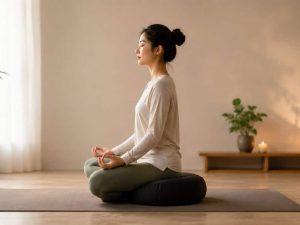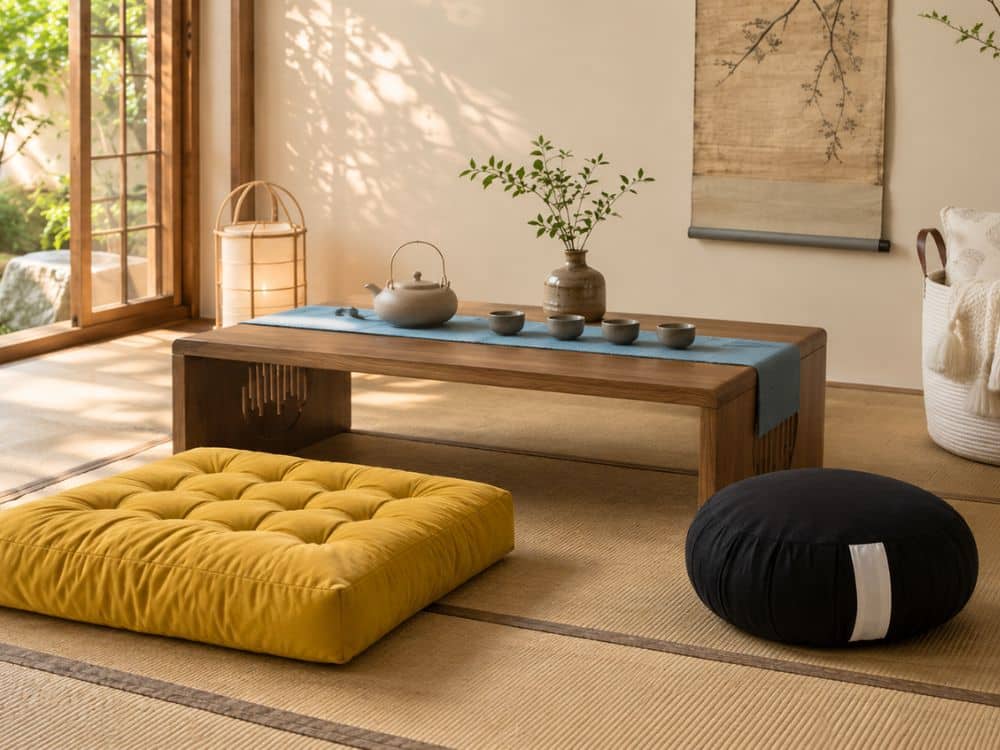
Japanese floor pillows work best when they are part of a simple floor-seating setup, not just a cushion placed on the floor. Start with the moment you want to create – tea, reading, meditation, journaling, or casual guest seating – then build the space in layers.
This guide shows you how to use Japanese floor pillows with a tatami-style mat, low table, zafu cushion, floor mattress, and easy storage so the corner feels calm, useful, and easy to reset. Instead of buying separate pieces and hoping they work together, you’ll learn how each layer supports a specific use: sitting, relaxing, meditating, hosting, or returning the room to order at the end of the day.
- Choose the right use case before buying cushions or tables
- Build from the ground layer to the main seat and activity piece
- Use Japanese floor pillows for tea corners, reading nooks, meditation spaces, or small apartments
- Keep the setup calm with fewer pieces, washable materials, and easy storage
Before You Build a Floor-Seating Corner
- Start with the moment Choose the use case first: tea, reading, meditation, journaling, small-apartment seating, or casual guests.
- Build in layers A calm setup usually starts with the floor, then adds a mat, main cushion, activity piece, and storage plan.
- Use products by role A floor pillow, tatami-style mat, low table, zafu, floor mattress, and basket each solve a different setup problem.
- Keep meditation separate If your main goal is meditation comfort, posture, or long sitting, the cushion setup matters more than styling.
- Make it easy to reset The best floor-seating corner is simple enough to clean, stack, fold, or return to order after daily use.
Setup Basics: Floor Seating Pieces to Know
Japanese floor pillow
A broad term for low cushions used for floor seating, tea corners, reading nooks, casual guests, or quiet everyday sitting.
Zabuton
A traditional Japanese sitting cushion used as a floor-contact layer, especially for knees, ankles, and grounded sitting. For the dedicated guide, see our zabuton floor cushion explainer.
Zafu
A round meditation cushion that raises the hips and helps create a more upright sitting position during practice. If you are not sure whether your setup needs a raised zafu, a flat zabuton, or both, compare the difference in this zafu vs zabuton guide before choosing the main seat.
Tatami-style mat
A ground layer that defines the seating area, adds texture, and keeps cushions from feeling randomly placed on the floor.
Low table
A floor-height table that gives the corner a clear purpose for tea, journaling, reading, or relaxed meals.
Storage piece
A basket, shelf, or folded storage spot that helps the setup return to order after daily use.
This article focuses on building a calm Japanese-inspired floor seating corner. If your main goal is long sitting, posture support, or meditation comfort, start with this guide on how to choose the right meditation cushion before deciding which floor pillow, zafu, or base layer belongs in the setup.
Start With the Purpose of the Corner
-
For tea or journaling
Use two cushions facing a low table. Keep the table small enough that you can reach tea, a notebook, or a tray without leaning forward.
-
For reading
Choose a softer, wider floor cushion or floor mattress near a wall, window, or bookshelf. Add one throw only; too many layers can make the corner feel messy.
-
For meditation
Use a firmer base layer and add a zafu only if you need hip lift. The setup should help you sit upright, not sink backward. If the goal is a softer rest-and-reflection space rather than a formal practice area, use this guide to create a quiet sitting corner for rest and reflection.
-
For small apartments
Choose stackable cushions, foldable tables, and pieces that can return to a basket or closet after use.
-
For guests
Use matching or coordinated cushions around one low table. Leave enough space between seats so the arrangement feels relaxed, not cramped.
Start with the use case first; the right products become much easier to choose once the purpose of the corner is clear.
Build the Foundation From the Floor Up
A Simple 5-Layer Floor Seating Setup
-
Clear the floor first
Leave more empty space than you think you need. Japanese floor seating works because the area feels calm and usable, not crowded with cushions.
-
Add a ground layer
A tatami-style mat, woven rug, or simple floor mat defines the corner and keeps the setup from feeling like loose pillows placed randomly on the floor.
-
Place the main seat
Use a square floor cushion for upright sitting, or choose a thicker floor mattress when the space is mainly for lounging, reading, or guest use.
-
Add one activity anchor
Choose one main purpose piece: a low table for tea, a zafu for meditation, or a small tray for reading and journaling.
-
Plan the daily reset
Decide where the cushions, covers, and throws go after use. If the setup cannot be reset easily, it will start to look like clutter instead of a calm corner.
Think of each piece as a layer with a job. The fewer pieces you need to use the corner comfortably, the calmer the space will feel.
Start With a Tatami-Style Base

Use this as the foundation beneath a floor pillow, low table, or meditation corner when you want the space to feel defined instead of temporary. Measure your room first; a ground layer should frame the corner without overwhelming it.
Choose the Main Floor Pillow

Use this as the main seat in a floor-seating corner. It works best around a low table, beside a bookshelf, or anywhere you want a soft floor-level cushion without turning the space into a full meditation setup.
Add the Activity Layer
Match the Add-On to How You Use the Space
-
Use a low table for tea, writing, or slow meals
A low table makes the corner feel intentional. For slow meals or tea at a low table, it also helps to choose Japanese dining pillows that match the table height, cushion firmness, and room style. Keep it proportionate: too large and the room feels crowded; too small and it becomes decorative instead of useful.
-
Choose a floor mattress for reading or lounging
Use a floor mattress when the corner is meant for relaxed time rather than upright sitting. It works best near a wall, window, or bookshelf where the body has a natural boundary.
-
Add a zafu for meditation support
Use a zafu when you need hip lift for a more upright seat. If you are unsure how high the cushion should be, use this meditation cushion height guide for beginners before building the setup.
-
Use a tray instead of a table in tiny spaces
A tray can hold tea, a book, or a journal without taking over the room. It is easier to move and reset than a permanent floor table.
-
Keep one focal object only
A tea set, candle, plant, or book is enough. Too many objects make the setup look styled rather than restful.
The activity layer should make the corner easier to use, not just more decorative.
Add a Low Table for Tea or Journaling

Use a low folding table when the corner is for tea, journaling, reading, or relaxed floor-level meals. Pair it with one or two floor cushions and leave enough open space so the setup still feels calm, not crowded.
Use a Floor Mattress for Lounging or Reading

Use this as the main seat in a floor-seating corner. It works best around a low table, beside a bookshelf, or anywhere you want a soft floor-level cushion without turning the space into a full meditation setup.
Add a Zafu Only When the Corner Is for Meditation
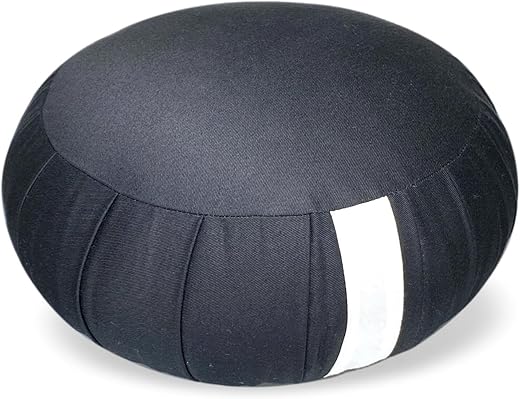
Add a zafu when your floor-seating corner will also be used for meditation. It helps create hip lift for a more upright seat, while the floor pillow or tatami layer stays underneath as the softer base of the setup.
How to Choose Pieces That Actually Fit Your Room
- Room sizeChoose smaller, foldable pieces if the floor-seating area shares space with daily living. A calm corner should leave visible floor around it.Look forStackable cushions, folding tables, and pieces that do not block walkwaysAvoidLarge mats or floor mattresses that take over the room
- Seat heightLow cushions feel grounded for tea and casual sitting, while a zafu or thicker cushion may work better for meditation or longer sitting.Look forA height that supports your real sitting style without forcing your knees or hipsAvoidChoosing by appearance before checking how you actually sit
- FirmnessSoft pieces suit lounging and reading. Firmer pieces are better when you want upright sitting or a more stable meditation corner.Look forEnough support to sit without sinking too deeplyAvoidOverly plush cushions for upright floor seating
- Material and careFloor seating touches the room more than a regular chair, so washable covers and breathable materials matter for everyday use.Look forRemovable covers, cotton or linen blends, and care instructions you can followAvoidDelicate fabrics that are difficult to clean after daily floor contact
- StorageIf a piece cannot be stacked, folded, or stored easily, it should earn its place visually and functionally.Look forBaskets, foldable tables, and cushions that reset quickly after useAvoidExtra pieces that stay on the floor but are rarely used
Keep the Space Calm, Not Cluttered
- Start with three pieces Use one ground layer, one main cushion, and one activity piece before adding anything decorative. For a broader room-level approach, see how to create cozy corners at home without overfilling the space.
- Keep the palette quiet Choose two or three soft tones, such as cream, sand, charcoal, sage, or warm wood.
- Leave visible floor Open space around the setup makes the corner feel intentional instead of crowded.
- Repeat natural textures Cotton, wood, rush grass, linen, or woven rope can work well when used with restraint.
- Avoid too many cushion shapes Mixing square pillows, round cushions, bolsters, and mattresses in one small area can make the setup feel busy.
- Plan the reset Keep storage close enough that the corner can return to order after tea, reading, meditation, or guests.
Keep the Setup Easy to Reset

Use a large basket when your floor-seating area needs to disappear at the end of the day. It keeps floor pillows, throws, covers, and small blankets close by without making the room feel cluttered.
-
Shake and rotate cushions after use
A quick shake helps the filling settle more evenly, while rotating cushions keeps one side from wearing down faster than the rest.
-
Fold or stack movable pieces
Return floor pillows, throws, trays, and foldable tables to their place after tea, reading, meditation, or guest seating.
-
Air out floor layers regularly
Mats, cushions, and floor mattresses need airflow, especially in humid rooms or spaces used directly on the floor.
-
Wash removable covers when needed
Use gentle care and follow the product label. Floor seating touches the room more than a regular chair, so washable covers make daily use easier.
-
Keep only the pieces you actually use
A calm Japanese-inspired setup depends on restraint. If a piece stays on the floor but rarely supports the routine, store it or remove it.
The easier the setup is to reset, the more likely you are to use it every day.
If your main goal is posture, knee support, back support, or long sitting, a Japanese floor seating setup is only part of the decision. For product comparisons, see our guide to the best meditation cushions for posture and comfort before choosing a zafu, floor pillow, or full sitting setup.
FAQ
What do I need for Japanese floor seating?
Start with one clear purpose, then add only the pieces that support it. A simple setup can include a floor pillow, a tatami-style mat or woven rug, and one activity piece such as a low table, tray, zafu, or reading cushion. Storage matters too, especially if the corner shares space with daily living.
Are Japanese floor pillows the same as zabuton?
Not always. “Japanese floor pillow” is a broad term people use for low cushions and floor seating, while a zabuton is a more specific traditional Japanese sitting cushion. In this article, the focus is the full floor-seating setup, not a deep guide to zabuton alone.
Can I use Japanese floor pillows for meditation?
Yes, but they usually work best as the base layer rather than the posture-support piece. For longer meditation, many people add a zafu on top or adjust cushion height so the hips can sit more comfortably. If the pillow is too soft, it may feel pleasant at first but less stable over time.
How do I keep floor pillows from making the room look cluttered?
Give every piece a job and a place to return to after use. Stick to two or three quiet colors, avoid mixing too many cushion shapes, and keep storage close enough that resetting the corner takes less than a minute.
A Calmer Way to Sit at Home
- Choose the use case before choosing the products
- Build from the floor layer to the main cushion and activity piece
- Use storage as part of the setup, not an afterthought
- Keep the space calm by removing pieces that do not serve the routine
Japanese floor pillows work best when they help create a small ritual space you can actually use: a tea corner, reading nook, meditation spot, or flexible floor-seating area for guests. Start with one purpose, add only the layers that support it, and keep the setup simple enough to reset every day.