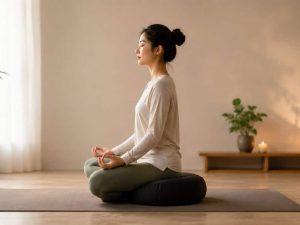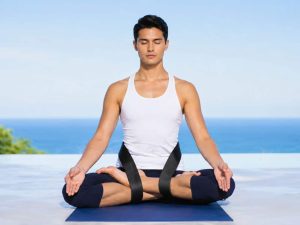
A crescent meditation cushion is not automatically better than a round zafu. It is a different shape that can feel more open around the legs, especially if a standard cushion makes your hips or thighs feel cramped.
This guide explains what a crescent meditation cushion is, who it tends to help, and when another option may make more sense. If you are still learning the basic cushion category, start with what is a zafu meditation cushion, then use this article to decide whether the crescent shape fits your sitting comfort needs.
- What makes a crescent cushion different from a round zafu
- Who may benefit from the open-front shape
- When a crescent cushion is not the right choice
- How to sit on one and what to check before buying
A crescent meditation cushion is a zafu-style cushion with a curved front opening. That open-front shape gives the legs a little more room than a fully round zafu, which can make cross-legged sitting feel less cramped for some people.
Terms to know before comparing cushion shapes
- Crescent meditation cushion
A zafu-style cushion with a curved front opening. The shape leaves more room near the legs than a fully round cushion.
- Round zafu
A traditional round meditation cushion that lifts the hips with an even, symmetrical seat shape.
- Front opening
The curved cutout at the front of a crescent cushion. This is the part that can make cross-legged sitting feel less crowded for some sitters.
- Seat footprint
How much space the cushion takes up under and around your body. A cushion can be the right height but still feel too bulky or restrictive.
- Zabuton
A flat meditation mat placed under the cushion to support the knees, ankles, feet, and lower legs on the floor. If you are not sure whether the problem is seat shape or floor pressure, compare zafu vs zabuton before choosing another cushion shape.
What a crescent cushion does not automatically fix
A crescent cushion is different, not automatically better.
Its open-front shape can feel less cramped for some sitters, but a round zafu may feel more stable and symmetrical for others.
Beginners should choose the shape that matches their hips, knees, and sitting style.
A crescent cushion may help if a round seat feels bulky, but it can still feel wrong if height, fill, or floor support is the real issue.
High knees can come from cushion height, hip mobility, or floor support, not just cushion shape.
A crescent front may give the legs more room, but it does not replace getting the seat height and lower-body support right.
Knee pain often needs floor support or a different sitting setup, not only a different cushion outline.
The cushion under your hips can change the sitting angle, but pressure under the knees, ankles, or feet may still need a zabuton, bench, or other support.
Crescent vs round meditation cushion
Neither shape is automatically better. The better choice is the one that makes your sitting position feel less forced.

If you are still comparing the classic option, this round meditation pillow guide explains when a fully even shape may feel better than a crescent front.
Who a crescent meditation cushion helps most
- A round zafu feels bulky If the front of a round cushion feels crowded where your legs want to fold, the crescent opening may feel easier to settle around.
- Your hips feel tight early If your hips feel restricted within the first few minutes, a less bulky front shape may reduce that boxed-in feeling.
- Your knees stay relatively high If the seat area feels crowded and your knees remain high, crescent shape may help with leg room, though height may still need checking.
- You want more room in front Some sitters simply prefer a cushion that feels more open around the thighs instead of evenly full on all sides.
- Cross-legged sitting feels cramped A crescent cushion may make cross-legged sitting feel more workable when the main issue is space around the legs, not knee pain or floor pressure.
The best clue is not the shape alone. It is whether the shape reduces the specific discomfort you feel on a round cushion.
If your knees stay high or the seat angle still feels wrong, check this meditation cushion height guide for beginners before assuming crescent shape alone will fix the setup.
When a crescent cushion is not the right choice
- Round zafu feels too bulky
- You want more front leg room
- Cross-legged sitting feels crowded
- The open shape matches your posture
- You prefer a fully even seat
- Height is the main issue
- Knee pressure is the real limit
- Floor sitting itself feels forced
If knee pressure is the main reason sitting feels difficult, start with this meditation cushion for knee pain guide. If cross-legged sitting itself keeps feeling forced, compare meditation bench vs cushion before choosing another cushion shape.
How to sit on a crescent meditation cushion
-
Face the curved opening forward
The open crescent cutout usually faces the front. That is the part meant to give your legs and thighs more room than a fully round zafu. Its smaller, directional footprint can also work well in small cozy corner ideas when you want a compact floor-sitting setup at home.
-
Sit on the fuller back portion
Let the fuller part of the cushion support your pelvis from behind. If you sit too far forward, the shape may feel unstable instead of supportive.
-
Check whether your hips feel gently lifted
Your hips should feel elevated enough to make the position easier, but not so high that you feel perched or tipped forward.
-
Notice where your knees land
Your knees should feel supported by the floor, a mat, or your overall setup. Do not force them down just because the cushion shape looks right.
-
Watch for adjustment signs
If you roll backward, brace your lower back, lose leg comfort quickly, or feel the cushion bulky in the wrong place, adjust angle, height, or leg position before blaming the shape.
A crescent cushion should make the front of the seat feel more open. If it only creates a different kind of tension, the setup still needs adjusting.
What to check before buying a crescent meditation cushion
- HeightA crescent shape can feel promising, but the cushion still needs to lift your hips to a workable angle. If it is too low, your pelvis may roll backward. If it is too high, the seat may feel perched or unstable.Look forA height that lets the hips feel lifted without forcing the knees or lower backAvoidChoosing by shape while ignoring seat height
- Fill materialFill changes how the cushion feels after your weight settles. Buckwheat usually feels firmer and more adjustable, while kapok tends to feel lighter and softer.Look forFill that keeps support after several minutes of sittingAvoidChoosing only by first-minute softness
- FirmnessThe right cushion should feel supportive, not simply plush. A cushion that compresses too much may feel comfortable at first but less stable as the sit continues.Look forStable support that does not collapse quicklyAvoidA cushion that flattens or shifts too much under load
- Cover and careA removable cover is useful if you sit often, especially if the cushion will stay in a visible room or be shared. Check whether the cover is washable and whether the inner fill can be accessed.Look forRemovable cover and practical care instructionsAvoidA cover that is difficult to clean for your routine
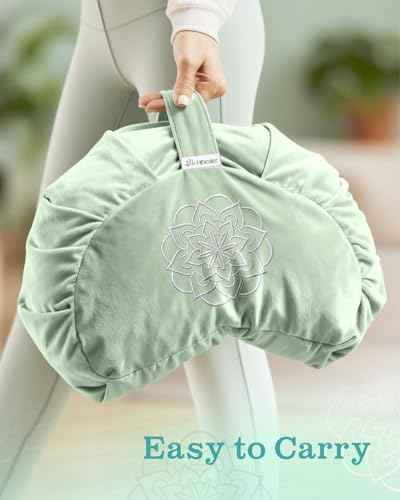
- PortabilityCrescent cushions vary in weight and size. If you plan to move it between rooms, classes, or storage, a handle and manageable weight matter more than they seem at first.Look forCarry handle and a size you can store easilyAvoidA heavy cushion if you need to move it often
If fill is the part you are unsure about, compare how buckwheat meditation cushions for long sitting behave before choosing. If you want to compare crescent, round, and other comfort-first options together, use this best meditation cushion for sitting comfort guide instead of buying by shape alone.
FAQ
Is a crescent meditation cushion better than a round zafu?
Not automatically. A crescent meditation cushion can feel better if a round zafu makes your legs or hips feel cramped, but a round zafu may feel more balanced if you prefer a symmetrical seat. The better choice depends on how the shape fits your body.
Can beginners use a crescent meditation cushion?
Yes. Beginners can use a crescent cushion, especially if a round cushion feels bulky at the front. But beginners should still check height, firmness, and knee support because shape alone does not guarantee sitting comfort.
Is a crescent meditation cushion good for tight hips?
It can be helpful for some people with tight hips because the open-front shape may feel less restrictive around the thighs. It will not solve every hip issue, but it can be worth testing if a round cushion makes your hips feel boxed in.
Do you need a zabuton with a crescent cushion?
Not always, but a zabuton can help if your knees, ankles, or feet feel pressure from the floor. The crescent cushion supports the hips, while the zabuton supports the lower contact points that the cushion does not cover.
Should I choose a crescent cushion if I have knee pain?
Not as the first fix. A crescent shape may change leg room, but knee pain often depends more on floor support, sitting angle, and whether cross-legged sitting is appropriate for your body. A zabuton, bench, or different setup may be more useful.
Choose crescent for shape, not hype
- Choose crescent if you need more room at the front of the seat.
- Choose round if you prefer a balanced, symmetrical cushion feel.
- Check height if your knees stay high or your pelvis feels unstable.
- Add floor support if knees, ankles, or feet are the limiting factor.
- Consider a bench if cross-legged sitting still feels forced.
A crescent meditation cushion is worth considering when a round zafu feels too bulky, cramped, or closed off around your legs. It is not automatically better, and it will not fix every setup problem by itself. The right choice depends on whether your issue is seat shape, cushion height, floor support, fill feel, or the sitting position itself. If you are still unsure which support path fits your body, use this how to choose a meditation cushion guide before choosing by shape alone.