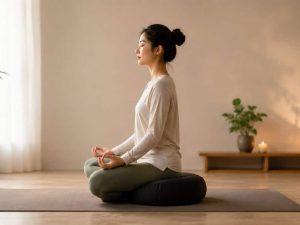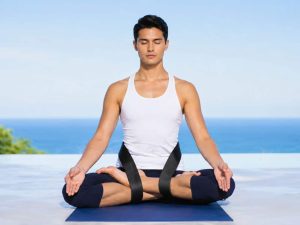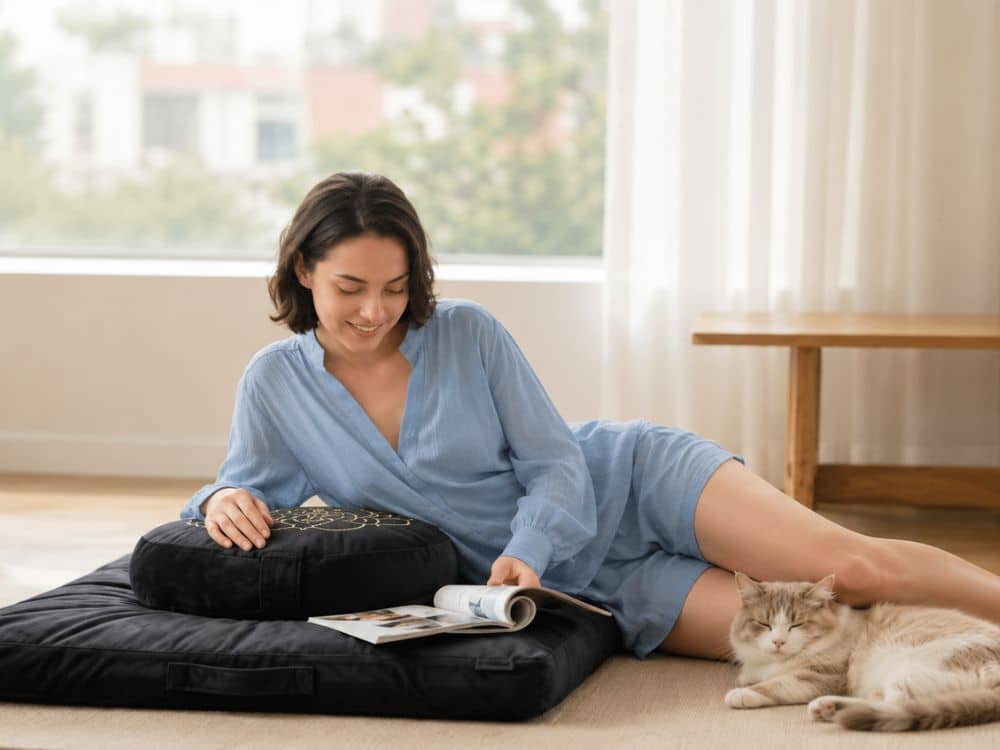
A good zafu and zabuton setup should make sitting feel steadier, not more complicated. The zafu lifts the hips; the zabuton cushions the knees, ankles, shins, and feet.
This guide shows how to set up a zafu and zabuton for sitting comfort, how to adjust buckwheat filling, and when a crescent zafu, blanket, bench, or different position makes more sense than buying another cushion.
- How to place the zabuton and zafu correctly
- How to adjust zafu height without forcing the knees down
- How the setup changes for cross-legged sitting, tight hips, and seiza
- What to try when the cushion still feels wrong
Before you sit
- Lift first The zafu should raise the hips enough for the pelvis to tilt forward without strain.
- Pad the floor The zabuton protects pressure points that a higher seat cannot fix.
- Adjust, then test Small changes in fill level, seat edge, and leg angle matter more than a perfect-looking setup.
If you are still choosing the base pieces, start with zafu vs zabuton support before comparing brands or looking for the best meditation cushion for sitting comfort.
A meditation cushion setup should reduce pressure, not push your body into a shape it cannot hold. If numbness, sharp pain, or weakness persists after you move, stop the session and seek medical advice.
What a zafu and zabuton setup should do
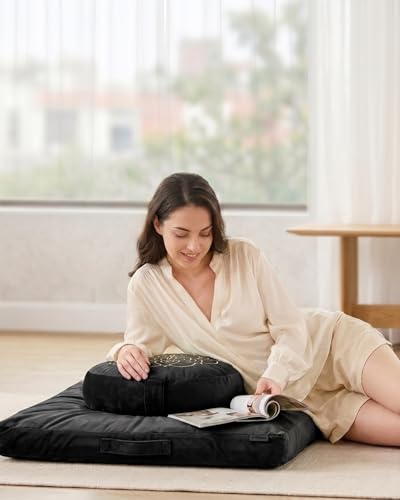
How to set up a zafu and zabuton step by step
- Lay the zabuton flat on a firm surface
Place the zabuton on the floor where it can lie flat without bunching. A firm, quiet spot matters too; a simple quiet sitting corner for rest and reflection often works better than moving the cushion around every day.
- Place the zafu near the back third of the zabuton
Center the zafu on the mat, but do not push it so far forward that your knees and ankles lose padding. The zafu supports the seat; the zabuton supports the lower body.
- Sit toward the front edge of the zafu
Do not sink into the middle of the cushion. Sitting closer to the front edge helps the pelvis tilt forward. If the height still feels off, use a meditation cushion height guide for beginners before adding more padding.
- Let the knees and lower legs rest, not hang
Your knees do not have to touch the floor, but they should not be suspended in a way that makes the hip flexors grip. Adjust the cushion height or leg angle until the legs feel less busy.
- Start with a short test sit
Begin with 5–10 minutes. Notice where pressure appears first: under the thighs, at the knees, around the ankles, or in the lower back. That tells you what to adjust next.
A zafu and zabuton setup is not one fixed pose. It is a small system: seat height, floor padding, and leg angle working together.

How to adjust zafu height and filling

Cross-legged, tight hips, and seiza: how the setup changes
A round zafu works for many people, but tight hips can make the front edge feel crowded. A crescent zafu may create more room for the thighs and heels.
If cross-legged sitting keeps creating thigh pressure or numb legs, compare the best sitting positions for meditation when your legs go numb before assuming the cushion is defective.
Supported seiza usually needs a cushion, bench, or folded support so the ankles and shins are not crushed underneath the body.
This is where the meditation bench vs cushion decision becomes practical: the goal is changing pressure, not proving you can tolerate kneeling pain.
The zabuton matters most when the knees, ankles, shins, or tops of the feet complain before the hips do.
Seat height and floor padding solve different problems. A zafu changes the pelvis; a zabuton changes the floor contact.

Common zafu and zabuton setup problems
- Your knees float highThis often means the hips are too low or the leg angle is too ambitious for today. Raise the seat slightly or choose an easier cross-legged shape.Look forKnees can soften downward without pressureAvoidPressing the knees with your hands
- Your ankles or shins hurt firstThe seat may be fine, but the floor support is too thin. Add a folded blanket or adjust where the lower legs land on the zabuton.Look forPadding under the exact pressure pointAvoidAdding zafu height when the floor is the problem
- Your lower back gets tired quicklyThe front edge of the zafu may not be supporting the pelvis well. Try sitting slightly more forward and shorten the session while you test.Look forSpine lengthens without bracingAvoidCollapsing into a wall for the whole sit
- The setup feels good for five minutes, then numbness appearsThe issue may be compression under the thighs or a leg angle that is too closed. Change position before buying more meditation equipment.Look forPressure appears later and is easy to relieveAvoidStaying still through numbness to prove discipline

When a zafu and zabuton are not enough
A zafu and zabuton setup is helpful, but it is not the only honest option. If you are still asking do you need a meditation cushion after several careful adjustments, the next step may be a different sitting style.
- Change the leg position
Try Burmese sitting, supported cross-legged sitting, seiza, or chair meditation instead of repeating the same painful shape. One of the common meditation mistakes beginners make is treating discomfort as something to endure instead of adjusting support wisely.
- Use kneeling support when cross-legged sitting fails
A kneeling meditation cushion or bench can change pressure away from the crossed thighs, but it must not create sharp knee or ankle discomfort.
- Move to a chair when the floor keeps winning
Chair meditation is not a failure. It is a stable setup when floor sitting keeps turning into posture management. If the setup still feels off, pause before buying another cushion and try one of these calming rituals that do not require buying anything.
- Revisit the cushion only after the position test
If several positions feel close but not right, then cushion height, shape, or fill level may be worth changing.
This is why a best meditation cushion for Vipassana or a best meditation seat list should still start with the body position, not the product name.

FAQ
How do you sit on a zafu and zabuton?
Lay the zabuton flat on the floor, place the zafu on top, then sit near the front edge of the zafu. The zafu should lift the hips while the zabuton cushions the knees, ankles, shins, and feet. Adjust the leg angle until the lower body can settle without gripping.
Should your knees touch the zabuton?
They do not have to touch perfectly. What matters is whether the knees and lower legs feel supported rather than suspended. If the knees float high or strain appears quickly, raise the seat slightly or choose a simpler sitting position.
Is a zafu and zabuton setup good for Vipassana meditation?
It can be, especially if long sitting makes floor pressure noticeable. But the best meditation cushion for Vipassana is not automatically the tallest or firmest one. The setup should support alert sitting without forcing the knees, ankles, or hips.
Is setup different for short people?
Yes, it can be. Meditation equipment for short people may need less seat height and more careful foot, ankle, or knee support. A cushion that works for a taller sitter may feel too high or unstable for a shorter sitter.
Should I choose a round zafu or crescent zafu?
A round zafu is a common starting point because it gives a stable lift. A crescent zafu can feel better if tight hips or crowded thighs make cross-legged sitting uncomfortable. The better choice is the one that lets the pelvis tilt forward without compressing the legs.
Set up for pressure, not perfection
- Use the zafu for hip lift
- Use the zabuton for floor pressure
- Adjust fill and position before replacing gear
- Switch posture when the body keeps resisting
A useful zafu and zabuton setup raises the hips, softens the floor, and gives the legs enough space to settle. If the cushion still feels wrong after careful setup, use meditation cushion troubleshooting before buying another product.