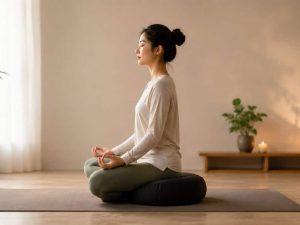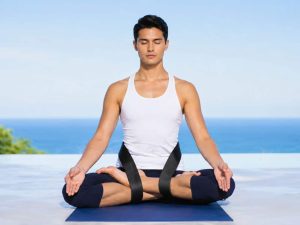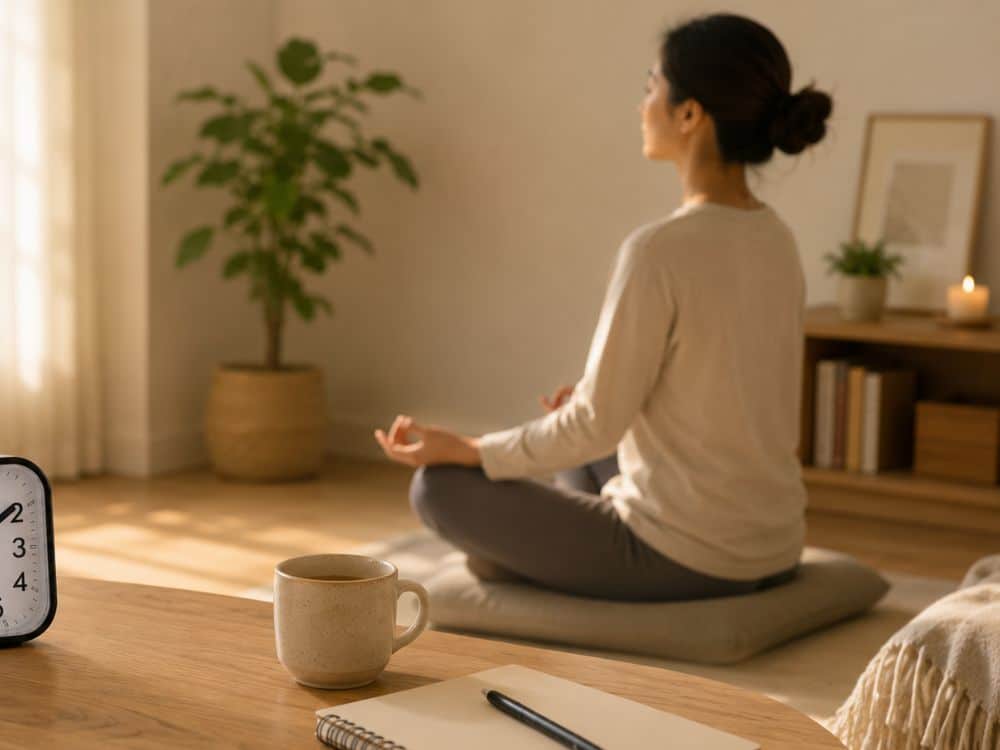
A sustainable meditation habit is not built by forcing yourself into long, perfect sessions. It is built by making the next sit easy enough to repeat, even on an ordinary or difficult day.
Most beginners do not quit meditation because they lack discipline. They quit because the plan is too ideal: too long, too uncomfortable, too hidden from daily life, or too hard to restart after missing a day. Think of this as one small part of building simple daily rituals: the practice should be visible, repeatable, and gentle enough to return to.
What Makes Meditation Sustainable
Use this as the rule of thumb: make meditation easy to begin, comfortable to repeat, and forgiving enough to restart.
Build the Habit Around a Cue You Already Have
-
After brushing your teeth
This works well for morning practice because the cue is already automatic. Keep the session short enough that it does not compete with the rest of your morning.
-
After making coffee or tea
Use the waiting time, the first sip, or the cup itself as the reminder. The point is not to create a complicated new ritual, but to attach meditation to one that already exists.
-
Before opening your laptop
If your day becomes busy quickly, sit before work starts. Even two quiet minutes before checking messages can make the habit easier to protect.
-
After closing your laptop
This is useful if meditation feels better as a transition out of work. Let the closing of the laptop become the signal to sit, breathe, and stop carrying the workday forward.
-
Before bed
Evening practice should stay gentle. If you are tired, use a short session rather than forcing a long one that you will start avoiding.
A visible setup can strengthen the cue. If morning is your easiest window, this morning meditation routine for beginners gives you a simple five-minute version to attach to an existing habit.

Do not wait until you feel motivated. Put the reminder where your day already passes: beside your bed, near your coffee spot, next to your desk, or in the corner where you want the practice to happen.
Choose a Minimum Session You Will Not Resist
-
Start with two minutes if you are new
Two minutes may feel almost too easy, and that is the point. The first goal is to make sitting down normal, not to prove how long you can meditate. If even two quiet minutes feel flat or restless, this guide explains why meditation feels boring without treating that feeling as failure.
-
Use five minutes when two feels automatic
Once the habit feels familiar, five minutes is a practical next step. Increase only when the shorter session no longer creates resistance.
-
Keep one tiny version for difficult days
Your minimum session is the version you can still do when you are tired, distracted, traveling, or behind schedule.
-
Stop before the habit feels heavy
Ending while the practice still feels manageable makes it easier to return tomorrow. You do not need to turn every good session into a longer one.
-
Let longer sessions be optional
If you want to sit for ten or twenty minutes, do it as a bonus. Do not make the longest version the rule you have to obey every day.
A sustainable meditation habit needs a floor, not a ceiling. Set the minimum so low that you can keep the promise even on an imperfect day.
The minimum session is not a sign that you are doing less. It is the safety rail that keeps the habit alive when motivation, time, or energy drops.
Make Sitting Comfortable Enough to Come Back Tomorrow
Know What Each Support Is For
Zafu
A raised meditation cushion, usually round or crescent-shaped, that helps lift the hips so the pelvis can tilt forward more naturally. If you are unsure how much lift you need, the meditation cushion height guide for beginners explains how seat height changes the posture.
Zabuton
A flat floor mat placed under the body to cushion the knees, ankles, and feet. It supports the floor contact points rather than raising the hips.
Meditation bench
A small kneeling bench used in a seiza-style posture. It can be useful if cross-legged sitting creates hip or knee strain. If you are still comparing cushions, benches, mats, and seat height, this guide on how to choose the right meditation cushion gives you a broader way to decide.
Knee pad
A targeted cushion for sensitive knees or elbows. It can add local padding, but it does not solve every posture problem by itself.
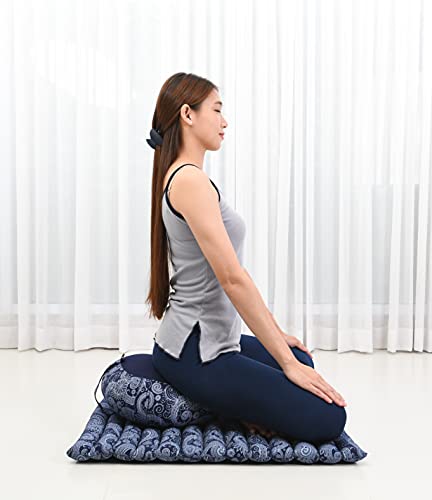
Match the Setup to the Discomfort

Mild adjustment is normal; sharp pain, numbness, or pain that increases is not a meditation challenge. Change the posture, shorten the session, add floor support, or use a chair if that helps you come back tomorrow. If sitting comfort is the main barrier, this guide to the best meditation cushion for sitting comfort can help you compare support options without guessing.
Create a Small Meditation Space Without Overdesigning It
- Choose one spot you can return to easilyYou do not need a separate meditation room. A corner beside the bed, a quiet floor space near a window, or one side of your desk can work if it is easy to use every day.Look forA place you can access without moving furniture, cleaning first, or preparing a full ritual.AvoidWaiting until you can create a perfect meditation room.
- Keep one visible cue in the spaceA cushion, mat, bench, or folded blanket can quietly remind you where the practice happens. The object is useful because it lowers friction, not because it makes the space look complete.Look forOne simple item that stays in the same place and makes the habit easier to remember.AvoidAdding too many accessories before the habit is stable.
- Reduce the most obvious distractionDo not try to control the whole room. Start with the distraction that most often pulls you away: your phone, a cluttered surface, harsh lighting, or a spot that feels too exposed.Look forOne small change that makes sitting down feel easier today.AvoidTurning the setup into another project you have to finish before meditating.
- Let comfort guide the setupThe space should help your body settle. If the floor feels hard, add support. If the posture feels strained, change the height, use a bench, or sit in a chair.Look forA setup that feels stable enough for your minimum session.AvoidKeeping a beautiful setup that your body does not want to return to.
- Keep the space useful, not preciousA calm space can support consistency, but it should not become a condition for practice. You should still be able to sit for two minutes when the room is imperfect.Look forA simple corner that helps you begin without fuss.AvoidSkipping meditation because the space does not look exactly right.

Use a Reset Plan for Missed Days
-
Miss one day, return with the minimum session
Do not turn one skipped session into a story about failure. At the next cue, sit for your smallest version, even if that only means two quiet minutes.
-
Miss several days, restart smaller than usual
A longer gap usually needs less pressure, not more. Make the comeback easy enough that you can begin without negotiating with yourself.
-
Do not pay back missed sessions
Trying to make up for lost days can turn meditation into a debt. You are rebuilding rhythm, not punishing yourself for losing momentum.
-
Keep the same cue if it still works
Return to the cue that made the habit visible in the first place: after coffee, before opening your laptop, after brushing your teeth, or before bed.
-
Measure the return, not the streak
A perfect streak is fragile. A more useful sign of sustainability is how calmly you come back when normal life interrupts the routine.
Decide the reset plan before you need it: miss one day, resume with the minimum session; miss a week, restart with two minutes; never turn meditation into a punishment.
Common Meditation Habit Mistakes Beginners Make
A short session still counts if it helps you return tomorrow. For a beginner, two to five minutes can be the right starting point because it lowers resistance.
The habit becomes sustainable when the entry point is easy enough to repeat on busy, tired, or imperfect days.
Mind wandering is part of the practice. The useful moment is noticing it and gently returning, not keeping the mind perfectly blank.
Judging every distraction as failure makes meditation feel tense, which makes the habit harder to keep.
A cue is more reliable than motivation. Sitting after coffee, after brushing your teeth, before opening your laptop, or before bed gives the habit something stable to attach to.
Motivation changes from day to day, but a familiar cue can keep the practice visible even when the mood is not ideal.
Some mild adjustment is normal, but recurring knee, hip, or back discomfort is useful information. Change the posture, shorten the session, add floor support, or use a chair if needed.
A meditation posture should support attention. If the setup makes your body dread the next sit, it becomes habit friction.
A missed stretch does not erase the habit. Restart with the smallest version and return to the same cue instead of trying to pay back lost sessions.
The ability to restart calmly is a stronger sign of sustainability than protecting a perfect streak.
FAQ
How long should a beginner meditate each day?
Start with a length you can repeat without resistance. For many beginners, two to five minutes is enough to make the habit feel normal. Once that feels easy, you can extend the session slowly instead of forcing a long sit from the beginning.
Is 5 minutes of meditation enough?
Yes, five minutes can be enough if it helps you return consistently. A short daily sit builds familiarity, and familiarity is what makes the habit easier to continue. Longer sessions can come later as an optional bonus, not a requirement.
Should I meditate at the same time every day?
A consistent time can help, but the cue matters more than the clock. Meditating after coffee, after brushing your teeth, before opening your laptop, or before bed gives the habit something stable to attach to. If your schedule changes often, keep the cue flexible but recognizable.
Do I need a meditation cushion to build a habit?
No, you do not need a meditation cushion to begin. A chair, folded blanket, bench, or simple floor setup can work if your body feels stable and supported. A cushion becomes useful when it lowers physical friction and makes sitting easier to repeat.
Is a zafu or zabuton better for beginners?
They solve different problems. A zafu raises the hips and can make the seated posture feel more stable, while a zabuton cushions the knees, ankles, and feet against the floor. Many beginners only need one support at first, but the right choice depends on where the discomfort shows up.
What if my knees or hips hurt when I meditate?
Do not treat sharp pain, numbness, or increasing discomfort as something to push through. Shorten the session, raise the hips, add floor support, try a bench, or use a chair. The posture should support attention, not make your body dread the next sit.
How do I restart after missing several days?
Restart with the smallest version of the habit. Sit for two minutes at your next cue and do not try to pay back the sessions you missed. The important skill is returning calmly, not protecting a perfect streak.
Keep the Habit Small Enough to Keep
- Choose repeatability over intensity
- Use a cue instead of waiting for motivation
- Make comfort part of the habit, not an afterthought
- Restart gently after missed days
A sustainable meditation habit is not the most ambitious version you can imagine. It is the version you can return to on a normal day, a tired day, and a day after you missed yesterday. Start with a clear cue, keep the session small, make the posture comfortable, and use your reset plan whenever life interrupts the routine. If your environment is the main friction, a quiet sitting corner for rest and reflection can be a natural next step.