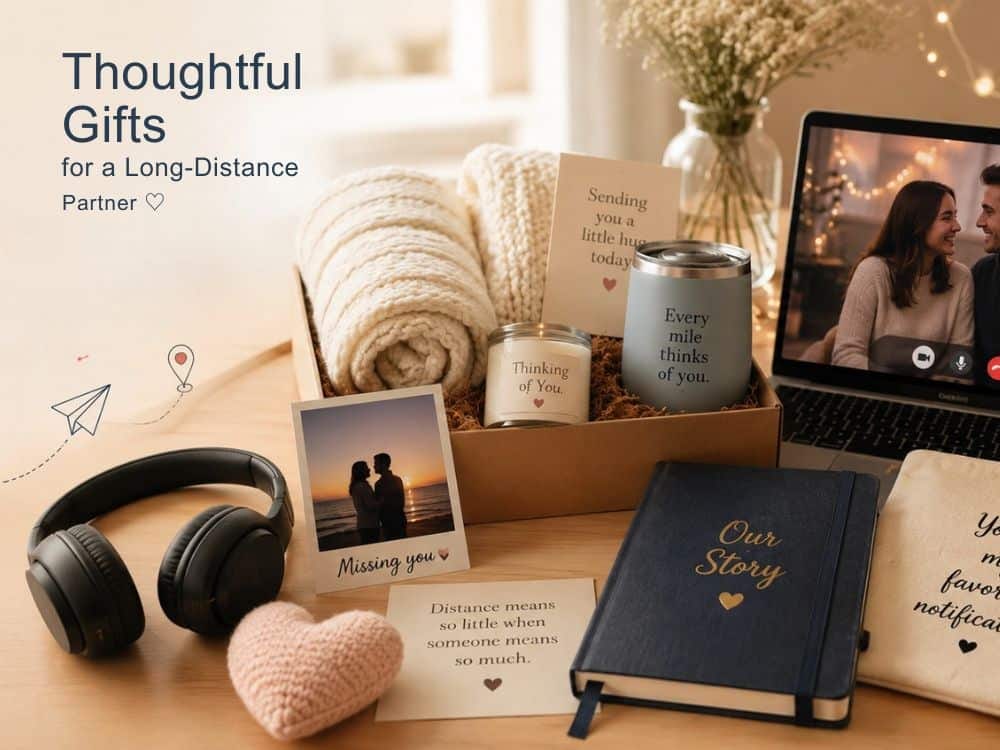
Distance can make an ordinary gift feel unusually important. It may need to cross a border, arrive at a shared address, work across different schedules, and carry affection without asking for an immediate response.
A thoughtful long-distance gift begins with the way you already stay close. Some couples exchange photographs throughout the day. Others save longer conversations for the weekend, share music, repeat a small evening ritual, or quietly plan for the next visit. The wider Gifting collection begins with the same principle: support the recipient’s real life instead of asking a product to create a feeling on its own.
- Fit the rhythm you already share
- Work without an immediate response
- Respect privacy, schedules, and distance
- Leave room for the relationship to remain human
The general collection of thoughtful gifts for a partner can help with interests, routines, and everyday comfort. Long distance adds another layer: the gift must travel well, arrive safely, and create connection without becoming one more notification or obligation.
Start With the Connection You Already Share
Before deciding what to send, identify the form of closeness that already feels natural between you. The gift should strengthen that pattern rather than replace it with a new routine neither person asked for.
- Notice your existing rhythm
Do you exchange short messages throughout the day, schedule longer calls, send voice notes, share photographs, or spend time together online?
- Name what distance interrupts
You may miss ordinary meals, spontaneous conversation, physical comfort, shared errands, or the small details that rarely make it into a formal call.
- Support one kind of closeness
A gift can carry a memory, support a shared ritual, make future plans feel warmer, or quietly help with something in the recipient’s own daily life.
- Check whether it requires two users
Connected devices, paired activities, and shared subscriptions only work when both people genuinely want the setup and maintenance involved.
- Keep the response optional
The recipient should be able to enjoy the gift without proving their affection through an immediate message, photograph, call, or matching gesture.
Distance already asks both people to make plans and wait. The gift should not add another test of timing or commitment.
Let Small Moments Travel Between You
A personal gift feels close because it notices the life you have already shared, not because it contains the largest number of photographs or declarations.
A photo book can gather moments that otherwise remain scattered across phones, messages, and cloud folders. The most meaningful pages may not be the polished holiday photographs. They may be a familiar dog, a meal you made together, a blurry train platform, or the view from a walk one person still remembers clearly.
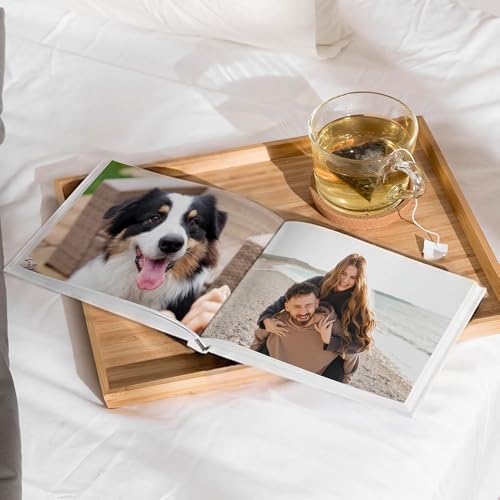
The book should follow the level of intimacy that already exists in the relationship. In a new relationship, a small collection of recent memories may feel warm without becoming overwhelming. In a long-established partnership, dates, short notes, private jokes, and unfinished plans may belong naturally beside the images.
Check the photographs before printing. Images taken from messaging apps may be compressed, screenshots may contain private details, and some memories may feel more personal to one person than the other. The act of selecting carefully often carries more meaning than filling every available page.
Create a Shared Ritual Without Fixing Every Date
-
Use something already familiar
Coffee, tea, music, reading, or a short evening note works better when it already belongs somewhere in both people’s lives.
-
Let each person participate separately
A ritual can connect two people without requiring them to perform it at the same hour, especially across different time zones.
-
Keep the setup simple
Avoid subscriptions, complicated recipes, special equipment, or supplies that one person must continually replace.
-
Allow the ritual to change
Busy weeks, travel, illness, and family responsibilities may interrupt the pattern without meaning the relationship has become less important.
A shared ritual should feel like an open door, not an attendance record. The same principle guides time together without pressure.
A kettle can become part of a simple tea or coffee ritual when the recipient already enjoys a warm drink. One person may make tea at the beginning of the day while the other does the same several hours later. The connection comes from recognizing the shared habit, not from requiring a live call every time the water boils.
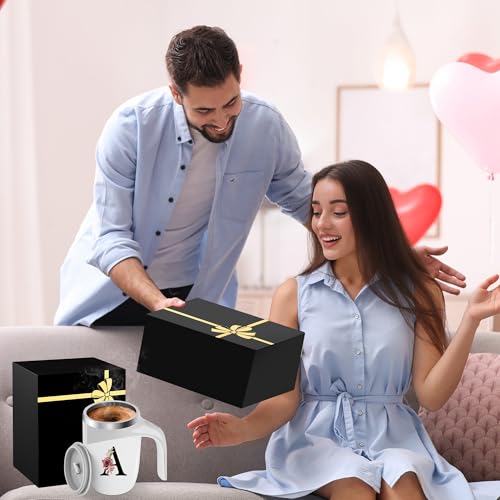
Before giving an appliance, check voltage, plug type, kitchen space, household rules, and whether the person already owns something similar. A kettle may suit someone who makes tea several times a day, but it becomes clutter when the recipient drinks coffee from a nearby café or shares a small kitchen with several people.
The ritual can remain very small. A photograph of the morning cup, a short voice note, or an occasional message saying “I made mine too” may be enough. The habit should create a gentle point of recognition, not a promise that must be renewed every day.
Choose Technology That Does Not Become a Third Person
- Setup responsibilityConnected gifts may require accounts, passwords, Wi-Fi access, updates, pairing, and troubleshooting.Look forA setup both people understand and can manage independentlyAvoidMaking the recipient depend on the giver whenever the device stops working
- Notification controlA light, alert, app, or shared device can become intrusive when every signal appears to require a response.Look forClear controls for volume, timing, visibility, and notificationsAvoidAlways-on alerts that turn affection into monitoring
- PrivacyPhotographs, messages, location, voice, and activity data may be stored outside the home.Look forUnderstandable permissions and the ability to delete stored informationAvoidDevices that collect more personal information than the connection requires
- Ongoing costSome gifts need a subscription, paid storage, replacement parts, or access to the same ecosystem.Look forCosts both people know about before setupAvoidLeaving the recipient with an unexpected monthly payment
- Independent usefulnessA connected gift is safer when it remains useful even if one person is busy, traveling, or temporarily offline.Look forA device that supports daily life on its ownAvoidA product that becomes meaningless whenever the other person does not respond
Technology can carry photographs, light, music, and messages across distance, but it cannot decide how much contact feels comfortable. A device that sends a signal every time one person touches it may feel affectionate to one couple and demanding to another.
Before buying, talk about apps, cameras, microphones, subscriptions, shared accounts, and notification habits. The planned guide to choosing technology they’ll use applies especially strongly here: compatibility includes emotional comfort as well as operating systems and Wi-Fi.
A handwritten message, saved playlist, printed photograph, or scheduled voice note may provide the same sense of presence with less setup. Technology is useful when it serves the connection quietly. It becomes a third person when both partners spend more time managing the device than enjoying what it was meant to support.
Give Them Something to Look Forward To
Anticipation feels warm when it leaves room for both people to decide when and how the plan becomes real.
An experience gift can connect the present to a future meeting without requiring you to book flights, hotels, or a fixed date immediately. A cycling tour, food experience, workshop, or outdoor activity may become part of the next visit when both people have confirmed the location, energy, and time involved.

A physical experience gift card still needs careful checking. Confirm where it can be used, how long it remains valid, whether booking depends on limited partners, and whether the recipient will face additional costs. A stated value does not necessarily cover transport, meals, equipment rental, or the full activity.
The future plan should match the current stage of the relationship. A flexible activity can feel hopeful in an established partnership, while an expensive journey or highly romantic package may feel too weighty in a newer relationship. The thoughtful part is not promising the largest experience. It is leaving a real possibility that both people can shape together.
Keep Shipping From Becoming Part of the Problem
-
Confirm the safest delivery address
Ask whether the recipient prefers home, work, a pickup point, a residence desk, or another address where parcels are less likely to disappear.
-
Check international restrictions
Batteries, liquids, food, plants, fragrances, alcohol, and handmade materials may be delayed, rejected, or require additional documents.
-
Prevent surprise charges
Understand duties, taxes, handling fees, and carrier charges so the recipient is not asked to pay unexpectedly before receiving the gift.
-
Respect shared living arrangements
Avoid highly personal packaging or contents when the recipient lives with family, roommates, colleagues, or residence staff unless they have agreed.
-
Plan for delay
Send early enough that the meaning of the gift does not depend entirely on arriving on one exact day.
-
Keep the parcel manageable
Use protective packaging without creating an oversized box, excessive waste, or a package that requires tools and considerable space to open.
Shipping details may not feel romantic, but solving them quietly protects the experience of receiving the gift.
Wrapping can give a parcel warmth before the recipient reaches what is inside. A coordinated paper, ribbon, card, and tag may make a simple package feel cared for, especially when the giver cannot be present for the moment it is opened.
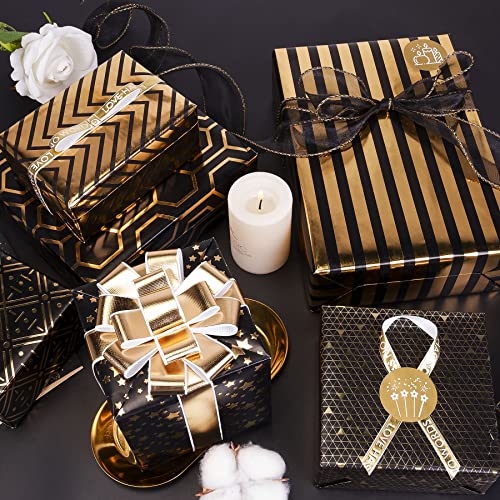
The wrapping should remain secondary to safe delivery. Decorative bows may be crushed, dark paper may show shipping labels poorly, and rigid gift boxes may add unnecessary weight. When sending internationally, the parcel may also be opened for inspection, so the inner presentation should survive even if the outer arrangement does not.
A note inside the package can carry the emotional meaning even when the ribbon arrives flattened. Write something that belongs to the relationship rather than apologizing for the distance or asking the recipient to respond immediately. The message can simply name what made you think of them.
Match the Gift to the Stage of the Relationship
- A newer relationshipKeep the gesture warm but proportionate to the intimacy, certainty, and shared history that already exist.Look forA personal detail, light memory, or flexible shared ideaAvoidExpensive commitments or gifts that imply a future neither person has discussed
- An established partnershipLonger relationships may hold more shared references, practical knowledge, and plans that can shape a deeply personal gift.Look forSomething rooted in a repeated ritual, private memory, or clearly discussed futureAvoidAssuming length alone makes every intimate gesture welcome
- Different time zonesAsynchronous gifts allow each person to participate without sacrificing sleep, work, or family responsibilities.Look forMemories, notes, rituals, and activities that do not require simultaneous availabilityAvoidDaily scheduled interactions that create guilt when missed
- Frequent travelThe recipient may need small, durable, portable items rather than something tied to one home or address.Look forEasy packing, flexible delivery, and independent usefulnessAvoidFragile objects or equipment that cannot move with them
- A relationship under strainA gift cannot replace a conversation about trust, expectations, communication, or the future.Look forA modest gesture that does not demand forgiveness or reassuranceAvoidUsing cost, surprise, or public display to force an emotional response
Long distance can tempt the giver to compensate with size, price, or intensity. That usually makes the gift carry more emotional work than it should. A new relationship may be better served by one thoughtful photograph or a small shared ritual than by a dramatic promise about the next year.
An established partner may appreciate something more layered because the meaning is supported by years of shared context. Even then, respect what the person has said about belongings, privacy, travel, and future planning. The guidance for when they say they need nothing still matters across distance: affection does not require adding an object to their home.
Know When a Gesture Is Better Than a Device
A voice note, letter, playlist, printed photograph, or familiar daily ritual may fit the relationship more naturally.
Closeness depends on how the gesture is received and used, not on how continuously two devices can communicate.
Something intended only for the recipient can still feel deeply connected when it reflects an ordinary detail of their life.
Care often appears in noticing what makes their day easier, warmer, or more personal when you are not there.
Asking about the address, schedule, compatibility, or preferred activity may be more considerate than protecting every detail of the surprise.
Distance makes practical uncertainty part of the gift. Reducing that uncertainty can be an expression of care.
A gesture may also be better when the recipient is exhausted, moving, studying, caring for family, or living in a temporary space. In those moments, a long letter, delivered meal, small photograph, or patient conversation may fit better than a device that needs setup or an experience that needs scheduling.
The gift does not have to reproduce physical presence. It only needs to say something true: I remember this part of your day. I know what you miss. I am looking forward to seeing you, but I am not asking you to rearrange everything right now.
Frequently Asked Questions
What is a thoughtful gift for a long-distance partner?
A thoughtful gift reflects the way you already stay connected and the recipient’s real daily life. It may preserve a memory, support a familiar ritual, create a flexible future plan, or quietly help with something they manage alone.
Are long-distance touch lamps worth giving?
They may suit couples who enjoy small visual signals and are comfortable with the setup, notifications, and expectation of responding. They are less suitable when either person values privacy, dislikes connected devices, or already feels pressure around communication frequency.
How do I choose a gift across different time zones?
Prioritize gifts that can be enjoyed asynchronously. Photographs, recorded messages, flexible rituals, letters, and open-date experiences allow each person to participate without losing sleep or interrupting work.
What can I send without knowing their exact schedule?
Choose something that does not require attendance, delivery at a precise moment, or an immediate call. Confirm the receiving address and any access restrictions even when the gift itself remains a surprise.
How can I make a long-distance gift feel personal?
Include a detail that belongs specifically to the relationship: a remembered phrase, ordinary photograph, shared song, familiar drink, or plan you have already discussed. Personal meaning comes from recognition rather than customization alone.
Should I surprise my partner with travel tickets?
Only when dates, destinations, documents, time off, budget, and comfort with the trip have already been discussed. Otherwise, offer the idea or contribute toward the trip while leaving the final booking to a joint decision.
What if international shipping is unreliable?
Send early, use tracked delivery, confirm customs restrictions, and avoid items whose meaning depends on one exact date. A digital or locally fulfilled gift can be a thoughtful alternative when the physical parcel carries too much risk.
Choose a Gift That Leaves Room for Real Connection
- Follow the rhythm you already share
- Keep responses and schedules flexible
- Check technology, privacy, and shipping
- Let the relationship carry the meaning
A thoughtful gift for a long-distance partner does not need to imitate living in the same room. It can carry one ordinary memory, support a familiar ritual, protect a future plan from unnecessary pressure, or remind the recipient that their daily life is still seen. The distance may shape how the gift travels, but it does not have to make the gesture louder than the relationship itself.