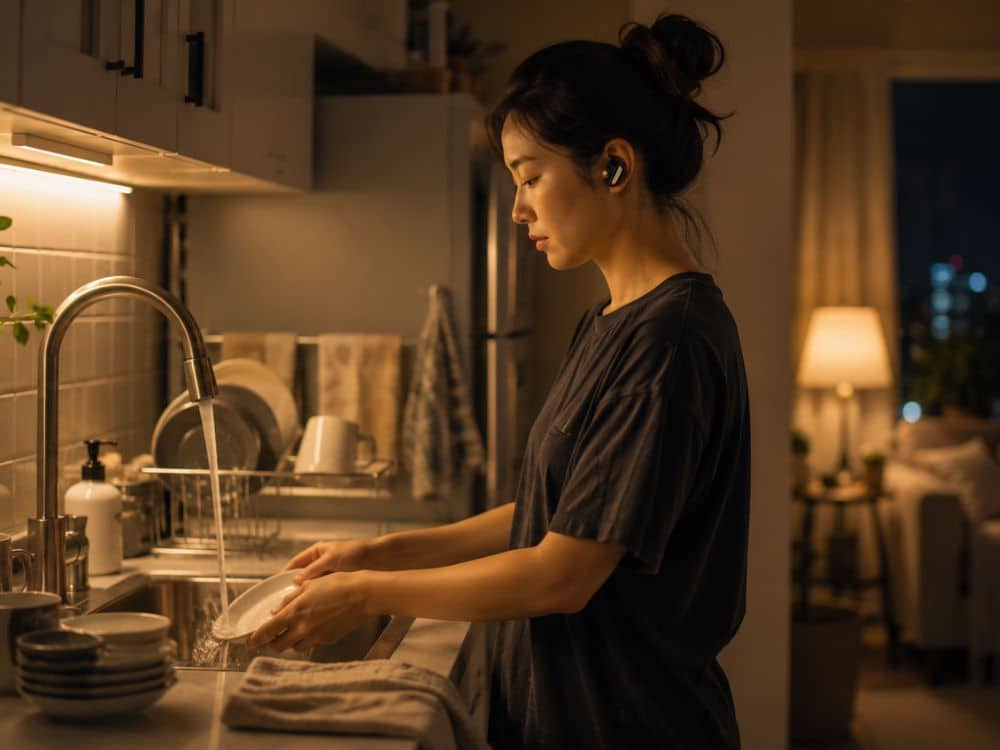
You look at the clock, and a heavy sigh escapes your lips. It’s happening again. Today ended way too late.
You look at your to-do list, and you feel an overwhelming sense of defeat. A day only has 24 hours, and tonight it feels like every single minute belonged to someone else.
You woke up, commuted, worked your shift, commuted back, handled the never-ending household chores, scrambled to eat something, and dealt with whatever random emergency life decided to throw at you.
By the time you finally sit down and have a brief moment to yourself, it is already past 10:00 PM.
You look at your phone, and a dark, frustrating thought hits you:
“I have absolutely no time for myself. My whole life is just working and surviving.”
You know you need to unwind, but you are completely out of gas.
You don’t have the physical energy to change into workout gear for a late-night exercise session. You don’t have the mental focus to read a long, heavy book. And let’s be honest – trying to sit cross-legged and meditate for 30 minutes when your brain is screaming with exhaustion can feel like another chore, not a relief.
So you end up staring at the wall or mindlessly scrolling through social media until your eyes hurt, wishing there were a way to actually relax that didn’t demand even more time from your already bankrupt schedule.
On nights like these, I don’t think the answer is another ambitious self-care routine. A simple evening reset can be much more passive: reduce what your tired senses still have to process, make the chores that cannot wait a little less miserable, and let bedtime finally be bedtime.
Step one: Hide the visual triggers of your endless to-do list
When you finally sit on your bed or couch at 10:00 PM, your eyes are still working overtime.
You look around and catch all the visual reminders: a stack of unopened mail on the counter, a basket of unfolded laundry in the corner, the flashing standby light of your work monitor, perhaps a cup that somehow missed every previous trip to the kitchen.
None of those things is an emergency. But when you are already exhausted, they can feel like a room full of tiny reminders that the day is still not finished.
And at this hour, cleaning the whole room just so you can relax would be a particularly cruel definition of relaxation.
So the easiest passive ritual may simply be to stop looking at it.
The minute you decide you are done moving for the night, put on a comfortable light-blocking sleep mask. Darkness removes the laundry, mail, standby lights and phone screen from view without requiring you to organize a single thing first.
The mess has not disappeared. Tomorrow morning will confirm this rather quickly.
But for tonight, it no longer needs your eyes.

Step two: Layer a passive sound canopy over the chores that cannot wait
If your day ran late, you may still find yourself pacing around the kitchen at 10:30 PM doing the final mandatory things: wiping a counter, packing tomorrow’s lunch, loading the dishwasher or finding the shirt somebody suddenly remembers they need in the morning.
This is where my impatience can really climb.
I am not necessarily angry about the lunch box. I am angry because every extra chore feels as though it is stealing another minute from the tiny piece of the night that was supposed to belong to me.
If the chore genuinely cannot wait, I would rather soften those minutes than spend them mentally arguing with the clock.
One option is quiet music, a familiar podcast or soft ambient audio through open-ear earbuds while my hands finish what they have to finish. The point is not that a particular frequency magically resets the nervous system. It is simply to give the mind something gentler than another screen or another internal rehearsal of everything that went wrong today.

If evenings routinely disappear this way, the problem may also be bigger than tonight’s dishes. I have found it useful to choose one after-work ritual that happens before the evening starts unraveling. It does not rescue every late day, but it gives ordinary days a small boundary before everything runs together.
Step three: Let bedtime be the part where you finally stop doing things
When a day ends too late, your body may simply feel used up.
Your calves may ache. Your feet may feel tired. Your lower back may remind you how many hours you spent sitting, standing, carrying things or moving from one job to another.
At that point, the idea of stretching for twenty minutes or taking a long bath may sound wonderful in theory and completely unrealistic in practice.
This is where I would be careful with the original idea of magnesium spray.
Topical magnesium products are often marketed as a way to deliver magnesium through the skin and relieve muscle tension, but evidence that meaningful amounts of magnesium are absorbed transdermally is limited. I would not describe a spray as replenishing depleted magnesium, entering the bloodstream within minutes or “unlocking” tight muscles while you sleep.
But that does not make the ritual itself useless.
If you enjoy a lavender magnesium body spray, it can still serve as a very simple bedtime cue: spray or rub a small amount over tired calves or feet, notice the cooling or moisturizing sensation, breathe in the scent if you enjoy it, and then stop. No twenty-minute routine. No additional achievement required.

That distinction matters to me. An evening reset routine does not need an impressive biological explanation to be worth keeping. Sometimes the value is simply that one small action says: I am finished now.
Why I sometimes stay awake even when I am exhausted
This is the strange part.
I can spend the entire evening complaining that I am exhausted, finally reach the moment when nobody needs anything from me – and then refuse to go to sleep.
I pick up my phone.
One video becomes another. Midnight arrives. I know perfectly well that tomorrow morning is coming, yet some stubborn part of me is thinking: No. These minutes are mine.
The term often used for this behavior is bedtime procrastination, and researchers have examined how delaying bedtime can be associated with lower self-regulation and insufficient sleep. Whatever label we use, the emotional logic is easy to recognize: when the day has felt controlled by obligations, giving up the final free minutes can feel unfair.
That is why I don’t think scolding myself with “just go to sleep earlier” is particularly helpful.
I need those last minutes to feel like mine – just without turning them into another hour of scrolling that makes tomorrow worse.
A sleep mask, quiet audio, a warm shower, a familiar scent or simply sitting in the dark can work because nothing is being accomplished. The reset is allowed to exist without producing a better version of you.
What if I am too tired to remember any of this?
If the sleep mask is buried in a drawer, I probably won’t look for it.
If the earbuds are dead and sitting in another room, tonight is unlikely to be the night I lovingly recharge them before relaxing.
And if the bedtime product requires six steps and an instruction booklet, it has chosen the wrong household.
So I make the reset almost embarrassingly obvious. The mask stays beside the bed. The earbuds have one predictable charging spot. Whatever I use at bedtime is already where bedtime happens.
This is the same reason a morning routine without waking earlier has to work with the life that already exists. A routine that requires extra time precisely when I have no extra time is beautifully designed for somebody else’s life.
James Clear describes a related idea in his explanation of habit stacking: attaching a new behavior to something that already happens can make the cue easier to remember.
For a late-night reset, the cue can be almost laughably simple: When the last necessary chore is done, the reset begins.
A late evening does not need to become a failed evening
This is the part I think matters most.
When I finally sit down at 10:30 PM, it is very easy to look backward and decide that the whole day belonged to everybody except me.
Maybe that is partly true. Some days really are crowded with obligations. Pretending otherwise doesn’t make them less exhausting.
But I don’t want the final minutes to become another place where I judge myself.
I don’t need to compensate for the day with an impressive night routine. I don’t need yoga, journaling, meditation, reading, skincare and a beautifully prepared herbal tea lined up like employees reporting for the night shift.
I need something smaller.
Sometimes that means darkness. Sometimes quiet audio while I finish the unavoidable last chore. Sometimes it means putting something on my tired legs, climbing into bed and refusing to turn rest into another job.
That is what I like about simple daily rituals. At their best, they do not ask me to squeeze more achievement into an already overcrowded day. They give ordinary life a few small places where I am allowed to stop.
When the day ends too late, make the ending smaller
- Remove visual reminders when you no longer have the energy to deal with them
- Make unavoidable late chores gentler instead of turning them into more screen time
- Treat bedtime products as comfort cues, not miracle recovery tools
- Keep anything you use where an exhausted version of you can actually reach it
- Let a small reset count instead of demanding an ideal evening
The feeling that you have absolutely no time for yourself can be painfully real when a day runs too late. But the answer does not have to be forcing one more complicated self-care routine into 10:00 PM. Sometimes a simple evening routine is just darkness over tired eyes, something quiet in your ears while the last chore gets done, and one small bedtime cue before you finally stop. You do not need to rescue the whole day. Tonight, it may be enough simply to give it a gentler ending.