
Some evenings, I finish work and somehow manage to be exhausted without actually resting. I close the laptop, sit down for “just a minute,” pick up my phone and start scrolling. Twenty minutes becomes an hour. An hour quietly becomes two. I have barely moved, yet my eyes are tired, my head is still replaying work, and half the evening has disappeared somewhere between one harmless video and the next.
For a long time, I thought I needed a better evening routine. Something healthy and organized. The problem was that by the time work ended, I had very little enthusiasm left for improving myself. What eventually made more sense was much smaller: one after-work ritual that tells me the working part of the day is over – and is easy enough that I can still do it on a tired Tuesday.
The word one matters. I am not trying to change clothes, stretch, meditate, journal, make tea and become a completely different human being between 5:00 and 5:45. I just want one reliable little bridge between work and the rest of my life.
Find the moment when your evening starts disappearing
If you commute home, notice what happens right after the door closes
I used to come home, put my bag down and sit on the couch while still wearing exactly what I had worn through the workday. Then I would check one thing on my phone.
You probably know how trustworthy the phrase one thing is when a phone is involved.
Before long, I was still sitting there in my work clothes, except now it was dark outside and I was wondering where my evening had gone.
That taught me something useful: if I wanted an after-work ritual, I needed it before the couch and the phone took over. Not later, when I was already negotiating with myself about getting up.
If you work from home, create the boundary your commute used to provide
Working from home creates a different problem. At 4:59, the table is my workplace. At 5:01, apparently it is supposed to become part of my relaxing home again. The table, unfortunately, has made no visible effort to cooperate.
That is where a physical cue becomes useful. Shut the laptop. Put it away if possible. Stand up. Change clothes. Walk into another room. The action does not have to be profound; it simply gives the end of work something more tangible than a number changing on the clock.
Choose the ritual for the problem you actually bring home
This was the part I had backwards. I used to find an appealing relaxation idea first and then try to squeeze my life into it.
Now I would start with a much simpler question: What is bothering me most during those first few minutes after work?
If you still feel dressed for work, change the physical cue
Changing clothes sounds almost too ordinary to count as a ritual. That may be exactly why I like it.
I don’t need motivation. I don’t need an app. I don’t need twenty uninterrupted minutes. Work clothes come off; comfortable home clothes go on. That small change gives the evening a visible beginning.
The important part, for me, is comfort rather than the idea of having special “relaxation clothes.” If I replace one stiff waistband with another or change into something I keep tugging and adjusting, I have rather missed the point.

If your shoulders arrive home before the rest of you, try warmth and stillness
There are evenings when I sit down and only then realize that my shoulders have spent most of the afternoon trying to become earrings.
On those days, I may not want another activity at all. A few quiet minutes with warmth across my neck and shoulders can make more sense to me than immediately opening another screen or giving myself another task.
Heat is commonly used for temporary relief of muscle stiffness and soreness, but I would keep the goal modest here. This is not about treating every aching neck after work. It is simply an easy physical ritual for the evenings when warmth feels good and sitting quietly for ten minutes feels possible.

If your hand keeps finding the phone, give it somewhere else to go
Telling myself not to use my phone left an awkward little hole. I was tired. I wanted to sit down. I did not particularly want to meditate, and staring nobly at an empty wall was unlikely to become the highlight of my evening.
A simple analog activity can fill that gap without demanding much from me. Coloring is one option. So is doodling, knitting, a small puzzle or anything else that gives the hands something uncomplicated to do while the workday fades into the background.
I particularly like activities with no meaningful outcome. I am not producing anything important. Nobody is waiting for my beautifully colored leaf. There is no performance review at the end.
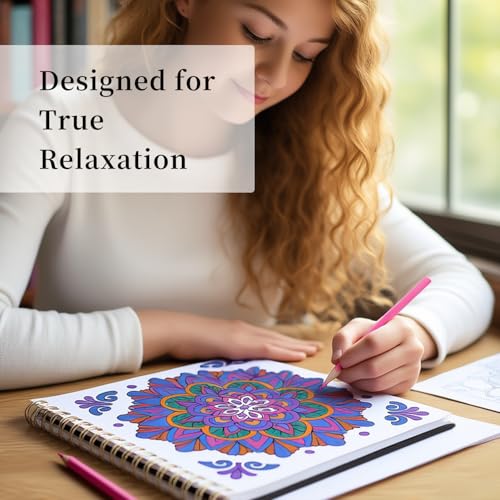
Those are three different answers to three different evenings. I would not do all three just because all three sound pleasant. If changing clothes solves the handoff, that can be the ritual. If ten minutes of warmth does it, fine. If coloring keeps my hand away from the endless scroll, that may be enough.
Make your one ritual ridiculously easy to start
I can design a magnificent evening routine on Sunday.
On Monday I will change clothes, stretch for twenty minutes, prepare something healthy, write thoughtfully in a journal and perhaps become the sort of person whose kitchen counters are always mysteriously clean.
Then Tuesday arrives.
A meeting runs late. I am hungry. Something needs washing. Somebody wants an answer. Suddenly my peaceful routine feels suspiciously like another job.
That is my test now: could I still begin this ritual on that Tuesday?
- It starts in less than a minute
I don’t want a ritual that requires finding equipment, choosing a video or making several decisions before I can begin.
Look forA first action I can begin almost immediately after work.AvoidAnything that needs setup, planning or several choices before I can start. - The short version still counts
Ten minutes may become three. The ritual should survive that without feeling like a failed version of itself.
Look forA version that still makes sense when I only have two or three minutes.AvoidA routine that only feels worthwhile when I complete the full version. - It does not create another obligation
If I start worrying about streaks, targets or doing it correctly, I have accidentally hired myself for an evening shift.
Look forSomething simple enough to feel like a transition, not another performance target.AvoidTracking, scoring or rules that make the ritual feel like work. - I genuinely don't mind doing it
A supposedly healthy ritual that I dread is unlikely to become my reliable boundary between work and home.
Look forSomething I can imagine repeating on an ordinary tired weekday.AvoidA ritual I already resent before I have even started it.
This is why I would rather repeat something almost laughably small than keep replacing ambitious routines that last four days.
Attach it to something that already happens
A fixed time sounds tidy, but my workday has never shown much respect for tidy ideas. Some days I finish at 5:00. Some days 5:00 seems to be merely a suggestion.
So instead of saying, “At 5:15 I will do my ritual,” I prefer an existing action as the trigger:
- After I close the laptop, I change clothes.
- After I put my keys down, I warm the shoulder wrap.
- After dinner is started, I leave my phone away and color for ten minutes.
This is the basic idea behind James Clear’s explanation of habit stacking: an action that already happens becomes the cue for the behavior you want to repeat.
I like it because I no longer have to wait for myself to feel inspired. My keys are already coming through the door whether I feel inspirational or not.
I eventually noticed that the same principle helps at the other end of the day too. When I try to build a morning routine, it works better when I fit a small action into the morning I already have instead of assuming I need to wake up earlier and create a whole new life before breakfast.
What counts on a terrible evening?
If my ritual is changing clothes, then changing clothes counts.
If my ritual is ten quiet minutes with warmth and tonight I manage four, four counts.
On evenings that run late, I have learned that a simple evening reset works better than trying to rescue the whole night. A smaller version still gives the day a stopping point without asking me to manufacture energy I no longer have.
If I normally color for ten minutes and tonight I fill in three ridiculous little leaves before deciding I would rather make dinner, those leaves count too.
I used to think consistency meant reproducing the same evening over and over. Real life cured me of that idea rather quickly.
On difficult evenings, I would protect the beginning of the ritual rather than its length. Work ends, the familiar cue happens, and the evening gets its small boundary – even if the whole thing lasts only a few minutes.
If the couch wins tonight, nothing is ruined
I wish I could say that once I understood all this, I never again sat on the couch scrolling much longer than I intended.
That would be a lovely ending. It would also be fiction.
There are still evenings when the phone wins. I look up and discover that forty-five minutes have vanished and I know surprisingly intimate details about the kitchen renovation of a stranger I will never meet.
What changed is what I do with that mistake. I don’t need to announce that my routine has failed, wait until Monday or invent a stricter system.
The next day I simply return to the cue.
Close the laptop. Change clothes.
Or warm the wrap.
Or put the phone down and color one silly leaf.
One is enough.
That is also what I have come to value about simple daily rituals: they help most when they make ordinary life a little easier to enter, not when they turn ordinary life into another project I have to manage perfectly.
One small doorway is enough
- Find the exact moment when work keeps following you into the evening
- Choose one ritual for the problem you actually have
- Make sure the ritual still works in a two- or five-minute version
- Attach it to something that already happens
- Return to it without turning a missed evening into failure
I used to think I needed a better evening routine. What I really needed was a small doorway between work and home. Yours might be changing out of work clothes, sitting quietly with a little warmth around tired shoulders, or giving your hands something other than a phone for ten minutes. It does not need to fix the whole evening. It does not even need to make you wonderfully relaxed every time. It just needs to be simple enough that, when tomorrow’s ordinary tired Tuesday arrives, you can still open that little door and walk through it.