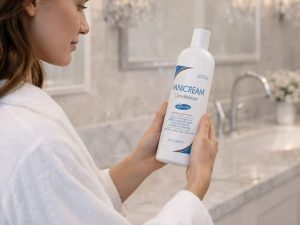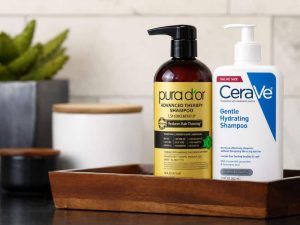
A shampoo, a conditioner, and a crowded shelf are not three versions of the same solution. The useful starting point is much smaller: decide whether the friction begins at the scalp, along the lengths, or in both places.
Searches for the best natural shampoo for thinning hair and a conditioner for dry hair often appear beside each other, but they describe different jobs. Shampoo mainly handles cleansing at the scalp. Conditioner mainly adds slip, softness, and manageability through the mid-lengths and ends. Once those jobs are separated, it becomes easier to change one thing at a time instead of replacing an entire routine.
Start with where the problem begins
- Scalp Notice oil, buildup, tightness, itching, or a change in shedding. These signs belong on the shampoo side of the decision.
- Lengths Notice dryness, tangles, roughness, frizz, or breakage through the mid-lengths and ends. These signs belong on the conditioner side.
- Both An oily or easily congested scalp can exist beside dry lengths. Two different needs do not automatically require a complicated routine.
The goal is not to diagnose the cause of thinning or dryness. It is to stop asking one product to do a job that belongs to another.
Choose your hair-care path
When the scalp needs attention
Oil, residue, sensitivity, and the speed at which buildup returns all matter when you choose an organic shampoo for hair loss. A formula that leaves one scalp feeling clean may leave another tight, coated, or ready to wash again too soon.
When the concern is reduced density rather than rough ends, a natural shampoo for thinning hair still needs to be judged first by how comfortably and consistently it cleanses. Shampoo may make the routine feel better, but it cannot explain every reason the hair appears thinner.

The phrase best organic shampoo for thinning hair becomes more useful after the scalp need is clear. Someone dealing with buildup may need something different from someone whose main concern is dryness, fragrance, or a tight feeling after washing.
Someone may search for the best clean shampoo for thinning hair one day and organic shampoo for thin hair the next. The wording changes, but the useful comparison remains the same: cleansing strength, scalp comfort, residue, fragrance, and how the hair behaves between washes.
When dry lengths need support
Dryness through the lengths is a reason to choose a conditioner for dry hair, not necessarily to replace the shampoo. The useful formula is the one that adds enough slip to reduce tangling without leaving the hair flatter, coated, or difficult to rinse.
A conditioner for dry hair at home does not need to turn wash day into a treatment session. It only needs to make the lengths easier to handle in a way that fits the texture, density, and frequency of washing.

An organic conditioner for dry hair can still feel too rich for fine strands, too light for coarse ends, or too fragrant for someone who prefers a quieter formula. “Organic” may narrow the shelf, but the hair’s response decides whether the product belongs in the routine.
Even the best conditioner for dry hair without chemicals is only useful when its texture matches the kind of dryness involved. Hair that needs light detangling should not be treated as though it needs the same weight and coating as very coarse or highly porous lengths.
When you may need both
An oily scalp can sit beneath dry, long, color-treated, or easily tangled ends. In that situation, a natural shampoo and conditioner for thinning hair should not be treated as an inseparable pair. The shampoo still has to suit the scalp, while the conditioner has to suit the lengths.
The two products do not have to come from the same range or even the same brand. Matching packaging is convenient, but it is less important than giving each formula a clear and separate reason to stay.
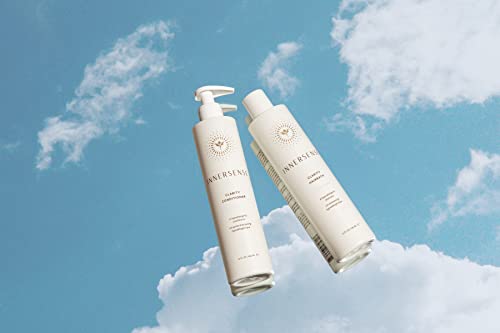
Labels do not choose for you
The word “organic” carries more weight than it should when an organic hair shampoo for hair loss is judged mainly by the promise on the front of the bottle. Cleansing strength, fragrance, residue, and scalp comfort still have to do the practical work.
The same problem appears when a chemical-free conditioner for dry hair is treated as though the label alone settles every question. A formula can sound reassuring and still be too heavy, too light, or poorly matched to the way the hair responds.
Test one change before buying again
-
Choose one area to watch
Decide whether this test is about the scalp or the lengths. Trying to judge oil, shedding, tangles, softness, and volume at once makes the result hard to read.
-
Change only one product
Keep the rest of the routine steady enough to notice what changed. A new shampoo, conditioner, leave-in, and mask introduced together cannot reveal which step helped or created more friction.
-
Read the ingredient list for fit, not fear
Notice fragrance, heaviness, buildup, and personal reactions rather than treating one ingredient list as a universal blacklist.
-
Check the way you apply it
Before replacing a conditioner, make sure it reaches the dry lengths, has enough time to spread, and rinses to the finish you prefer.
-
Judge the result after the hair is dry
Slip in the shower can be pleasant, but the more useful test is how the scalp and lengths feel later: clean without tightness, soft without heaviness, and manageable without several corrective products.
If you are searching for a good conditioner for dry scalp, pause before applying a rich conditioner directly to the scalp. Dry scalp and dry hair are not the same concern.
A long blacklist can make shopping feel precise while revealing very little about the final formula. Looking at ingredients to avoid in conditioner for dry hair is most useful when it helps you notice patterns such as fragrance sensitivity, repeated buildup, excess weight, or a texture your hair consistently dislikes.
Sometimes the bottle is not the problem. Learning how to use chemical-free conditioner for dry hair may reveal that the product was applied too close to the scalp, spread unevenly, rinsed too quickly, or used in a larger amount than the lengths needed.
Shampoo and conditioner can change cleansing, softness, slip, and manageability. They cannot identify the cause of sudden shedding, patchy hair loss, scalp pain, sores, or other significant changes. Those signs should not be handled by repeatedly buying a different bottle.
Give each product one clear job
- Begin with shampoo when the main friction is at the scalp.
- Begin with conditioner when dryness and tangling live through the lengths.
- Use both only when the scalp and lengths genuinely need different support.
- Test one change long enough to understand it before adding another.
Explore more practical guidance in our Hair Care collection.
“`