
Have you ever looked around your life and felt like you were standing in the middle of a room that just got wrecked by a category-five hurricane? That is exactly where I found myself not too long ago.
After going through a brutal wave of loss, heartbreak, and emotional pain, my mind became a chaotic, messy blur. In those dark moments, I kept asking myself the same heavy question over and over again: “After everything that has happened, is it even possible for my life to be good again?”
The worst part wasn’t that I didn’t want to get back up. I did.
I desperately wanted to rebuild my life, but I was completely paralyzed.
When your mind is drowning in emotional debris, even ordinary decisions can feel enormous. You look at the mess of your finances, your health, your messy house, and your broken relationships, and you honestly don’t even know which fire to put out first.
You don’t know how to start. You don’t know which task deserves your remaining 1% of energy.
You aren’t lazy. You just don’t know where to put your foot down first.
That was when I began to understand something about how to start over in life: trying to fix the entire thing at once was only breaking my spirit a little more.
I didn’t need a massive, aggressive comeback plan. I needed one small place to begin. Rebuilding my life after the storm became a slow process of picking up one single piece of debris at a time.
Shaking some of the tension out of my senses
When I was at my lowest, the emotional pain didn’t stay neatly inside my thoughts.
I walked around with clenched fists, a tight jaw, tight shoulders, and sometimes a heavy pressure in my chest.
It felt as though my body had forgotten how to stop bracing for whatever might happen next.
And when I already felt like that, sitting down and calmly making intelligent decisions about my future was easier said than done.
I couldn’t simply think myself into feeling okay.
Instead of forcing myself through a rigorous workout or a complicated yoga routine that I had no energy for, I started with something much more passive.
Some mornings, I would stand still and wrap a heavy blanket around myself for ten minutes.
The weight gave me a steady physical sensation to notice when my thoughts were going everywhere at once. I wasn’t expecting a blanket to solve grief, heartbreak or whatever had brought me to that point.
It simply gave me a warm hug.

Clearing the visual debris of yesterday
Once I could breathe a little easier, I looked at the physical space around me.
My bedroom was a disaster.
There were piles of unwashed clothes on the floor, empty water glasses on the nightstand, and layers of dust on the shelves.
Every time I looked at that mess, another wave of guilt arrived with it.
“Look at you. You can’t even take care of your room.“
I had to teach myself that I didn’t need to clean the whole house; I just needed to clear one square meter of visual debris.
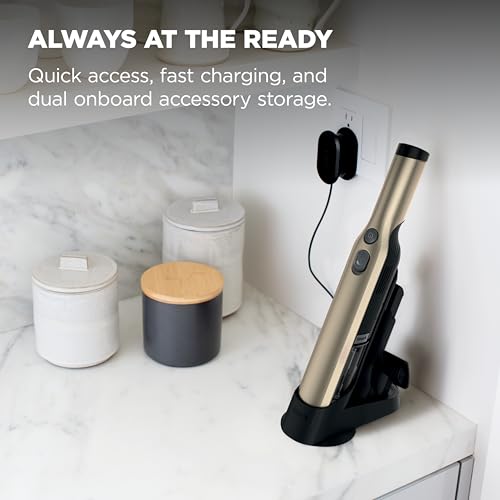
I picked up a simple, cordless handheld vacuum cleaner and made a rule: I would only clean the surface of my desk or the top of my mattress for two minutes.
There is something deeply therapeutic about watching physical dirt and dust vanish into a machine. It gave me a small, undeniable hit of accomplishment.
For those two minutes, I wasn’t a victim of my circumstances; I was the person cleaning up the mess.
That distinction mattered to me.
If you’re in a place where even two minutes sounds ambitious, a few small things while you’re still in the slump may be a better starting point. There are days when getting through the day is already the task.
Documenting the tiny wins in the dark
The biggest enemy I faced during my recovery was my own brain telling me that my progress was too small to matter.
When you are trying to heal after a difficult stage, you tend to focus entirely on how far you still have to go, completely ignoring the fact that you survived the day.
I needed a way to force my mind to see the tiny steps I was taking, even when everything felt hopeless.
I started a ritual called “The One-Line Journal.”
Every night before turning off the lights, I refused to write a long, emotional diary entry because it was too exhausting.
Instead, I forced myself to write down just one single sentence detailing something I did right that day – even if it was just, “I washed three plates today,” or, “I stood outside in the sun for five minutes.”
Keeping this log kept my hands busy and gave my mind a concrete record of my resilience.

I also learned that a tiny action was easier to keep when I gave it a familiar place in my day. James Clear describes a similar principle in his explanation of habit stacking: connecting a new behavior to something you already do can make it easier to repeat. For me, turning off the light was already part of every night, so writing one line just before it gave that tiny ritual somewhere natural to live.
Those tiny repeated actions are why simple daily rituals became meaningful to me. Not because a ritual magically fixes a difficult life, but because it gives an ordinary day a little shape when everything else feels shapeless.
Finding where to place your foot first
Believing that your life can be beautiful again after a difficult season is incredibly hard, and I don’t think you should force yourself to feel positive when you are hurting inside. Healing isn’t a straight line, and it doesn’t happen because you wake up one morning with a brand-new attitude. HelpGuide’s guidance on coping with emotional and psychological trauma also emphasizes giving recovery time rather than expecting difficult reactions to simply disappear.
There were times when “everything will be fine” would have sounded almost insulting to me. I didn’t know that everything would be fine. I only knew that I was still here, and because I was still here, there was one more small thing I could choose.
If you are currently sitting in your own wrecked room, stop looking at the horizon for a moment. Lower your gaze and look at what is directly in front of you. Perhaps it is one glass that needs carrying to the kitchen, a shower you have been putting off, or simply opening the curtains. Perhaps today your one-line journal says nothing more impressive than, “I got through today.” On some days, that is where your foot goes first.
When I have enough energy to move beyond that first tiny action, getting out of a slump becomes a different question: not “How do I repair my entire life today?” but “What is the next piece I can realistically pick up?” That is a much smaller question, and sometimes a smaller question is the only one I can answer.
Starting again does not mean going back
For a long time, I thought starting over meant getting my old life back.
I wanted my old energy back. My old confidence. My old routines. I wanted to wake up one morning and recognize the person I had been before everything became difficult.
But some difficult seasons change us.
Not always beautifully. Not always in ways we would have chosen.
And perhaps how to get back on track in life is not always about finding the exact track we were on before.
Sometimes I have to make a new one.
That may mean my routines are smaller now.
It may mean I need more rest than I used to. It may mean certain relationships, ambitions or expectations no longer fit the person who came through the storm.
I don’t have to decide all of that today.
Today I only have to put my foot somewhere.
One piece of debris at a time
- Give your exhausted body somewhere simple to settle before asking yourself to solve everything
- Clear one small physical space instead of trying to repair the whole house
- Record tiny wins before your mind dismisses them
- Let the smallest version of progress count on the hardest days
- Remember that starting again does not require becoming exactly who you were before
You don’t need to know how the whole story ends to turn the next page. Some days, starting over may look almost embarrassingly small: a weighted blanket across your lap, dust disappearing from one corner of a desk, one sentence written before the light goes out. None of these things rebuilds a life by itself. But when I was standing in the wreckage wondering where to put my foot first, small was not meaningless. Small was where I finally found the ground.