Buying Essentials Is Part of Learning to Live on Your Own
Starting independent life can make small purchases feel constant. Everyday essentials are not exciting, but they quietly shape your budget, your routine, and how calm your space feels day to day.
When you are 18–24, starting college, moving into a dorm, renting a first room, or handling more of your own daily needs, it is easy to underestimate how often small basics run out, break, disappear, or suddenly become urgent. A charger, shampoo, laundry detergent, notebooks, towels, snacks, and simple cleaning supplies may not feel expensive one at a time, but together they can turn into a budget leak.
That is why this guide is not about buying every useful-looking item at once. It is about building a simple system for everyday essentials: what to buy first, what to restock, what to wait on, and how to avoid turning convenience into overbuying.
Prime can help with convenience, delivery timing, and planned restocks, but only after you know what you actually need. The goal is to make independent life easier, not to let every small want become an urgent order.
- How to tell the difference between real essentials and impulse buys
- Why small repeat purchases can quietly drain a young adult budget
- How to build a simple restock system before opening Amazon
- When Prime can help with convenience without becoming a shopping excuse
Save Money by Buying in Layers, Not in Panic
This is where saving money becomes a system: buy what supports your real routine first, restock what you actually use, and let everything else wait.
Know the Four Types of Everyday Essentials Before You Shop
- Consumables
These are the things you use up regularly, such as shampoo, toothpaste, laundry detergent, trash bags, paper towels, basic cleaning supplies, and hygiene products. They are easy to underestimate because each item feels small, but they become expensive when you only notice them after they run out.
- Replacements
These are items you do not buy often, but may need quickly when they break, disappear, or stop working. Think phone chargers, towels, water bottles, notebooks, pens, headphones, or basic school supplies. Replacements are where convenience can help, but only when the item is genuinely needed.
- Setup items
These are one-time or long-term purchases that help your space function, such as a laundry basket, storage bin, desk lamp, shower caddy, drying rack, or small cleaning caddy. They should solve a real routine problem, not just fill empty space.
- Comfort extras
These are items that make your space feel nicer but usually belong after the basics: throw blankets, extra lighting, decor, candles if allowed, specialty organizers, or aesthetic upgrades. Comfort matters, but it works best when it supports a routine you already understand.
Build a Small Essentials System Before You Open Amazon
-
Walk through one normal day
Before you shop, picture a normal weekday from waking up to going to bed. The goal is to notice what your real life already asks for, not what a shopping page suggests you might need.
-
List what you use during each routine
Write down what you use in the morning, during class or work, after a shower, during laundry, while cleaning, and before bed. This turns everyday essentials into a routine-based list instead of a random cart.
-
Separate move-in needs from ongoing restocks
If you are preparing for college, use a focused guide like this dorm room essentials for young adults list to identify true setup items first. After that, keep this article’s system for repeat essentials and restocks.
-
Mark what runs out or breaks
Highlight items you use up regularly, such as toothpaste, shampoo, laundry detergent, trash bags, or hygiene products. Then separate replacement items like chargers, pens, towels, notebooks, or water bottles so you do not treat every useful item like a weekly restock.
-
Choose one place to track restocks
Use one notes app, paper list, planner page, or shared household list for restocks. If your list is scattered across memory, screenshots, and late-night tabs, you are more likely to rebuy the wrong things.
-
Review the list once a week before buying
Check the list before opening Amazon or any shopping app. A weekly review helps you order planned essentials together, skip duplicates, and avoid turning convenience into panic shopping.
Start with the routine, then shop from the list. That one habit keeps Prime, deals, and fast delivery in the role they should have: useful support, not the thing deciding what your independent life needs.
Use the One-Open-One-Backup Rule
- Keep one item in use For essentials you truly use every week, keep one item open and active in your routine. This makes it easier to see what you actually use before buying more.
- Keep one backup, not a shelf full One backup is usually enough for repeat basics like shampoo, toothpaste, laundry detergent, trash bags, or hygiene products. Three backups can become clutter disguised as savings.
- Do not stock up because of a discount A deal is only useful when it supports something you already use. Five notebooks, extra organizers, or duplicate personal care items are not savings if they sit untouched.
- Protect your money and your space The rule works because it limits both spending and storage pressure. In a dorm, small bedroom, or first apartment, every extra item has to be stored, moved, cleaned around, or eventually thrown away.
Use this rule for repeat essentials, not every category. Replacement items and comfort extras should usually wait until there is a real need.
What to Buy Monthly, What to Buy Once, and What to Wait On
- Buy regularlyThese are the basics that support repeat routines and run out with normal use: laundry detergent, personal care basics, hygiene products, simple cleaning supplies, and snacks if they are truly part of your week.Look forItems you use consistently and can track easilyAvoidRestocking from memory when you have not checked what is left
- Buy once and use for monthsThese are practical setup items that help your space work for a long time, such as a laundry basket, shower caddy, desk lamp, basic storage, water bottle, or small toolkit.Look forDurable items that solve a daily routine problemAvoidBuying upgraded versions before you know your habits
- Replace only when neededSome items are important but do not need backups unless they are truly essential to your day. Chargers, towels, bedding pieces, headphones, and backpack items usually belong in the replace-when-needed category.Look forReliable replacements for items you actually useAvoidKeeping duplicates just because losing one would be annoying
- Wait before buyingExtra decor, duplicate organizers, appliance gadgets, seasonal comfort items, and bulk packs with no storage plan should usually wait. These can be useful later, but they are not the first layer of independent living.Look forA real gap that appears after living with your routineAvoidBuying around an imagined version of your space
When Prime Can Help – and When It Can Make You Overbuy
Fast delivery saves time when the item solves a real problem, not when it makes every small want feel urgent.
If you are replacing a broken charger, restocking laundry detergent, or ordering a needed school supply, convenience can support your routine. For a fuller explanation of the program itself, read this Prime for Young Adults guide.
A deal only saves money if the item was already on your list.
If the discount creates a new need, it is not really savings. It is just a cheaper version of spending you were not planning to do.
Bulk only helps when you have space, use the item consistently, and will not waste it.
A large pack of something you use every week may make sense. A large pack of something you are trying for the first time can trap money and storage space in one oversized box.
Prime can make essentials easier, but only when your list is clear before you shop.
Used carefully, Prime can support planned restocks, urgent replacements, and everyday basics. Used carelessly, it can make impulse buying feel organized just because the order arrives quickly.
A Simple Weekly Restock Routine for Young Adults
- Check bathroom basics
Look at the items you use every day or almost every day: toothpaste, shampoo, body wash, skincare basics, toilet paper, hygiene products, and anything else that affects your morning or evening routine.
- Check laundry and cleaning supplies
See what is actually low before buying more. Laundry detergent, stain remover, trash bags, dish soap, wipes, and basic cleaning supplies are useful only when they match your real routine and storage space.
- Check your school or work bag
Look for the small things that disappear at the worst time: pens, notebooks, chargers, earbuds, folders, ID holders, or other everyday carry items. Replace what is missing, not everything that looks useful.
- Check food and snack basics if relevant
If you keep simple snacks, drinks, or pantry basics, check what you actually use during the week. Do not restock foods just because they seem like something a responsible person would keep around.
- Add only missing essentials to one list
Put every real restock need in one place before you shop. This keeps planned essentials separate from random ideas, screenshots, and late-night browsing impulses.
- Wait 10 minutes before ordering comfort extras
If you want to add decor, soft lighting, extra organizers, or a non-urgent comfort item, pause before ordering. A short wait is often enough to tell the difference between a real upgrade and a mood-based purchase.
- Order planned items together when it makes sense
Prime can be useful when it supports a clear restock list, urgent replacement, or planned essentials order. If you are eligible and want to check the current terms first, review the Prime for Young Adults offer before using it as a restock tool.
A weekly restock routine keeps small essentials from becoming small emergencies. The point is not to buy more often; it is to notice what you need before panic, clutter, or impulse takes over.

What Not to Buy Just Because You Are Starting a New Life
Wait until you know your actual space before buying multiples of the same cleaning supplies.
A dorm, shared apartment, first studio, or room at home may not need the same setup. Start with a few basics you will actually use, then add only what your routine proves is missing.
Bulk only makes sense for personal care products you already use consistently.
A large pack of a shampoo, skincare item, deodorant, or hygiene product you have never tried can waste money, space, and patience if it does not work for your routine.
Some starter kits include useful basics, but others add items you may never touch.
Before buying a bundled kit, check whether each item solves a real routine problem. If half the kit feels unnecessary, you may be paying for convenience instead of value.
Decor works better after your daily clutter has a place to land.
A room does not feel calmer just because it has more cute things in it. If laundry, papers, chargers, snacks, and personal care items have nowhere to go, decor will sit on top of the mess instead of fixing it.
Buy the simple version first unless you already know the upgrade matters to you.
A premium towel, planner, water bottle, desk accessory, or cleaning tool may be worth it later. But when you are still learning your habits, the best first choice is often the basic one you will actually use.
Spend Less by Making Essentials Boring on Purpose
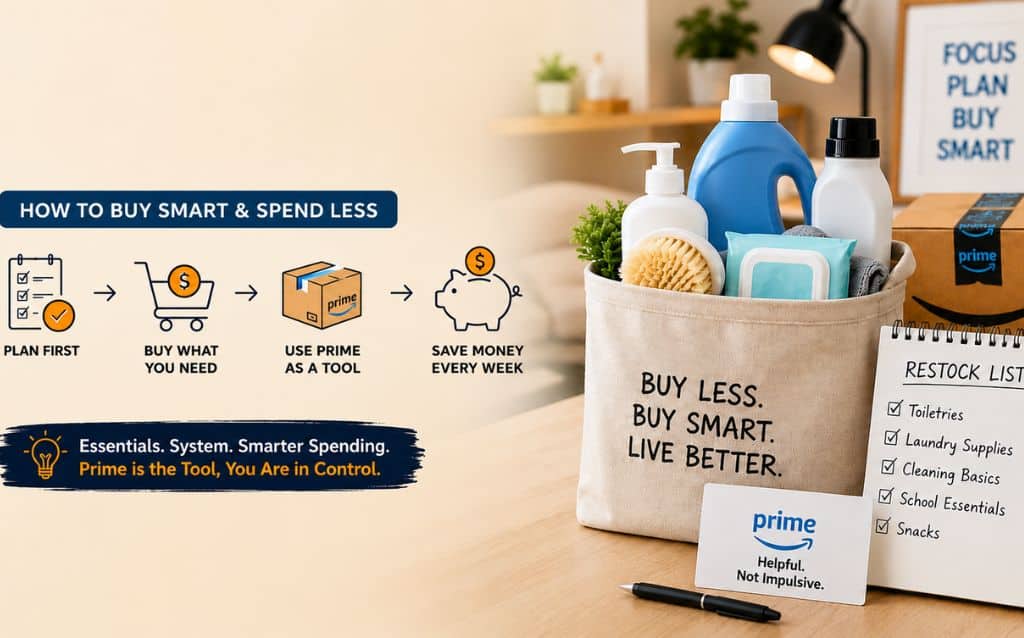
- Build a simple system before shopping
- Restock what you actually use
- Wait on comfort extras until the need is clear
- Use Prime as support, not as the reason to buy
Independent life feels easier when everyday essentials have a system. You do not need the perfect starter kit, a full backup shelf, or a cart that tries to predict every version of your future self.
The real savings come from knowing what you use, what you need, and what can wait. Prime can support planned buying, practical restocks, and urgent replacements, but it should stay in the background. Your routine should decide what belongs on the list.