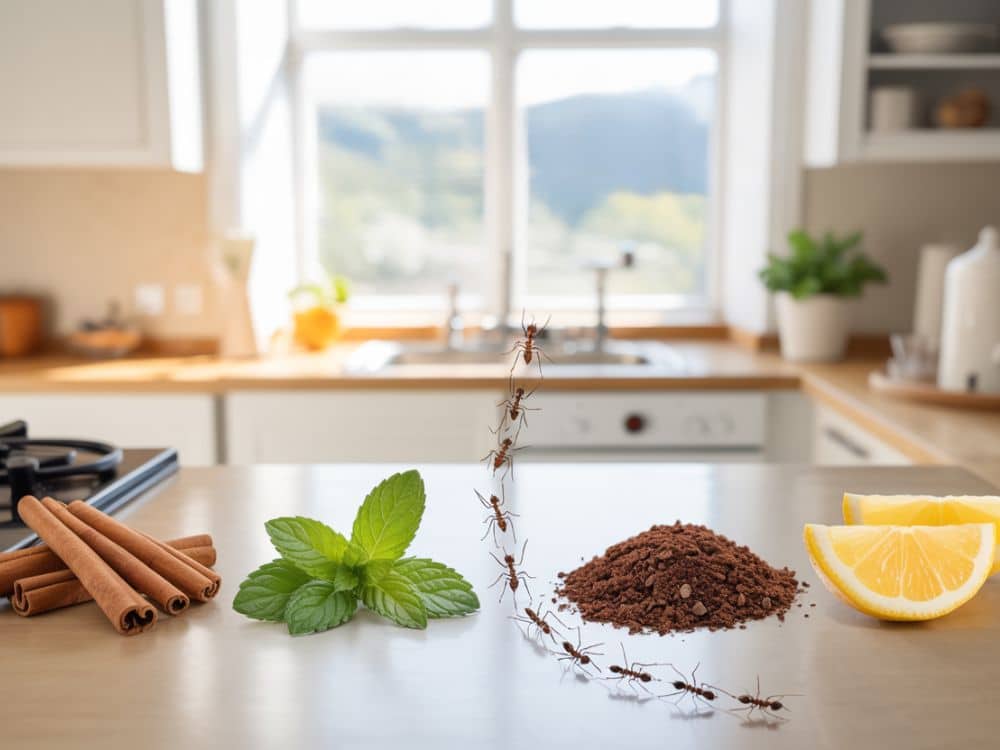
The smell ants seem to avoid most in everyday home use is peppermint, while white vinegar is one of the most useful scents for wiping away ant trails. Peppermint can help make entry points less attractive, and vinegar-water can temporarily disrupt the pheromone paths ants use to find food.
Scent repellents work best as part of a bigger plan: follow the trail, remove food or water, clean the surface, apply the scent barrier, and seal the entry point. If ants keep coming back, use this guide together with our broader natural pest control approach so you are not relying on smell alone.
- The most useful smells ants tend to avoid
- Why vinegar and peppermint work differently
- How to apply scent barriers without overdoing it
- When scent repellents are not enough
- Products that can help you clean trails and refresh barriers
The smells ants hate most
Think of scent as a traffic detour, not a full ant-control plan.
If you spray peppermint over a dirty counter or sticky ant trail, the food source may still win. First wipe the area with soap and water, then use vinegar-water or a repellent scent after the surface is clean.
Why Smells Affect Ants So Strongly
How ants use scent
- Food trails When a worker ant finds food, it can leave a pheromone trail that guides other ants to the same spot.
- Antennae do the work Ants rely on their antennae to read chemical signals on surfaces, along edges, and near entry points.
- Strong odors can confuse trails Vinegar, peppermint, citrus, and spices may mask or disrupt the signals ants are trying to follow.
- The effect is usually temporary Once the scent fades, ants may return if crumbs, moisture, or open gaps are still available.
What scents can and cannot do
Best Ant-Repelling Smells and How to Use Them
- PeppermintBest for refreshing short-term scent barriers around doors, windows, cracks, baseboards, and cabinet corners after the trail has been cleaned.Look forUse diluted peppermint oil or a ready-to-use peppermint ant spray.AvoidUsing undiluted essential oil on delicate surfaces or around pets without caution.
- White vinegarBest for wiping pheromone trails and removing light food residue from hard, safe surfaces.Look forUse a mild vinegar-water solution or vinegar-based cleaner after soap-and-water cleaning.AvoidUsing vinegar on marble, limestone, unsealed stone, or surfaces that may etch.
- CitrusUseful as a bright-smelling support scent around kitchen edges, trash areas, and entry points where ants have been seen.Look forUse diluted citrus oil or lemon-scented cleaning after surface testing.AvoidAssuming citrus alone will stop ants if food remains exposed.
- Cinnamon and cloveGood for dry corners, pantry edges, and places where you want a low-moisture scent barrier.Look forUse lightly in dry, low-traffic spots where powder will not be disturbed.AvoidUsing powders where children, pets, or food-prep surfaces may contact them.
- Coffee groundsBetter for outdoor areas than indoor counters. Dried used grounds may help mask trails near garden edges or foundation-adjacent spots.Look forUse outdoors only and replace before they mold.AvoidLeaving damp coffee grounds indoors.
- Diatomaceous earthNot a smell repellent, but a dry physical barrier that can support ant control in cracks and low-moisture edges.Look forUse food-grade product in dry cracks with careful dust control.AvoidBreathing dust, applying it wet, or using it on food-prep surfaces.
Vinegar can damage natural stone, and essential oils can stain or irritate when used too strongly. Test a small hidden area first, dilute DIY sprays, and keep oils and powders away from children, pets, dishes, and food-prep surfaces.
How to Make a Scent Barrier That Actually Works
-
Follow the ant trail first
Watch where the ants are entering and where they are going. Do this before wiping the trail away.
-
Remove the attractant
Clean crumbs, seal sugar and snacks, remove pet food, empty sticky trash, and dry any standing water.
-
Wash with soap and water
Use regular cleaning first to remove food residue. This gives scent repellents a cleaner surface to work on.
-
Wipe the trail with vinegar-water
Use a mild vinegar-water solution on surfaces that tolerate vinegar to disrupt the pheromone path.
-
Apply peppermint or another scent barrier
Mist entry points lightly or place diluted peppermint on cotton balls in corners where appropriate.
-
Seal the gap
If ants are entering through a crack, door gap, or window seam, scent alone will not solve it. Seal the route once you find it.
-
Refresh after cleaning or rain
Most scent barriers fade quickly. Reapply after mopping, wiping, heavy rain, or when ants begin testing the route again.
If ants suddenly appeared and you are not sure why, this related guide can help you diagnose the cause: Why do I suddenly have black ants in my house?
When Ant-Repelling Smells Are Not Enough
- Ants return every day A repeat trail usually means food, water, an entry gap, or a nest location has not been handled.
- There are multiple trails Several trails may point to a larger colony or more than one entry point.
- You see large black ants Large ants, sawdust-like frass, or activity near damp wood can point to carpenter ants and should be inspected more seriously.
- Ants come from walls or outlets A hidden route may need sealing, bait placement, or professional inspection instead of repeated scent sprays.
- You plan to use bait Do not spray repellents on or near bait. Repellent scents can keep ants from carrying bait back toward the colony.
If ants keep returning after you clean and apply a scent barrier, look for the real reason they are coming in: crumbs, pet food, moisture, trash odors, wall gaps, or an outdoor colony close to the house. Recurring trails, several entry points, wall activity, or suspected wood damage are signs that DIY is not enough. If activity is near sinks, damp cabinets, or bathroom drains, this guide on how to clean hidden drain buildup can help you rule out another pest-friendly source.
Products That Can Help You Use Ant-Repelling Scents More Effectively
Peppermint ant spray for active trails and entry points
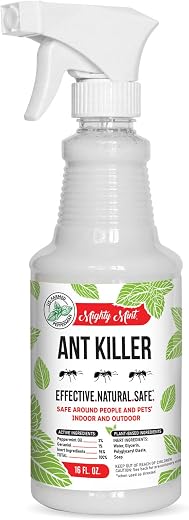
Use this type of ready-to-use peppermint spray after cleaning the trail and removing the food source. It is best for refreshing entry points, baseboards, cracks, and other areas where ants keep testing a route.
Peppermint essential oil for DIY scent barriers

Peppermint essential oil is useful if you prefer to make a diluted spray or place scented cotton balls in selected corners. Use it carefully, dilute it properly, and avoid applying it where pets, children, or food surfaces may contact it.
Vinegar cleaner for wiping ant pheromone trails

A vinegar-powered cleaner can support the trail-cleaning step after you remove crumbs and sticky residue. Test surfaces first, and avoid vinegar on natural stone or any material that may etch or discolor.
Diatomaceous earth for dry cracks and edges

Diatomaceous earth works as a dry physical barrier rather than a scent repellent. Follow the label, apply only a light layer in appropriate dry cracks or edges, avoid breathing the dust, and keep it away from food-preparation surfaces.
Use scent as a smart barrier, not a complete fix
- Peppermint works well as a short-term entry-point scent
- Vinegar is best for cleaning pheromone trails
- Citrus, cinnamon, and clove can support specific areas
- Scent barriers fade and need refreshing
- Food, water, and open gaps matter more than fragrance
Peppermint is the best everyday answer when people ask what smell ants hate most, and vinegar is one of the best tools for wiping away ant trails. But the strongest routine is simple: follow the trail, remove the attractant, clean the surface, refresh a scent barrier, and seal the entry point. If ants keep returning, the problem is probably bigger than smell.