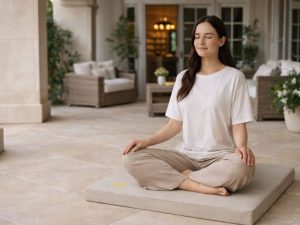
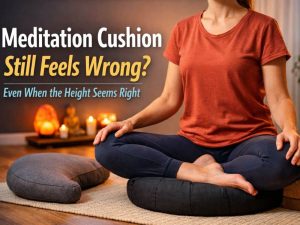
If your knees hurt during meditation, it becomes hard to focus on anything else.
Sometimes the discomfort shows up right away. Other times it builds after ten or twenty minutes until you keep shifting just to stay seated.
In many cases, knee pain during meditation is not a discipline problem. It is a support problem. The seat may be too low, the cushion may compress too much, or your knees may need better support where they meet the floor.
If the setup still feels wrong even after you address the obvious basics, the next issue may be shape, firmness, or the fact that the sitting posture itself is not working well for your body.
That is also why it helps to understand when you don’t need a meditation cushion yet, because not every uncomfortable sit means you need to buy support immediately.
This guide will help you choose the right meditation cushion for knee pain based on what is actually causing the strain: low seat height, collapsing fill, hard floor contact, or a sitting position that does not suit your body.
If pain feels sharp, unstable, or continues outside meditation, stop and treat that as a medical issue rather than something to push through.
Why knee pain happens during meditation
This article is for you if your knees feel sore, pressured, or strained during seated meditation, especially if the discomfort makes you shift often or cut sessions short.
Most meditation-related knee pain is really pressure or strain: a dull ache, tightness, or load that builds as you sit.
Sharp pain is different. If you feel stabbing pain, sudden catching, instability, or pain that intensifies quickly, stop and change position. Do not try to sit through it.
If that pain keeps happening or shows up outside meditation, get medical guidance instead of treating it like a cushion problem.
The three setup problems that cause most knee pain
In many cases, knee pain during meditation comes from one of three setup problems:
1. Your seat is too low
When the hips sink below the knees, the knees end up carrying more load and the lower back often collapses with them. If you are unsure whether height is the problem, start with this meditation cushion height guide for beginners.
2. Your cushion compresses too much
The listed height may look correct, but once you sit down, the fill collapses and your effective height drops. That often brings pressure back into the knees after a few minutes.
3. Your knees need softer contact with the floor
Sometimes the height is fine, but the contact point is still too hard. In that case, the problem is not only the seat. It is the support under the knees and ankles.
Once you identify which of these is happening, choosing the right support gets much easier.
Quick diagnosis: what is most likely causing your knee pain?
| What you notice first | Most likely problem | Support to try first |
|---|---|---|
| Knees sit higher than hips | Seat too low | Higher or adjustable cushion |
| Pain appears after 15–30 minutes | Cushion compresses over time | Firmer, shape-holding fill |
| Knees hurt where they touch the floor | Hard contact points | Zabuton or knee/ankle pad |
| Cross-legged sitting always aggravates your knees | Sitting style is the problem | Bench or kneeling setup |
What actually helps knee pain: the best support options by situation
Knee pain does not have one universal fix. What helps depends on where the strain is coming from.
A higher seat
Best when your hips sit below your knees.
Raising the seat is often the fastest way to reduce knee load. Start with enough lift to bring the hips slightly above the knees without making the base feel perched.
A zabuton or knee support pad
Best when floor contact is the problem.
If the seat height already feels reasonable but your knees still dislike the floor, a softer support layer under the knees and ankles can make longer sitting much easier. If you are unsure what kind of floor support this is, start with what is a zabuton.
A bench or kneeling setup
Best when cross-legged sitting consistently aggravates your knees.
A kneeling bench changes how weight is distributed and can reduce the twisting or compression some knees feel in cross-legged positions. If you are deciding between these two approaches, compare meditation bench vs cushion for knee pain before buying.
A V-shaped or thigh-supporting cushion
Best when tight hips make the legs feel unsupported.
For some body types, extra thigh support improves pelvic position and reduces the urge to force the legs down, which can indirectly reduce knee strain.
A fill that holds its shape
Best when pain shows up later in the sit.
If your cushion feels fine at first but knee pain returns after fifteen or twenty minutes, compression is often the missing factor. Comparing buckwheat meditation cushions for long sittingg is a useful next step if you suspect your current cushion is too soft or sinky.
Best meditation cushion support for knee pain: top picks
Before choosing a product, match the support type to the pattern of pain you are actually feeling. These are the most useful support options for knee pain, depending on whether you need more height, softer floor contact, better weight distribution, or a fill that holds its shape.
1) Adjustable-height meditation cushion
Best for: Tight hips, knees higher than hips, beginners needing more lift
Pros:
- Height can be fine-tuned as your flexibility changes
- Helps reduce knee load by elevating the hips
Cons:
- Too much height can feel unstable if you over-lift
- Some fills compress over time and need readjustment


2) Zabuton meditation mat
Best for: Knee soreness from hard floor contact (tile/wood)
Pros:
- Softens pressure at the knee/ankle contact points
- Works with any sitting posture and any cushion
Cons:
- Does not fix hip-to-knee height problems by itself
- Adds bulk if you need to store or travel with it

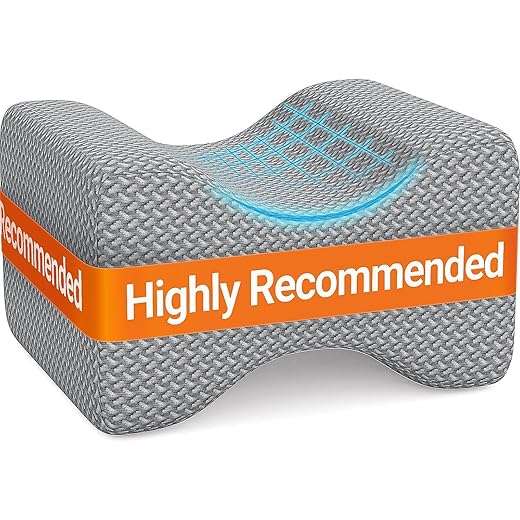
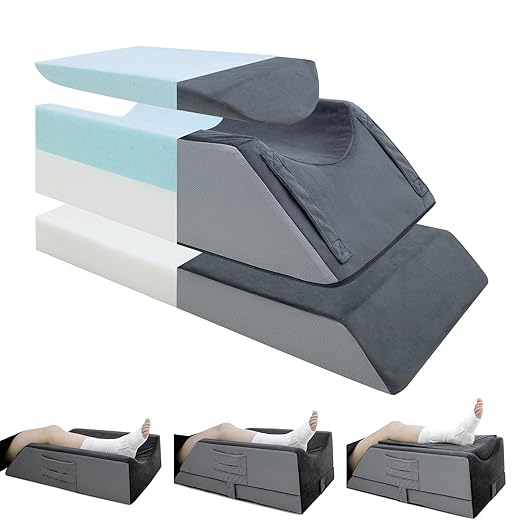
3) Knee pillow or ankle support pads
Best for: Targeted knee/ankle support, uneven discomfort (one side worse)
Pros:
- Adds support exactly where you need it
- Easy to combine with your current cushion
Cons:
- Can shift during sitting unless positioned carefully
- Doesn’t replace the need for correct seat height
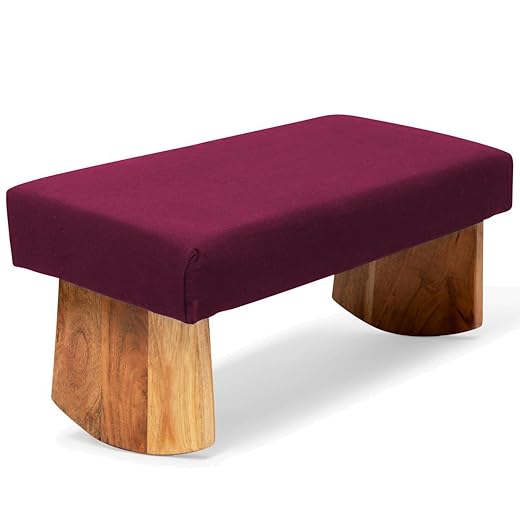
4) Seiza meditation bench
Best for: People who can’t sit cross-legged comfortably; knee-friendly long sitting
Pros:
- Changes weight distribution and can reduce knee strain
- Often feels more stable for long, still sessions
Cons:
- Not ideal if kneeling itself irritates your knees
- Takes time to find the right bench height/angle
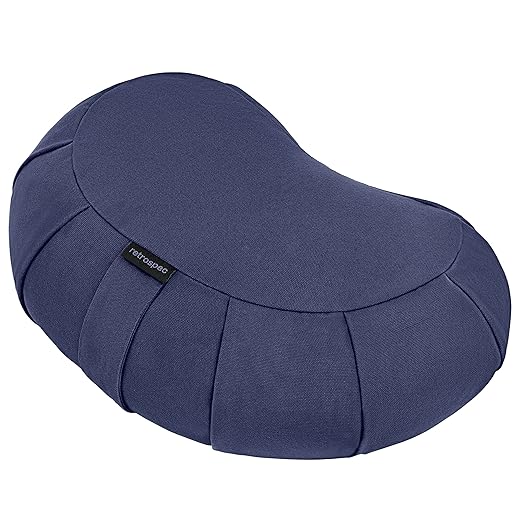
5) Buckwheat-filled meditation cushion
Best for: Pain that appears after 15–30 minutes; cushions that feel too soft/sinky
Pros:
- Holds shape better, helping maintain effective height
- Can feel stable for long sitting
Cons:
- Firmer feel may not suit everyone
- Heavier than some other fills
How to choose the right support for your situation
Use the scenarios below to identify what is most likely causing your knee pain, then start with the support that solves that problem first.
If your hips are tight and your knees lift up
Most likely cause: the seat is too low for your current flexibility.
Start here: raise your seat height first, then add soft support under the knees only if floor contact still bothers you.
Quick check: if your hips sit below your knees when you relax into posture, start with the meditation cushion height guide for beginners before buying anything new.
If your legs go numb first, then your knees hurt
Most likely cause: pressure builds from contact points and poor circulation, then the knees start compensating.
Start here: add a softer support layer under the knees and ankles, and re-check whether your seat height is sinking too low.
Next step: if this happens in longer sessions, how to sit longer without your legs going numb will help you troubleshoot what is driving the numbness.
If pain shows up only after 15–30 minutes
Most likely cause: compression over time.
Start here: choose firmer support or a fill that holds shape better.
Next step: if your current cushion feels fine at first but sinks later, compare buckwheat meditation cushions for long sitting before replacing your full setup.
If one knee hurts more than the other
Most likely cause: asymmetry in your base, hip tightness, or uneven pressure.
Start here: add targeted support under the painful side and slightly reduce or rebuild the height until the pelvis feels more level.
If you are not sure where to start, fix height first, then floor support, then fill. In many cases, the best meditation cushion for knee pain is simply the setup that removes knee load instead of asking your knees to compensate for a bad base.
What to look for before you buy
Before you buy, match the setup to the problem you are trying to solve.
If you want the full selection framework beyond knee pain alone, read how to choose a meditation cushion for the bigger picture.
Height range and adjustability
The most common mistake is choosing a cushion that ends up too low once you are actually seated.
Look for:
- enough height to let the hips sit slightly above the knees
- adjustable fill if you are unsure what height you need
Firmness and compression over time
If your setup feels fine at first but knee pain shows up later, compression is often the reason.
Look for:
- a fill that holds shape consistently
- less sinking during long sits
Shape and knee clearance
Shape affects how the thighs rest and how pressure distributes through the knees.
Look for:
- a stable base
- enough room for the thighs to relax
- more thigh support if tight hips are part of the problem
Add-ons: knee pillows and floor pads
Sometimes the cushion itself is fine and the real issue is the floor contact.
Look for:
- a zabuton-style base
- small knee or ankle pads if one side is more sensitive
FAQs
How do I choose a meditation cushion for knee pain?
Start by identifying what is actually causing the strain. If your hips sit below your knees, choose more height. If the floor contact hurts, add a zabuton or knee pad. If pain appears later in the sit, choose a fill that holds its shape better.
What is the best meditation cushion for knee pain?
The best option depends on what is causing the discomfort. A higher or adjustable cushion helps when the seat is too low, while floor padding or a bench may work better if the pressure comes from contact points or the way you sit.
Why do I get knee pain during meditation?
In many cases, knee pain during meditation comes from one of three setup problems: the seat is too low, the cushion compresses too much, or the knees need softer contact with the floor.
Can the wrong meditation cushion height cause knee pain?
Yes. If the seat is too low, more load shifts into the knees and the lower back often starts collapsing with it. That makes discomfort build faster, especially in longer sits.
Is a taller meditation cushion always better for knee pain?
No. The goal is not to sit as high as possible. The goal is to keep your hips slightly above your knees without making the base feel unstable or forcing the lower back to overwork.
What meditation cushion height is best for knee pain?
The best height is the one that lets your hips rest slightly above your knees while keeping the base stable. For most people, that reduces knee load more effectively than simply choosing the tallest cushion available.
Should I buy a knee pillow set or a different cushion?
If the problem is hard floor contact or one knee feels more sensitive, a knee pillow set can help. If your hips sit too low or your cushion compresses during the sit, changing the cushion or adjusting height usually matters more.
Do I need a zabuton for knee pain during meditation?
You may. If your seat height feels mostly right but your knees or ankles still hurt where they meet the floor, a zabuton or similar support layer can make a big difference.
Is a meditation bench better than a cushion for knee pain?
Sometimes. A bench can help when cross-legged sitting consistently aggravates your knees, but it is not always better if kneeling itself irritates the joint.
Why does my knee pain start after 15 to 30 minutes?
That often means your cushion compresses over time, your effective height drops, or pressure gradually builds at the contact points. Pain that shows up later in the sit is often a support problem, not a posture cue you should ignore.
What kind of meditation cushion helps if one knee hurts more than the other?
When one knee hurts more than the other, the problem is often asymmetry in the base, uneven hip tightness, or pressure on one side. In that case, targeted support under the more sensitive side and small height adjustments usually help more than replacing the whole setup immediately.
What is the best support for longer sits if my knees hurt?
For longer sits, the best support is the setup that reduces knee load and keeps its shape over time. That may mean a higher cushion, a firmer fill, added floor padding, or a bench if cross-legged sitting keeps aggravating the knees.