There’s a special kind of peace that only arrives after dark – when the world grows quiet and a good book feels like company.
But the light that guides your words can also make or break the experience. Too bright, and it ruins the calm. Too dim, and your eyes ache before you finish the page.
That’s why finding the best lighting for reading at night without eye strain is more than just a matter of convenience – it’s part of creating a more cozy, nurturing everyday life that supports you in quiet ways
The right glow lets you read longer, sleep better, and fall a little deeper into your story without discomfort or distraction.
This guide will help you understand how to choose light that supports your eyes, your mood, and your love for reading – one gentle page at a time.
Why night-time reading needs special lighting

When the sun goes down, everything about the way we see changes.
Our eyes shift from daylight clarity to the dim, scattered glow of indoor lamps. Pupils widen, focus slows, and harsh light suddenly feels sharper than it did just hours before.
That’s why reading at night requires a different kind of care. The lighting that feels fine during the day can cause strain, glare, and even headaches once the rest of the room grows dark. Your eyes work harder to balance contrast between bright pages and deep shadows – and over time, that tension turns into fatigue.
The best lighting for reading at night without eye strain helps restore that balance. It softens brightness, warms the tone, and creates an even field of light that feels calm instead of clinical.
It’s not just about seeing clearly – it’s about feeling comfortable enough to stay with your book long after the world has gone quiet.
Choose the right brightness, temperature & position
The secret to comfortable night reading isn’t in the lamp’s design – it’s in how you use it.
Light has three gentle rules: brightness, color, and direction.
When they work together, your eyes relax, your pages glow evenly, and the world around you fades into quiet focus.
Brightness: gentle, not harsh
Your light should be bright enough to make text crisp, but never so strong that it reflects off glossy pages.
Aim for 450 to 800 lumens for most bedside or reading lamps – that sweet spot where words stay sharp but the glow feels soft.
If your lamp has adjustable levels, start low and raise it just until the page looks evenly lit.
💡 Tip: If you find yourself squinting, your light is too dim.
If you notice afterimages when you look away, it’s too bright. The right brightness is the one that disappears – you forget the lamp is even there.
Color temperature: warm light wins every time
Cool white or bluish light (above 4000K) might look clean, but it’s harsh on tired eyes and can interfere with melatonin, making sleep harder.
Instead, choose a warm light between 2700K and 3000K.
This amber-toned glow mimics candlelight, helping your eyes relax while creating a sense of calm – perfect for evening reading rituals.
Try to stay consistent, too. Switching between cold and warm tones confuses your eyes and makes it harder to unwind. A steady, warm hue tells your body: it’s time to rest, not rush.
Lamp position: let the light follow the page
Where your light sits matters just as much as its tone. Keep the lamp slightly behind and above your shoulder, angled toward the page so that light falls evenly without glare.
If you’re right-handed, place the lamp on your left side (and vice versa) to avoid casting shadows across your text.
Avoid direct light shining into your eyes or bouncing off glossy covers. For late-night readers sharing a room, clip-on lights with focused beams offer comfort and courtesy – they let you stay in your story without waking someone else.
Types of reading lights that work at night

Not all lights are created equal – and at night, the kind you choose can completely change your reading experience.
Some lamps are meant to flood a space, while others exist to create a small circle of calm – the kind that lets you read longer, softer, and without strain.
Clip-on or book lights
Compact and convenient, clip-on lights are perfect for readers who love quiet moments in bed or while traveling. They cast a gentle, focused beam that stays on your page without disturbing the room.
Modern versions often include adjustable warmth, dimming settings, and rechargeable batteries – simple comforts that make a big difference during long nights.
For many readers, these little details are part of what turns reading into a ritual – much like the thoughtful accessories described in Must-Haves for Book Lovers, where every item is chosen to make your time with a book feel calmer and more personal.
Adjustable floor and desk lamps
If your books have a permanent home – a corner chair, a desk by the window – an adjustable lamp can make that space complete.
Look for designs with pivoting arms or flexible heads that let the light move with you, not against you.
The most comfortable setups use warm light between 2700K and 3000K combined with dimmable brightness, so your eyes adjust naturally as evening deepens.
A lamp that remembers your settings – brightness, tone, direction – quickly becomes invisible, blending into the rhythm of your reading without demanding attention.
Smart lights and dimmable options
Smart lighting has brought a quiet kind of luxury to reading.
With voice control or app-based settings, you can tune the light to your exact preference – a warm amber glow before bed, or a neutral tone for late-night study.
The most comforting setups use scheduled dimming, easing brightness as the night slows down.
This rhythm supports both your eyes and your sleep – a seamless way to let stories fade into rest.
Setup tips for different home scenarios
Every reader’s space is different – and so is the way light behaves in it. A lamp that feels perfect in a quiet bedroom may look too harsh in an open living room.
The secret lies in adjusting your lighting to both the mood of the space and the distance between you, your light, and your book.
Below are a few ways to bring balance, depending on where your reading moments unfold.
Small apartments or shared rooms
When space is tight, lighting has to be both functional and discreet.
Clip-on reading lights, wall-mounted sconces, or narrow floor lamps with adjustable arms all help you save surface area without sacrificing comfort.
Choose focused, directional light rather than general illumination – this creates a private bubble of warmth even when you share a room.
The trick is to layer light: a small wall sconce near your bed for soft ambience, and a clip-on light for focused reading.
Together, they mimic the coziness of a nook without taking up extra room.
Warm bulbs (around 2700 K) keep the light from feeling clinical, especially in small spaces where reflection can amplify glare.
In apartments where every inch matters, think vertically.
Mounting a narrow light fixture on the wall or shelf can free up space and make your corner feel curated instead of crowded – a principle that echoes the design ideas explored in Interior Hacks for Compact Homes, where lighting becomes both décor and function.
Bedside reading in the bedroom
Bedside lighting should make you feel cocooned – present in your book but halfway to dreaming.
Avoid harsh overhead lights; they flatten the room and pull you out of your story.
Instead, layer a warm bedside lamp (2700 K) with a soft backlight or candle-like glow that surrounds your immediate space but leaves the rest of the room dim.
Position your lamp slightly behind your shoulder to minimize shadows on the page.
If you read digital books, use your device’s warm-light setting or “night mode” to avoid blue-light fatigue.
Smart bulbs with preset timers are particularly useful here – they can fade out gradually, helping your mind transition from reading to rest.
Textures also matter in bedrooms: lampshades made from linen or frosted glass soften diffusion, keeping the light gentle on sleepy eyes.
The goal is to create a rhythm – your lamp brightens when the book opens, dims as you begin to slow your breathing, and finally rests when you do.
Living room evenings
In living spaces, your reading corner competes with multiple light sources: TV glow, ceiling fixtures, and decorative lamps.
Balance is key – you want your reading area bright enough for clarity but not so isolated that it feels disconnected from the rest of the room.
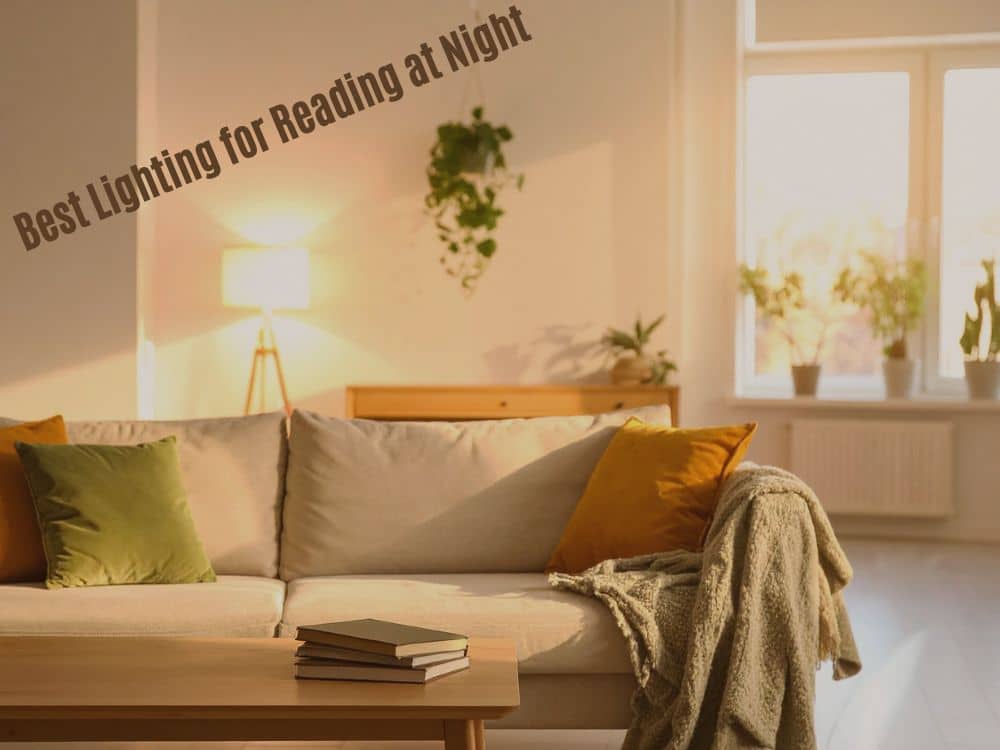
Start with ambient light at a low level (floor lamps, table lamps), then add a directional reading light with adjustable focus.
This dual setup prevents harsh contrast between bright pages and dark surroundings – one of the main causes of nighttime eye strain.
If you read with family or friends nearby, indirect lighting (such as a lamp aimed at a wall rather than the book) softens the visual boundaries between you and your environment, creating a shared sense of calm.
For an added layer of comfort, use dimmable bulbs that shift tone from bright white to soft amber as the evening deepens.
And remember, light has mood. In the living room, it should invite – not command – attention.
When your lighting feels like an afterthought, your story struggles to stay center stage.
Protecting your eyes and your reading habit
Reading at night can be one of life’s quiet pleasures – but it’s also when your eyes work hardest.
After a long day spent staring at screens or artificial light, they become more sensitive to glare and contrast.
To keep reading a source of comfort rather than fatigue, you need both the right environment and a few mindful habits.
Control glare and light direction
Glare is one of the main causes of eye strain during night reading. It occurs when the light from your lamp reflects off glossy paper or digital screens, forcing your eyes to constantly adjust.
Position your lamp slightly behind and above your shoulder, angled so that light falls across the page rather than directly onto it.
Use matte or frosted bulbs instead of clear ones – they diffuse brightness and eliminate sharp reflections.
If you prefer reading on an e-reader, lower the brightness to match the room’s light level.
Your screen should feel like part of the space, not a spotlight in the dark.
Choose the right light temperature
The color of your light deeply affects how your eyes respond.
Cool, bluish tones (above 4000K) make it harder to fall asleep and cause fatigue when used for long periods.
Warm light between 2700K and 3000K is the safest range for evening reading – it softens edges, reduces visual tension, and signals your body to unwind.
You can also use bulbs labeled “warm white” or “soft white.” These mimic the glow of late-afternoon sunlight, creating a gentler transition between wakefulness and rest.
This simple shift can make hours of reading feel easier, even under artificial light.
Take regular eye breaks
Even the best lamp can’t protect your eyes if you never look away.
Every 20 minutes, give your eyes a brief pause: focus on something about 20 feet away for 20 seconds.
This simple rule – known as the 20-20-20 method – helps relax the tiny muscles that control focus, preventing the dull ache that builds up during long reading sessions.
Blink often, too. When you read intently, your blink rate can drop by half, which dries the eyes and makes them feel gritty.
Keeping a humidifier nearby or using lubricating eye drops can also reduce dryness in winter months.
Maintain a consistent routine
Your eyes, like the rest of your body, respond to rhythm.
Try reading under the same lighting setup each night – similar brightness, same position, and a familiar glow.
This consistency trains your visual system to relax faster, making it easier to focus and unwind.
Avoid switching between cold task lights and warm bedside lamps in a single session; the constant color change forces your pupils to readjust repeatedly
Instead, find one balanced setup that supports both clarity and calm – and keep it. A steady environment turns reading into a ritual, not just an activity.
Light that lets stories shine
Good lighting is never just about visibility – it’s about how it makes you feel while you read.
At night, a soft, well-balanced glow can turn silence into warmth, letting your eyes move easily and your mind rest deeper in every line.
Finding the best lighting for reading at night without eye strain comes down to balance – not brightness.
Warm tones between 2700K and 3000K, even diffusion, and thoughtful placement protect your eyes while inviting calm.
This kind of light doesn’t shout; it breathes quietly in the background, shaping the mood as much as the words themselves.
Across all cozy interiors, designers know that the most peaceful rooms share one secret – their lighting has rhythm.
So tonight, as you open your book, let the light fall just right – steady, warm, and kind – a quiet companion that lets your stories shine without ever asking for attention.