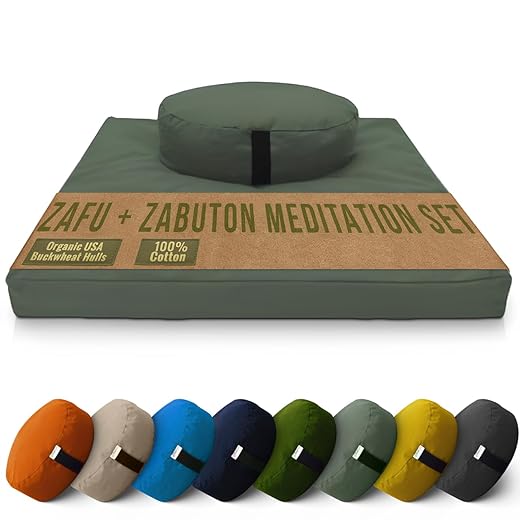
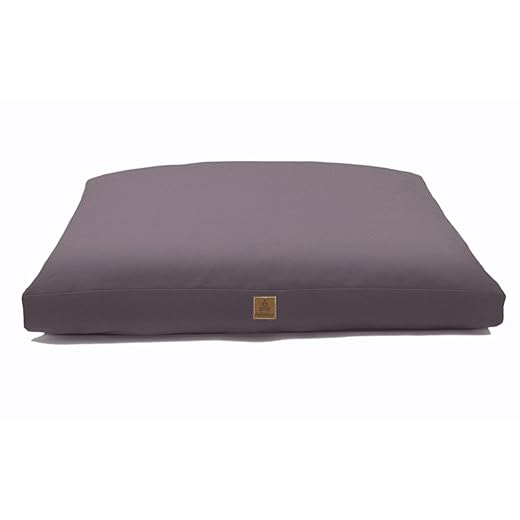
Zabuton is not something you buy just to make your meditation setup look complete. If you sit on hardwood, tile, or any other hard floor and your knees or ankles start to ache within a few minutes, the problem may not be your focus or discipline at all. It may simply be the layer between your body and the floor.
The right zabuton will not magically fix every posture issue, but it can reduce pressure on your knees, ankles, and lower legs enough to make meditation feel more sustainable.
That matters if you are looking for a more comfortable option for sore knees, still comparing zafu vs. zabuton, or trying to figure out how to choose a meditation cushion when the floor itself is the main source of discomfort.
In this guide, I’ll help you figure out when a zabuton is enough on its own, when a zafu and zabuton setup makes more sense, and what actually matters most on hard floors – thickness, size, support, and how the cushion feels after more than just the first few sits.
If the floor is the real problem, the right zabuton can do more for your comfort than forcing yourself to “sit through it.”
Quick picks
Hard floors change what “comfortable” really means in meditation. If you already know that hardwood or tile is what makes your sits feel short, fidgety, or harder on your knees, the picks below are a better starting point than the generic cushions you often see grouped into broader best meditation cushions roundups.
And because floor discomfort is often confused with posture discomfort, this is also one of those cases where how to choose the right meditation cushion matters more than buying the softest-looking option.
| Best for | Pick | Why it works |
|---|---|---|
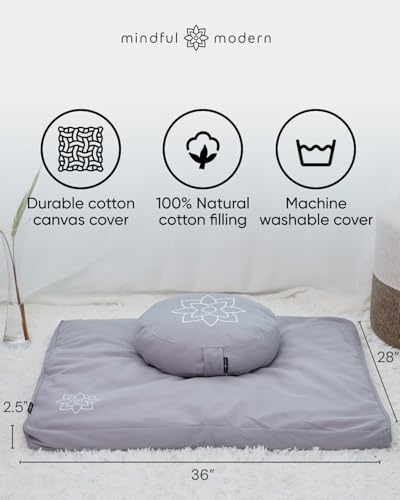
| Best overall | Mindful & Modern Zabuton Meditation Mat | Broad enough for most seated and kneeling setups, with the kind of dedicated floor padding that makes hard surfaces feel less harsh on the knees and ankles. |
| Best for sore knees | MAYA LUMBINI Organic Meditation Mat Zabuton/ Floor Pillow | The thicker build makes it a stronger fit for people who feel pressure quickly in the knees, ankles, or lower legs on hardwood or tile. |
| Best budget starter | Bean Products Zabuton Meditation Cushion, Cotton – Small | A simpler first step if you want to test whether a real zabuton improves hard-floor comfort before committing to a larger setup. |
| Best with a zafu | FelizMax Zabuton Meditation Mat | Works well as a padded base under a raised seat, especially when you want knee and ankle support without making the whole setup feel overly bulky. |
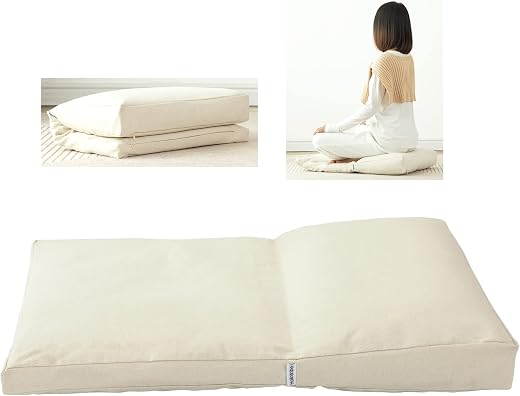
| Best for small spaces or travel | Halotribe Meditation Cushion and Zabuton 2-in-1 | Combines a compact seat and floor layer in one piece, which makes it easier to store, carry, and use in smaller spaces than a full traditional setup. |
If your body is telling you that the floor is the issue, not just your posture, that distinction becomes more important than the usual zafu vs zabuton debate. A thinner or prettier cushion may fit the room better, but on hard floors, thickness and coverage usually matter first.
A real zabuton should solve floor pressure, not just look like part of a meditation setup.
The best zabuton for meditation on hard floors
The right zabuton should do one job well: take the edge off the floor without making your whole setup feel unstable. That means the best pick is not always the softest or the prettiest one.
On hard floors, what matters more is whether the cushion keeps your knees, ankles, and lower legs comfortable after your weight settles into it – and whether it fits the way you actually meditate.
Best overall for hard floors
Mindful & Modern Zabuton Meditation Mat – Best for most people who want a true zabuton without overcomplicating their setup
This is a strong starting point if you want a real zabuton for hardwood or tile and do not need anything highly specialized. It suits people who want broad floor coverage for kneeling or seated meditation, especially if the main problem is pressure under the knees and ankles rather than a major posture issue.
What makes it work on hard floors is the overall balance. It is purpose-built as a zabuton rather than a decorative floor cushion, and the cotton-filled design makes more sense here than something overly plush that may sink too easily.
For many people, that middle-ground feel is exactly what they need: enough padding to soften the floor, enough structure to still feel grounded.
Pros
- broad coverage for knees and ankles
- purpose-built for meditation rather than general floor lounging
- simple choice if your main issue is floor pressure, not hip height
Cons
- not the thickest option in this group
- may not feel protective enough for very sensitive knees on especially hard tile


If your knees are already quite tender, I would skip this one and go straight to the thicker Maya Lumbini or Halfmoon options instead.
Best for sensitive knees and ankles
MAYA LUMBINI Organic Meditation Mat Zabuton/ Floor Pillow – Best for people who feel the floor quickly
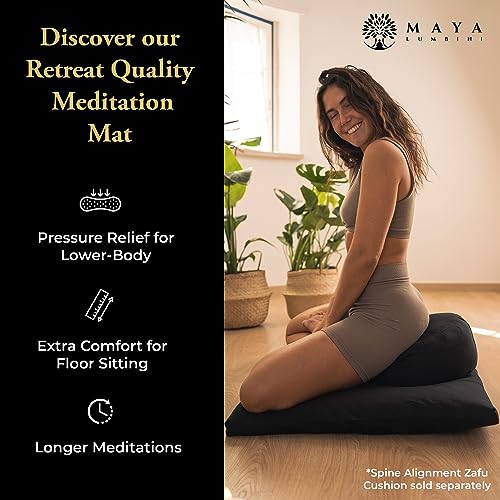
This is the pick I would look at first if your knees or ankles start complaining early in a sit.
On hard floors, the advantage here is obvious: more thickness, more room for pressure relief, and a product description that actually speaks to the problem people are trying to solve.
If you sit on hardwood or tile and know your body reacts strongly to floor contact, that extra cushioning can matter more than elegant materials or minimalist design.
Pros
- available in thicker 3-inch and 4-inch versions
- specifically marketed for reducing knee and leg pain
- easy fit for people who know they need more than average padding
Cons
- some people may find it softer or puffier than they expected
- the thicker build may feel bulky if you have limited space

If you want something more grounded and less plush-feeling, Halfmoon may be the better choice.
Best budget starter
Bean Products Zabuton Meditation Cushion – Best for testing the idea before spending more
This is the kind of option that makes sense when you are fairly sure the floor is part of the problem, but you are not ready to commit to the biggest or thickest zabuton right away.
What makes it a good starter pick is not that it is the best-performing zabuton overall, but that it does the basic job without pretending to be more than it is. It gives you a real meditation-specific layer under the body, which is often enough to tell whether your discomfort is actually coming from the floor.
Pros
- designed around joint support, not just general lounging
- washable cotton fill is practical for regular use
- sensible first step if you want to test whether a zabuton helps
Cons
- may not satisfy people who need substantial thickness
- less compelling if you already know your knees need a lot of cushioning


If you already know you are dealing with hard-floor pain rather than general discomfort, it may be worth skipping the starter option and going straight to a thicker model.
Best zabuton to pair with a zafu
FelizMax Zabuton Meditation Mat – Best if you already sit on a raised cushion or bench
This cushion is best suited for use when you already have a zafu cushion or a meditation bench and need an additional layer of padding underneath. It is designed for both kneeling and sitting, to be used alongside a zafu or a higher seat, featuring a washable cotton cover and an organic cotton filling.
This makes its role in a complete meditation setup much clearer compared to many other descriptions where you’re left guessing how it should be used.
For hard floors, that pairing logic matters. A zafu can lift the hips, but it does not protect the knees and ankles by itself. This mat fills that gap well, especially if you already know you prefer a raised seat and want the floor layer to feel stable rather than incidental.
Pros
- clearly sized and positioned for use under a zafu or bench
- 3-inch profile offers meaningful padding without becoming as bulky as thicker mats
- washable cover adds practical value
Cons
- not the strongest choice if you need a zabuton-only solution and lots of extra thickness
- may feel like overkill if you mostly meditate on a chair


If you are not using a raised seat and the floor itself is the only issue, a simpler standalone zabuton may be the cleaner buy.
Best for small spaces or travel
Halotribe Meditation Cushion and Zabuton 2-in-1 – Best if you need something compact and portable
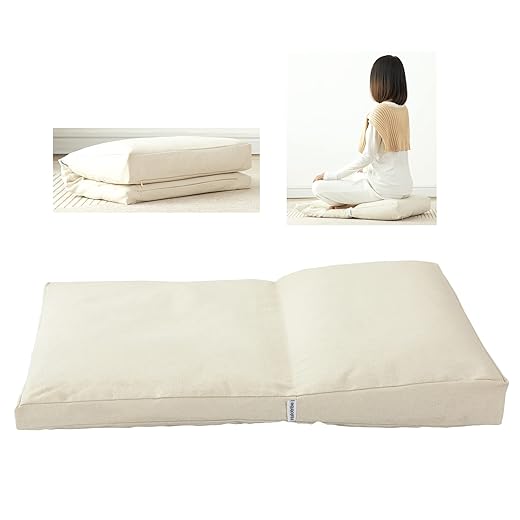
This one is not the purest traditional zabuton in the group, but it earns its place because it as a 2-in-1 design that combines a supportive buckwheat pillow with a soft 4 cm zabuton section, focusing on comfort and portability.
That makes it a better fit for people who live in smaller spaces or want something easier to move around than a full traditional setup.
Its value is convenience. You get both some hip support and a softer floor layer in one piece, which can be useful if you do not want multiple bulky items.
But the tradeoff is that it is less of a dedicated hard-floor zabuton than the other picks above. It is best seen as the practical choice, not the most protective one.
Pros
- compact, portable 2-in-1 design
- includes both hip lift and floor cushioning
- easier for small homes, shared rooms, or travel
Cons
- less specialized than a true standalone zabuton
- the zabuton section is smaller and thinner than the strongest hard-floor options here


The best zabuton is not the one that looks most serene in your space. It is the one that still keeps your knees and ankles comfortable once the floor starts pushing back.
What to look for in a zabuton for hard floors
A zabuton that looks comfortable in a product photo can still feel disappointing on a hard floor. What matters here is not just softness, but whether the cushion can keep your knees, ankles, and lower legs comfortable after your weight fully settles into it.
On hardwood or tile, the best zabuton usually comes down to four things: thickness, coverage, fill, and stability.
Thickness that actually helps on hard floors
Thickness is the first thing most people notice, but it is also where a lot of bad buys happen. A zabuton can look generously padded and still feel too thin once you sit on it.
On a hard floor, that usually shows up quickly: your knees start pressing down, your ankles feel sharp against the surface, or your shins never fully relax.
What matters is not whether the cushion feels plush when you press it with your hand. What matters is whether it can absorb pressure without flattening too quickly under your body.
If you sit for longer sessions, practice on tile, or already know your joints are sensitive, a thicker zabuton with better structure usually makes more sense than something softer but flatter.
What to watch for:
- too thin, so your knees and ankles still feel the floor
- too soft, so the filling compresses too easily and loses support
- attractive loft at first touch, but not enough real cushioning once you settle into the sit
- thickness that sounds good on paper but does not hold its shape over time
Size and knee coverage
Size matters more than many people expect. A zabuton works best when your knees, ankles, and the parts of your lower legs that touch the floor all stay on the padded area. If your knees end up near the edge, the comfort difference drops quickly.
This matters even more if you meditate kneeling, sit with a wider leg angle, or shift positions during a longer session. A compact zabuton can make sense in a smaller home, but on hard floors, smaller often means less forgiving. You are trading coverage for convenience.
A few signs you may need more surface area:
- your knees naturally open wide when you sit
- you switch between kneeling and cross-legged positions
- your ankles or shins often end up close to the edge of the cushion
- you want one zabuton to work with both floor sitting and a raised setup
For smaller-framed meditators, a less bulky setup can still feel more manageable, which is why the fit questions behind best meditation cushion for short people can be useful. But on hard floors, too little coverage is usually a bigger problem than a little extra size.
Fill material and how it feels over time
The filling decides whether a zabuton stays supportive or slowly turns into something that only looks good in the corner of the room.
Cotton batting and recycled cotton often feel more grounded and stable, which is one reason they work well in zabutons. They usually give a firmer, flatter kind of support that makes more sense on hard floors than a plush fill that sinks too easily.
A cushion that feels extra soft at first can be tempting, but softness is not always the same as comfort once you are twenty minutes into a sit.
This is really a question of compression. How much does the zabuton flatten over time? How quickly does it stop doing its job?
That same logic shows up in material comparisons like buckwheat vs memory foam meditation cushion and whether buckwheat meditation cushions are worth it for long sitting.
Even though those pieces focus more on raised cushions than flat bases, the buying mindset is similar: you are not choosing what feels nicest in your hand, but what keeps supporting your body once the session is underway.
A removable, washable cover is also worth more than it sounds. If you use your zabuton regularly, that practical detail stops being minor very quickly.
Stability when used with a zafu or bench
A zabuton does not always work alone. Sometimes its real job is to make the rest of your setup feel more stable.
If you place a zafu on top, the zabuton should create a grounded base rather than a soft platform that shifts or sinks unevenly. If the outer edges compress too much, or the surface underneath the zafu feels unstable, the whole posture can start to feel slightly off.
The same is true with a bench, but in a slightly different way. With a zafu, the goal is usually balance under the seat and softness under the knees.
With a bench, you may need the padding to protect the knees and shins more directly, especially if your setup still leaves pressure points where the body meets the floor.
That is why it helps to understand what a zafu meditation cushion is before pairing one with a zabuton, and why the choice between a meditation bench vs cushion for knee pain is not only about posture style, but also about where the floor is still affecting your body.
Do not judge a zabuton by how plush it feels with your hand. Judge it by whether your knees and ankles still feel supported after ten or fifteen minutes on the floor.
Should you buy just a zabuton, a zafu and zabuton set, or a meditation bench?
The right setup depends on what your body is reacting to most: the floor, your sitting angle, or the posture itself.
Buy just a zabuton if…
Choose this if:
- the floor is the main problem
- you already have enough hip support
- you mostly want cushioning under your knees, ankles, or shins
- you sit low or kneel and do not need extra height
Buy a zafu + zabuton set if…
Choose this if:
- you sit cross-legged
- you need both hip lift and floor padding
- your hips or lower back get uncomfortable before your knees do
- sitting higher helps, but hard floors still feel harsh underneath
Consider a meditation bench if…
Choose this if:
- your knees are sensitive even with padding
- cross-legged sitting makes your legs go numb quickly
- you want less rotation through the hips and knees
- floor sitting feels tiring no matter what cushion you use
If the floor is the main problem, start with the zabuton. If your hips need lift too, choose a zafu + zabuton set. If your knees dislike floor sitting altogether, a bench may be the kinder option.
FAQ
Is a 2-inch zabuton enough for hardwood floors?
Sometimes, but not always. A 2-inch zabuton can be enough if you are lighter, sit for shorter sessions, or already have some softness under it. On very hard floors or for sensitive knees, many people find that thicker padding feels more reliable over time.
Can you use a zabuton without a zafu?
Yes. A zabuton can work on its own if your main issue is floor pressure rather than hip height. It is especially useful for kneeling, low seated postures, or anyone who mainly wants softer support under the knees, ankles, and shins.
Are zabutons good for beginners?
They can be, but beginners do not always need one right away. If the floor is what makes meditation uncomfortable, a zabuton can make practice feel much more approachable. If the main issue is posture or sitting angle, a different type of support may help more.
Can a zabuton help with numb legs?
It can help when numbness is made worse by pressure from a hard floor. But if your legs go numb because of hip angle, tightness, or the way you sit, a zabuton alone may not fully fix it.
Is a zabuton only for meditation?
No. Many people also use a zabuton for breathwork, stretching, floor reading, or any quiet practice where they want a softer, more grounded base on the floor.