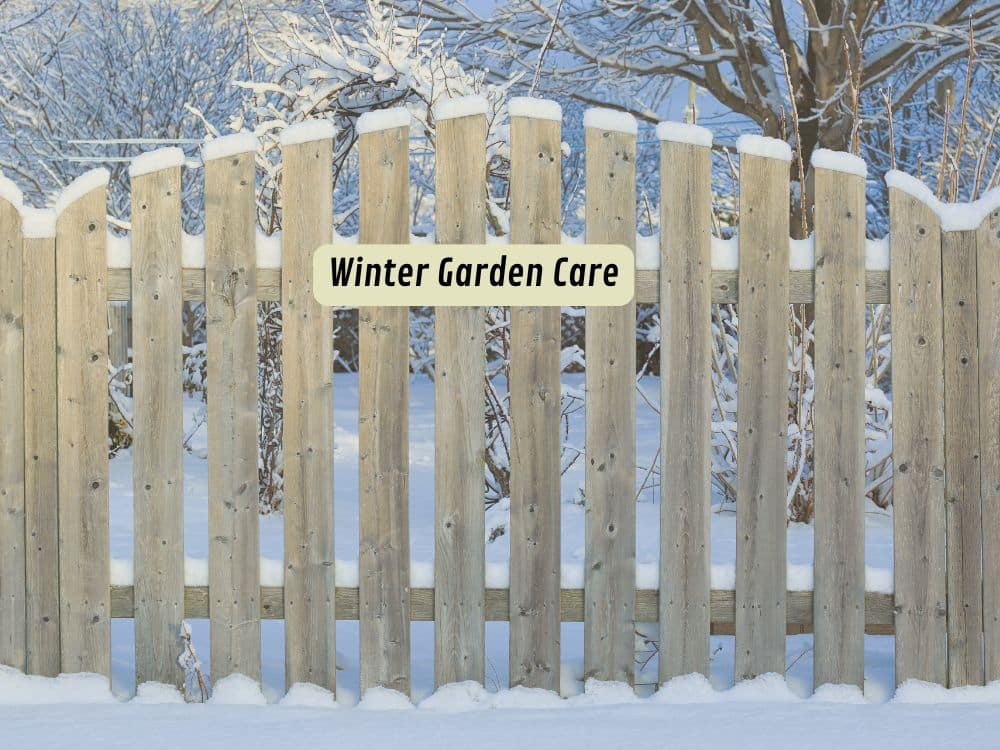
Winter garden care is not about control – it’s about companionship.
As the air turns crisp and the colors fade into quiet tones, your garden begins its slow retreat into rest. The lawn softens under the pale sun, flowers curl toward their roots, and the soil tucks itself in for warmth.
To the untrained eye, it may seem like nothing is happening, but gardeners know: growth doesn’t stop in winter – it simply slows its rhythm.
This gentle season reminds us that caring for a garden in winter means doing less, not more.
It’s about observing the subtle signs – the moisture in the soil, the resilience of evergreen blades, the delicate frost tracing the petals that remain.
Winter garden care teaches patience: water only when needed, prune lightly, and let nature follow its own wisdom. The garden is not asking for rescue; it’s asking for respect.
When we learn to tend without hurry, something beautiful happens.
Each small act – brushing away snow, adding a layer of mulch, letting the earth sleep – becomes an expression of quiet trust. And when spring returns, the garden answers in color and light, reminding us that even the coldest months can hold the promise of life waiting just beneath the surface.
This post looks at winter care as a whole – from what happens to grass and flowers in the cold to how soil, timing, and patience shape what returns in spring. And where one part of the garden needs a closer look, I’ll point you to more focused guides.
Understanding how winter affects your garden
To care for your garden in winter, you first have to understand its silence.
What looks like loss – the yellowing grass, the faded petals, the still soil – is often nature’s way of conserving strength. Winter doesn’t kill your garden; it teaches the garden how to rest.
Every blade, root, and bud adjusts its rhythm to survive the cold. In this quiet retreat, life doesn’t stop. It simply takes a slower, wiser breath.
For lawns, that means dormancy.
When temperatures drop, growth pauses and chlorophyll fades, giving the lawn a pale, golden hue. It’s not a sign of failure, but a signal of rest. Overwatering or fertilizing during this period can do more harm than good, because the roots are asleep, not thirsty.
One of the most essential lessons in winter garden care is learning to wait – to let the soil breathe without interference until warmth returns.
Flowers tell a different story.
Each species has its own threshold of cold tolerance. Some hardy perennials endure frost with grace, while delicate blooms wilt at the first chill. Frost doesn’t just freeze petals; it draws moisture away, leaving stems brittle and tired.
The key isn’t to rescue them with frantic watering or warmth, but to shelter them gently – a thin cover, a move indoors, or simply protection from harsh winds. These small, mindful acts preserve what matters most: the roots, where new life will begin again.
Winter, then, is not a threat but a teacher. It invites you to slow down, to watch how nature adapts without panic.
When you understand that stillness is part of growth, you begin to see the beauty in waiting – and realize that good gardening, like good living, isn’t about doing more, but doing thoughtfully.
Caring for your lawn in cold weather
When winter arrives, your lawn begins its quiet retreat. The bright green that once stretched proudly across your yard slowly softens into gold.
It’s easy to mistake this change for decay, but it’s really just dormancy – a natural pause that allows the grass to conserve energy for spring.
In winter garden care, this is the first truth to accept: yellow doesn’t mean dead; it means resting.
Grass, like people, slows down when it’s cold.
Growth halts as the soil temperature drops, and chlorophyll – the pigment responsible for that lush summer color – fades away. Beneath the surface, however, the roots remain alive, drawing just enough moisture to stay strong. This is why watering too often in winter can backfire.
The soil stays moist longer, and excess water suffocates dormant roots. Instead, water only when the top few inches of soil feel dry, and choose the warmest part of the day to prevent freezing.
Fertilizing in winter is another common mistake.
Nutrients can’t reach inactive roots, and what’s not absorbed may burn the grass or wash away with rain.
Wait until early spring, when the first new blades appear, to feed your lawn again. For now, let nature take its course. Remove fallen leaves, but don’t rake too hard – the grass underneath is fragile. Keep foot traffic light so the soil doesn’t compact.
If frost forms overnight, resist the urge to walk on it.
Frozen blades can snap easily, leaving gray footprints that take weeks to heal.
A little patience goes a long way here. Cover exposed patches only if you expect extreme cold, and remember that most lawns – even the delicate ones – are stronger than they look.
So let your lawn rest. Trust that beneath its golden blanket, life is simply waiting for light.
And if you want a deeper look into the science and gentle methods behind this transformation, you can explore Why is my lawn turning yellow in winter? – a closer reflection on how patience, not panic, keeps your garden thriving through the cold.
Protecting flowers and shrubs from frost
If lawns rest quietly in winter, flowers and shrubs are the dreamers – delicate, hopeful, and more vulnerable to the cold. Their colors fade faster, their stems turn brittle, and the first frost often feels like a cruel visitor. Yet, frost isn’t the end of beauty; it’s simply a test of endurance.
The secret to winter garden care lies in knowing which plants ask for protection – and which ones prefer to face the chill on their own.
Every flower has its threshold.
Hardy perennials like pansies or hellebores whisper through the frost, resilient and calm. But tender blooms – begonias, impatiens, or tropical species – shiver at the first touch of ice. When temperatures dip below freezing, their cells can burst as the moisture inside expands.
That’s why the most loving act isn’t to water them more or move them frantically; it’s to shield them gently.
A layer of mulch around the base helps regulate soil temperature, keeping the roots insulated even when the air turns sharp.
For potted plants, moving them close to walls or under covered porches provides natural warmth. At night, lightweight fabric covers or burlap wraps can block the frost’s bite while still allowing air to circulate.
Avoid plastic – it traps moisture and can cause more harm than good.
Most importantly, resist the urge to prune frostbitten leaves too soon. Wait until spring warmth returns; cutting early can expose healthy tissues to further cold damage.
Even in winter’s stillness, flowers remind us that fragility is not weakness. The care we offer – quiet, patient, unhurried – helps them endure.
And for a closer look at how long your favorite blooms can stay outside safely, or when it’s time to bring them in, you can read How Long Can Flowers Be in the Cold? – a gentle guide to understanding resilience in nature’s most tender season.
Preparing your garden before winter arrives
Good winter garden care begins long before the first frost touches the ground.
Preparation isn’t about rushing to protect every leaf – it’s about creating balance, setting the stage for nature to rest peacefully. Just as we ready our homes with blankets and warm lights, the garden too deserves gentle preparation before the cold settles in.
Start by listening to your garden.
Walk through it slowly. Notice which plants are still active and which have begun to fade. Remove annuals that won’t survive the cold, and trim back perennials just enough to keep them tidy – not too short, not too bare.
Over-pruning at this stage can expose roots and stems that need insulation. Think of it less as cleaning, more as tucking your garden in for sleep.
(For a detailed, science-based guide on preparing your garden for the cold season, you can explore the Fall Garden Care and Winter Preparation Checklist by Montana State University Extension
– a trusted resource offering practical steps to ensure your garden rests safely before winter arrives.)
Next, focus on the soil – the quiet heart of everything.
Clear fallen leaves, but don’t strip the earth completely bare. A light layer of organic mulch, straw, or compost helps regulate temperature and moisture, protecting the roots that remain alive beneath.
If you garden in pots, elevate containers slightly off the ground to prevent freezing from below, and cluster them together for shared warmth. Small adjustments like these keep your plants from suffering sudden temperature shocks.
Watering also plays a subtle role.
Deep watering before the freeze helps soil retain warmth longer. Once winter settles in, water less frequently but more thoughtfully – only when it’s above freezing and the soil feels dry to the touch.
If snow arrives, let it stay. A thin snow blanket acts as natural insulation, keeping the ground from freezing too deeply.
Finally, take a moment to pause before you’re done.
Look at your garden – bare, still, and beautiful in its simplicity.
Preparation isn’t just about protection; it’s about respect.
When you take time to understand what your garden truly needs before the cold, you’ll find that winter becomes less of an enemy and more of a quiet companion.
Maintaining soil health through the cold
In every season, the soil tells a story.
During winter, that story grows quieter but no less alive. Underneath the frost, billions of microorganisms continue their work – breaking down organic matter, storing nutrients, and keeping the ecosystem breathing.
The heart of winter garden care is learning to protect this unseen world so it can awaken strong when spring returns.
The first rule of soil care in cold weather is simple: don’t disturb it.
Tilling or digging in frozen ground can damage the structure that roots depend on and expose beneficial microbes to deadly temperature swings. Instead, focus on shielding the soil, not stirring it.
A natural mulch – leaves, straw, or compost – creates a blanket that holds warmth and moisture, preventing erosion from wind and winter rain.
Avoid adding chemical fertilizers now; the roots are dormant and can’t use them.
Instead, layer organic compost or shredded leaves over garden beds. As these materials slowly decompose, they feed the soil without shocking its rhythm.
When spring arrives, your plants will find a ready buffet of nutrients waiting beneath the surface.
Moisture balance is equally important. Too much water drowns roots; too little causes desiccation. Water only on milder days when the ground isn’t frozen solid, allowing hydration to reach where life still stirs.
If snow covers your garden, consider it a gift – it acts as insulation and, when it melts, provides a gentle slow-release drink for the earth.
And perhaps, like the soil, we too can learn from stillness. There’s wisdom in rest – in doing less so that renewal can begin from within.
When spring returns: reviving your garden’s color
When the frost finally lifts and the first warmth brushes your face, the garden begins to stir – quietly at first, then all at once.
The muted tones of winter give way to a soft shimmer of green, and it feels as if the earth itself exhales. This is the reward for patience – the proof that gentle winter garden care always comes full circle.
Reviving your garden’s color isn’t about rushing.
The soil, still cool from months of rest, needs time to wake up. Start by clearing away the protective mulch, one layer at a time. Don’t pull too soon; the nights can still surprise you with a lingering chill.
When you see the first tender shoots, give them light but not intensity – filtered sun, a soft watering schedule, and air circulation that feels like a slow conversation with spring.
Your lawn, once golden, begins to blush green again.
Now is the time for your first light feeding – an organic fertilizer or compost tea to reintroduce nutrients gradually. Deep watering in the early morning encourages roots to grow strong without shocking them.
If you kept traffic minimal during winter, the grass will bounce back faster, grateful for the quiet rest you gave it.
As for flowers, check the stems that survived the frost. Trim only what’s truly lifeless, leaving the rest to recover naturally.
Perennials that seemed gone often surprise you – a sign that dormancy was not death but resilience. Choose companion plants that bloom in succession, keeping color alive from early spring to late summer.
Above all, savor this moment.
Spring isn’t a command for action; it’s an invitation to wonder.
The months of stillness have taught both you and your garden something essential – that beauty grows best in patience.
And when you look at the first blossoms, remember: every hue of green, every petal of color, carries the quiet gratitude of a garden that was allowed to rest, and now, finally, to begin again.
The art of gentle care
Every season asks something different of us.
Summer calls for energy, autumn for reflection, and winter – for gentleness.
To care for a garden in winter is to practice trust. You learn to accept that not every act of love requires action, and not every quiet moment is empty. The soil may seem still, the colors gone, but life continues – unseen, unhurried, unwavering.
True winter garden care is not a checklist of tasks. It’s a mindset – one that values presence over perfection.
It means resisting the impulse to fix what doesn’t need fixing, to fertilize what’s simply sleeping, to rush what only time can heal. In learning to step back, you discover a rare kind of peace – the peace that comes when you let nature lead.
There’s a rhythm to this patience.
Each season, each cycle, mirrors something within us. The same way the earth rests to renew itself, we too need pauses to grow. The same warmth we offer the soil, we can offer our hearts – through stillness, care, and the faith that what is quiet now will one day bloom again.
When spring returns and color fills the garden once more, you’ll see the difference not only in the soil but in yourself. Every leaf that unfurls becomes a reflection of your patience, your presence, your willingness to care without demanding reward.
That’s the art of gentle care – not about doing everything right, but about doing everything with tenderness.
So as you stand at the edge of your winter garden, take a deep breath.
Feel the weight of the season, the calm of the air, the subtle hum of life waiting beneath.
This isn’t just gardening. It’s listening. It’s belonging.
And it’s remembering that beauty doesn’t always grow loud – sometimes, it grows quietly, right where the frost once lay.