Fruit flies swarming around your kitchen sink can shatter the calm of cooking at home, turning meal prep into a frustrating battle instead of a peaceful routine.
These tiny pests thrive on the organic buildup hidden deep inside drains – so no matter how much you wipe the surface, the real problem lies out of sight. Left unchecked, they multiply fast, and suddenly your kitchen feels anything but fresh or hygienic.
In this guide, you’ll discover exactly how to clean drains of fruit flies using simple, effective methods with everyday household items – no costly pest control needed.
Whether you’re a homeowner tired of that constant buzzing, a renter just trying to keep things clean, or simply someone who craves a pest-free space, these solutions are here for you.
You’ll learn how to spot the breeding zones in your drains, apply proven cleaning tricks with baking soda, vinegar, and dish soap, and use a few smart habits to stop new infestations before they start.
Let’s dive into these practical steps and transform your sink from a breeding ground into a clean, odor-free space you’ll actually enjoy spending time in.
Identify fruit fly breeding grounds in your drains
Recognize common drain locations where fruit flies multiply
Kitchen sinks are often fruit fly hubs, especially around garbage disposals where food scraps gather. The warm, moist environment plus organic debris make them ideal breeding conditions.
Bathroom drains come next – showers and tub drains trap soap scum and hair, creating damp buildup that attracts flies. Floor drains in basements, laundry rooms, and utility areas also pull their weight, especially if they rarely get flushed and water lingers.
Bar sinks, prep sinks, and any secondary kitchen drains are frequently ignored in regular cleaning – they become hotspots for infestations. Even drains that look clean on the surface can hide colonies.
Biofilm and buildup along the pipe walls just below the visible parts give fruit flies places to lay eggs and grow. Drains near fresh produce storage are especially vulnerable – fruit flies don’t travel far from food sources to find breeding sites.
Spot visual signs of fruit fly infestation in kitchen and bathroom drains
Some eye-openers:
- Swarms of adult fruit flies hovering right around drain openings. If you turn on faucets, open cabinets, or disturb nearby areas, you might see them appear in little clouds, seemingly emerging from the drain itself.
- Dark, slimy residue around drain edges or organic debris stuck to drain covers. Tiny larvae or pupae may be visible – look for small worm-like shapes or brown oval cases.
- A sweet, fermenting smell from your drain – rotting food, sugars, yeast – is a strong indicator that organic matter is decomposing inside, feeding fly populations.
- Drainage issues: water draining slowly, gurgling sounds, sticky residue around the rim, or discoloration on nearby surfaces. These all point toward places where flies thrive.
Understand why drains become prime breeding environments
Drains offer a perfect trio for fruit fly reproduction: moisture, food, and shelter. Water usage keeps humidity high, while grease, soap residue, hair, and food particles feed the larvae. Inside pipes, especially hidden ones, eggs and larvae are protected from disturbances, predators, and drying out.
Temperature matters too – indoor drains tend to stay warm and stable, which accelerates fruit fly growth cycles. Under good conditions, the life cycle (egg → larva → pupa → adult) can take just 8–10 days. The slimy biofilm that forms on pipe walls becomes prime real estate for egg-laying.
Poor ventilation makes things worse. If drains are tucked in dark corners, rarely cleaned, or where moisture lingers (like in under-sink cabinets), they become perfect nurseries for multiple generations of fruit flies.
Distinguish between fruit flies and other drain pests
| Pest Type | Size | Color / Appearance | Behavior | Key Differences |
|---|---|---|---|---|
| Fruit Flies | ~ 1/8 inch | Tan-brown body, often red/dark eyes | Hovering near drains, kitchen produce | Strongly drawn to fermenting materials, less fuzzy wings, more active flight |
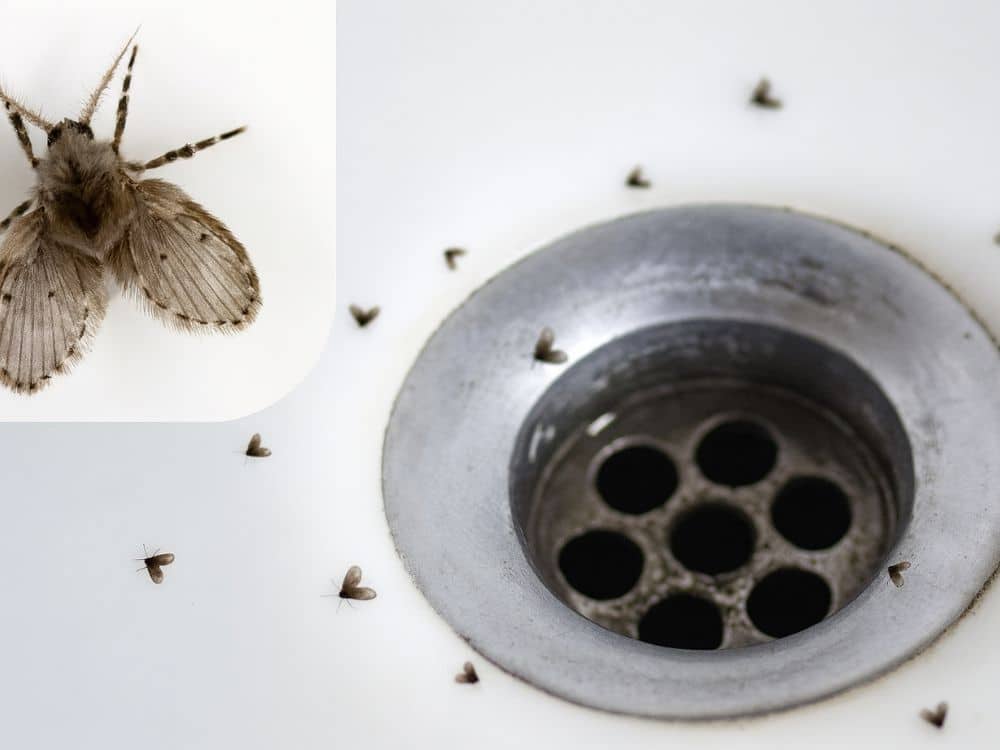
| Drain Flies | ~ 1/8 inch | Dark gray/black, fuzzy, moth-like wings | Flutter weakly, rest on walls near drains | Heart-shaped hairy wings, slower flutter, more around pipes and damp surfaces |
| Gnats / Fungus Gnats | ~ 1/4 inch | Dark brown/black, long legs | Fly erratically, especially near soil | Often linked to over-watering, soil, not just drains |
| Phorid Flies | ~ 1/8 inch | Brown/yellow, humpbacked shape | Run across surfaces, not strong fliers | More likely over decaying matter beyond drains; distinct humped appearance |
Fruit flies usually have noticeable red or dark eyes and prefer sweet, fermenting smells. Their flight is more purposeful – not as moth-like or erratic as some others. Drain flies, by contrast, are fuzzier, with weak fluttering flights, and tend to rest on surfaces rather than hover over food.
As noted by the EPA’s Safe Pest Control guide, proper identification ensures you’re targeting the right pest with the right methods – fruit flies respond best to eliminating breeding sites and food sources, while other drain pests may require different approaches.
Prepare your drain cleaning arsenal with household items
Gather essential cleaning supplies you already own
Chances are, you already have everything you need at home to get rid of fruit flies hiding in your drains. White vinegar is the first go-to – it’s both a cleaning agent and a natural deterrent.
The acetic acid breaks down organic buildup where fruit flies in drain multiply, while leaving behind an environment they can’t stand.
Baking soda, another household staple, becomes a powerful scrubbing partner when paired with vinegar. It neutralizes odors, helps loosen stuck grime, and creates a foaming reaction that pushes debris out of the way.
Dish soap, meanwhile, cuts through grease and food particles while lowering surface tension, making it easier to wash away the gunk where fruit flies breed.
Salt is another overlooked ally – it works as an abrasive cleaner and a natural dehydrator, killing eggs and larvae on contact. Hot water is just as important, since heat activates cleaning reactions and melts fatty deposits clinging to pipe walls.
Hydrogen peroxide, if you have it, doubles as a disinfectant and organic matter breaker without harming most plumbing systems. Lemon juice adds acidity to dissolve mineral buildup, while leaving a clean, fresh scent.
Select the most effective natural ingredients for pest elimination
When it comes to natural fruit fly control, some ingredients stand out more than others. Apple cider vinegar, for example, doesn’t just clean – it lures flies in with its sweetness before the acidity finishes them off, which is why it’s often used in a homemade fruit fly trap.
Essential oils such as peppermint, eucalyptus, and tea tree add extra power. A few drops mixed into your solution repel pests while providing antimicrobial benefits that keep drains fresher for longer.
| Ingredient | Primary Action | Secondary Benefit |
|---|---|---|
| Apple Cider Vinegar | Attracts then eliminates flies | Dissolves organic buildup |
| Baking Soda | Scrubs and deodorizes | Creates foaming action |
| Dish Soap | Breaks surface tension | Cuts through grease |
| Coarse Salt | Abrasive cleaning | Dehydrates larvae |
| Essential Oils | Repels insects | Antimicrobial properties |
Together, these ingredients create stronger effects. Baking soda and vinegar foam up to physically dislodge buildup, while dish soap boosts the cleaning mix so it can lift sticky residues where flies lay eggs.
For ongoing maintenance, try crushing garlic cloves and mixing them with hot water. The allicin compounds they release act as a natural insect repellent – an easy extra step after your main cleaning.
Choose proper tools for thorough drain access and cleaning
Natural cleaners do a lot, but the right tools make the job complete. A drain snake or plumber’s auger can reach deep to remove hidden clogs where colonies thrive.
Bottle brushes with stiff bristles scrub the first few inches of pipe, while old toothbrushes are perfect for detailed cleaning around covers and tight corners.
Rubber gloves protect your hands and give better grip during scrubbing, while a flashlight or headlamp helps you spot hidden buildup. Measuring cups and funnels let you pour your cleaning solutions more precisely, avoiding mess.
Keep microfiber cloths or clean rags nearby to wipe surfaces and pick up spills – they hold onto grime better than paper towels and can be sanitized for reuse.
If you’re interested in more natural ways to keep pests out of your home, check out What Smell Do Ants Hate the Most?. It pairs perfectly with these fruit fly solutions, showing how everyday scents can double as gentle pest control.
Execute deep cleaning techniques to eliminate fruit flies
Remove visible debris and organic matter from drain surfaces
Start your cleaning mission by tackling what you can actually see. Slip on rubber gloves and remove the drain cover or stopper completely – you’ll likely uncover a messy mix of hair, food particles, soap scum, and other organic matter that has been feeding your colony of fruit flies in drain.
Shine a flashlight into the opening and scoop out large debris using your hands or needle-nose pliers. Pay close attention to the drain rim and the first few inches of pipe- favorite egg-laying spots for fruit flies. This warm, moist buildup creates the perfect breeding ground.
For stubborn grime clinging to the surface, use an old toothbrush or bottle brush to scrub away the residue. Even the smallest food particles can sustain a new generation of fruit flies, so thoroughness is key.
Apply boiling water treatment to kill eggs and larvae
Boiling water is your first line of defense when learning how to clean drains of fruit flies. Heat a large pot of water until it reaches a rolling boil – you’ll need enough to thoroughly saturate the entire drain system.
Pour the boiling water slowly in two or three applications, pausing between pours so the heat can penetrate deeper into the pipes. At 212°F, boiling water instantly kills fruit fly eggs and larvae, while also loosening organic buildup.
Repeat this process twice a day for three consecutive days to ensure that any newly hatched larvae don’t get a chance to mature.
Scrub drain walls and pipes to remove biofilm buildup
Fruit flies thrive in the slimy biofilm coating your pipe walls. This sticky layer of bacteria and organic matter provides both shelter and food, so eliminating it is critical if you want to truly get rid of fruit flies long-term.
Mix equal parts baking soda and white vinegar, then pour the baking soda first, followed by vinegar. The foaming reaction helps dissolve biofilm while baking soda’s abrasiveness scrubs pipe walls clean.
Let the solution sit for 15–20 minutes, then use a long-handled bottle brush or a drain snake with a brush attachment to scrub inside. Focus especially just below the drain opening, where buildup is thickest.
For tougher layers, make a paste of baking soda and dish soap. Apply it to your brush and scrub vigorously – the soap cuts through grease while baking soda provides gentle abrasion without harming pipes.
Flush drains thoroughly to wash away dead pests and residue
Once scrubbing is complete, finish with a deep flush to wash away dead flies, eggs, larvae, and cleaning residue. Start with another round of boiling water to melt away lingering organic matter.
Follow with a strong stream of cold water for several minutes. This hot-cold contrast helps dislodge any stubborn debris while resetting your pipes to their normal temperature. Cold water also solidifies loosened grease, making it easier to push out.
For maximum effectiveness, alternate hot and cold water three times, running each cycle for at least two minutes. This expansion and contraction helps break apart lingering deposits and ensures your drains stay fresh and pest-free.
Deploy natural home remedies for complete pest control
Create powerful vinegar and baking soda drain bombs
One of the most effective and affordable ways to get rid of fruit flies is the classic vinegar and baking soda combo. Mix one cup of baking soda with two cups of white vinegar, then pour the baking soda down the drain first, followed immediately by the vinegar.
The fizzing reaction produces carbon dioxide bubbles that scrub away biofilm, dissolve grime, and eliminate eggs and larvae hiding along pipe walls.
The acidic nature of vinegar also breaks down soap scum and mineral deposits that fruit flies in drain often use as breeding sites.
Let the mixture fizz for about 15–20 minutes, then flush with hot water to wash away loosened debris. For stubborn infestations, repeat this process daily for three consecutive days.
Want an upgrade? Swap white vinegar for apple cider vinegar- it doubles as a natural fruit fly trap, drawing flies in with its sweet scent before the acidity finishes them off.
Use dish soap solutions to trap and eliminate adult flies
Dish soap is another versatile ally when learning how to clean drains of fruit flies. By breaking the surface tension of water, dish soap causes adult flies to sink and drown when they land.
To make a simple trap, combine two tablespoons of liquid dish soap with one cup of warm water in a shallow bowl, then add a splash of apple cider vinegar for attraction. Place these traps near affected drains in the evening when fruit fly activity peaks.
For drain treatment, pour a solution of hot water mixed with dish soap directly down the drain. Three tablespoons of soap per cup of hot water works best.
Let it sit for 30 minutes before flushing with hot water. This suffocates larvae and leaves a slippery film that prevents adults from settling in. Dawn dish soap, thanks to its degreasing power, works especially well.
Apply essential oil treatments for natural repellent effects
Essential oils not only leave drains smelling fresh but also repel fruit flies naturally. Peppermint oil, with its strong menthol compounds, overwhelms and drives flies away. Mix 10–15 drops in one cup of hot water and pour it down affected drains.
Rotate with eucalyptus or tea tree oil, which add antimicrobial benefits while repelling insects.
Lemongrass oil disrupts fruit fly communication, making it harder for them to find breeding sites, while lavender oil adds a soothing aroma. Combine 10 drops of lemongrass with 10 drops of lavender in hot water for a dual-purpose treatment that refreshes your kitchen while deterring pests.
Apply essential oil treatments twice weekly. Stored in a spray bottle, they can also be spritzed around drain openings and surrounding surfaces to keep flies away.
Implement overnight enzyme cleaners for deep sanitization
For a gentle yet thorough approach, enzyme cleaners target the very food source fruit flies rely on. These cleaners contain beneficial bacteria that digest proteins, fats, and carbohydrates, breaking down the organic buildup fruit flies need to reproduce.
Pour enzyme cleaner into drains at night when water usage is minimal to maximize contact time.
Enzymes continue working for hours, reaching deep into pipe walls and biofilm layers where eggs often hide. They’re safe for plumbing and septic systems, unlike harsh chemical cleaners.
For a DIY alternative, mix half a cup of plain yogurt with warm water and pour it down the drain – the active cultures help consume organic waste while creating a protective bacterial colony.
Weekly enzyme treatments prevent new buildup, keeping drains inhospitable for future infestations. Combined with vinegar, baking soda, dish soap, and essential oils, this strategy provides a complete, natural plan to get rid of fruit flies once and for all.
Establish prevention strategies to stop future infestations
Maintain regular drain cleaning schedules (how to clean drains of fruit flies long-term)
Consistency is your best defense. Set a weekly routine: pour boiling water down each drain to flush away organic matter and potential breeding spots. Every two weeks, do a deeper clean – add ½ cup baking soda, then ½ cup white vinegar; let it sit 30 minutes, and finish with hot water.
Once a month, remove and clean stoppers, scrub the visible pipe walls with an old toothbrush, and check for grease or food buildup. Kitchen drains usually need more attention than bathroom drains because of higher exposure to food particles. Put these dates on your calendar or set phone reminders so you actually stick to them.
For a light, repeatable routine that takes minutes, try this five-minute weekly ritual to keep sinks calm and pest-free.
Control Moisture Levels Around Drain Areas
Fruit flies thrive where it’s damp. After each use, wipe the sink dry to remove standing water. Fix leaky faucets or pipes immediately – tiny drips still create ideal breeding conditions. Improve airflow with exhaust fans in kitchens and bathrooms, or open windows when weather allows.
For persistently damp corners, try a small dehumidifier or moisture absorbers near drain openings.
Don’t forget under-sink cabinets: look for water stains or ongoing dampness. Replace worn weatherstripping near windows, and recaulk around fixtures to keep hidden moisture – from which fruit flies in drain can quickly rebound – under control.
Eliminate food sources that attract fruit flies
Food residue is both a buffet and a nursery. Avoid pouring grease, oil, or scraps down the drain – even with a disposal. Scrape plates well and use a sink strainer to catch particles.
Store ripe produce in the fridge instead of on the counter near sinks. Wipe spills right away, especially sugary ones like juice or soda, and empty trash frequently with tight-fitting lids.
Clean sneaky crumb zones: the seam between sink and countertop, behind the faucet, and around soap dispensers. A quick disinfecting wipe keeps these spots from becoming mini breeding grounds.
Install protective drain covers and screens
Physical barriers help you get rid of fruit flies before they start. Fit fine-mesh screens in sink drains to stop tiny food fragments while allowing water to flow. For showers and tubs, use hair catchers that also trap soap scum and organic debris; replace them when damaged or too gunked to clean.
Consider drain plugs with built-in strainers for double duty: fewer clogs, fewer access points for pests – whether fruit flies or drain flies.
Monitor early warning signs of pest return
Early action prevents a full-on comeback. If you notice even a couple of adult flies hovering near a drain, act fast. Sniff for sweet, fermenting odors – a classic sign of organic buildup. Look around rims for small dark specks that may indicate eggs or larvae.
Set simple monitoring traps: a little apple cider vinegar in a small container near drains can flag emerging activity. Do a quick flashlight check weekly to spot buildup early, and jot down sightings to find patterns – some drains are repeat offenders and may need extra attention.
Frequently asked questions about fruit flies and drain flies
How to get rid of fruit flies?
Start by targeting the source: their breeding grounds. Wipe counters, store produce in the fridge, and empty trash regularly.
For drains, pour boiling water daily, then use baking soda and vinegar to scrub away buildup. Adding a simple fruit fly trap with apple cider vinegar and dish soap near problem areas also works wonders.
How to get rid of drain flies?
Drain flies look moth-like and live right on slimy drain walls. To eliminate them, scrub the drain walls with a stiff brush, flush with boiling water, and use enzyme cleaners overnight to digest the biofilm.
Physical cleaning is key since these pests thrive in the slimy layer that vinegar and baking soda alone may not fully remove.
How to get rid of fruit flies in drain?
The most effective method is combining boiling water treatments with baking soda and vinegar “drain bombs.” Scrub just below the drain rim with a toothbrush, then flush with alternating hot and cold water.
Consistency is important – repeat daily until no flies return. This routine is at the heart of how to clean drains of fruit flies.
Will Drano kill drain flies?
Drano may kill some larvae, but it’s not the best long-term solution. Harsh chemicals can damage plumbing and don’t always break down the slimy biofilm where flies breed. Safer options like boiling water, enzyme cleaners, or natural remedies work more effectively and protect your pipes.
How to get rid of fruit flies fast?
For quick relief, set up a fruit fly trap: mix apple cider vinegar with a drop of dish soap in a shallow dish. The scent draws flies in, and the soap makes them sink. While traps catch adults quickly, pair them with drain cleaning for lasting results.
Are drain flies harmful?
Not usually. Drain flies don’t bite, sting, or spread major diseases. They’re more of a nuisance than a threat. That said, their presence signals dirty drains or hidden moisture issues that need attention – otherwise the infestation can spread quickly.
How to get rid of fruit flies in plants?
Fruit flies around houseplants are often fungus gnats. Let the soil dry between waterings, since larvae thrive in damp conditions. Sprinkle sand or gravel over the soil surface to deter egg-laying. Sticky traps near the pot also help catch adults.
What causes fruit flies?
Fruit flies are attracted to ripening or rotting produce, sugary spills, and organic buildup inside drains. Warm, moist environments give them everything they need to reproduce. Keeping sinks clean, storing produce properly, and wiping spills immediately are the best preventive measures.
What do you pour down the drain to get rid of cockroaches?
A mix of boiling water and dish soap can kill cockroaches on contact. For added power, some homeowners use a combination of baking soda and vinegar, followed by hot water, to flush and sanitize the drain.
Still, if roaches persist, you may need professional pest control since they’re tougher than fruit flies.
Your next step
Fruit flies don’t stand a chance once you take control. Clean your drains, clear the buildup, and cut off their breeding grounds. Simple steps – boiling water, baking soda, vinegar, and natural remedies – make all the difference.
Stay consistent. Stay proactive. Stay pest-free.
Don’t wait for another infestation. Act now – grab your supplies, tackle your drains, and reclaim a fresh, fly-free home today.