If you’ve spotted bed bugs and found yourself staring at that bottle of fabric softener in the laundry room, you’re definitely not alone.
When infestations strike, many people reach for quick fixes using everyday household products, hoping to avoid the stress, disruption, and cost of professional treatments. One of the most common questions that comes up during these moments is simple and urgent: does fabric softener get rid of bed bugs?
This question spreads quickly online, often fueled by anecdotes and DIY tips that promise easy relief. But bed bugs are persistent pests, and not every home remedy does what people hope it will.
In this post, we’ll look closely at what fabric softener can – and can’t – do when it comes to bed bugs. You’ll learn why some people believe it works, how it’s commonly used, and where its limits become clear.
By the end, you’ll have a realistic understanding of fabric softener’s role, along with safer, proven options that actually address bed bug infestations at their source.
Does fabric softener get rid of bed bugs?
Short answer: Fabric softener does not reliably get rid of bed bugs and should not be used as a treatment.
At best, fabric softener may kill a small number of bed bugs on direct contact. However, it does not reach hidden bugs, does not affect eggs, and does nothing to stop an infestation from spreading.
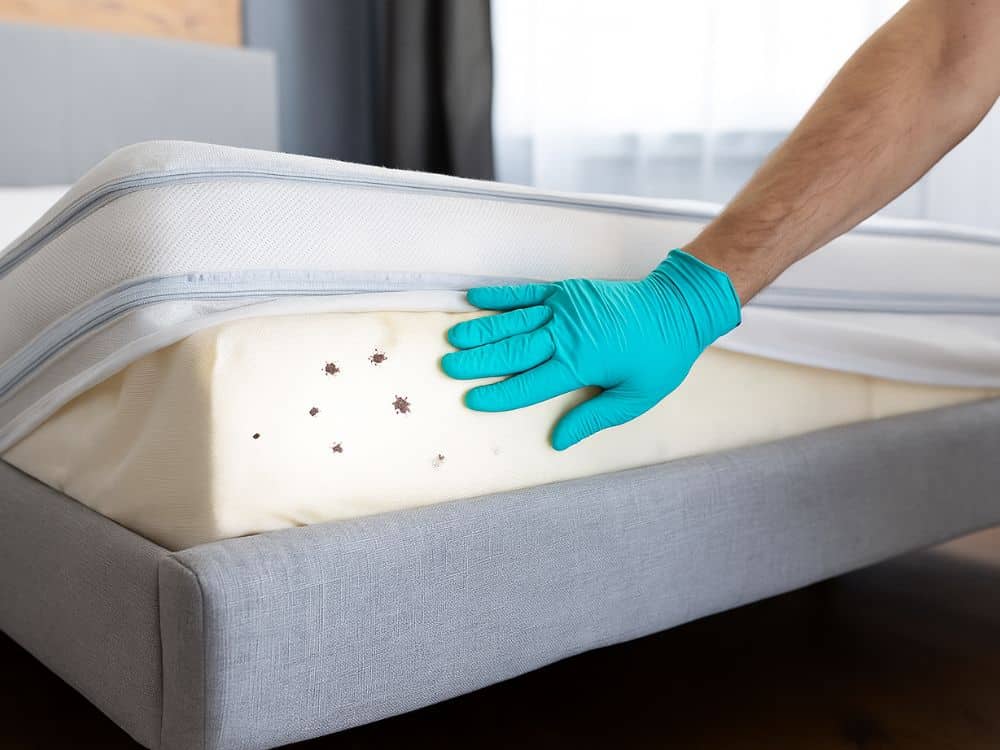
Bed bugs hide deep in mattresses, furniture seams, wall cracks, and electrical outlets – places fabric softener simply cannot penetrate.
Because of this, using fabric softener may give a false sense of control. While a few visible bugs might die, the infestation continues quietly in the background, often growing worse over time.
Why do people think fabric softener works on bed bugs?
The belief that fabric softener can get rid of bed bugs doesn’t come out of nowhere. It usually forms when stress, limited information, and small but convincing moments overlap during an infestation.
Immediate results can be misleading
When fabric softener is sprayed directly onto visible bed bugs, some of them may slow down or die. In the middle of an infestation, this feels like clear proof that the product is working.
However, those visible bugs are only a tiny fraction of the population. Most bed bugs remain hidden, so killing a few on contact creates a false sense of progress while the infestation continues out of sight.
Online advice often blurs the line between killing and controlling
Many online tips lump fabric softener together with other household “bed bug hacks,” especially dryer sheets. These stories spread quickly but rarely explain the difference between killing a single bug and actually controlling an infestation.
Over time, repeated anecdotes turn into assumptions, and people begin to believe that any product capable of killing on contact must also solve the larger problem.
Stress and urgency push people toward quick fixes
Bed bug infestations are emotionally exhausting. They interrupt sleep, create embarrassment, and make people feel powerless in their own homes. In that state, professional treatments can feel overwhelming or too expensive.
A bottle of fabric softener feels familiar, affordable, and within reach. Using it becomes a way to take immediate action, even if that action doesn’t address the root of the problem.
Together, these factors explain why fabric softener continues to seem like a reasonable solution at first glance – despite its very limited effectiveness against bed bugs.
What actually happens when bed bugs are exposed to fabric softener?
When people see bed bugs die after being sprayed with fabric softener, it’s easy to assume the product is doing its job. But what’s actually happening at a biological level is far more limited than it appears.
Fabric softener works only through direct physical contact
Fabric softener does not poison bed bugs the way professional insecticides do. It has no active ingredient designed to disrupt their nervous system or metabolism. Instead, when sprayed directly, the liquid can coat the insect’s body and block its spiracles – the tiny openings bed bugs use to breathe.
If enough liquid covers the bug, it may suffocate and die. This effect, however, requires direct and thorough contact. A light spray or indirect exposure does nothing. Once the liquid dries, any effect disappears completely.
Hidden bed bugs remain completely unaffected
Bed bugs are experts at staying out of sight. Most of their lives are spent hiding in mattress seams, bed frames, furniture joints, baseboards, wall cracks, and electrical outlets. Fabric softener cannot reach these spaces in any meaningful way.
Because of this, only the small number of bugs that happen to be exposed at the moment of spraying are affected. The vast majority of the population remains untouched, continuing to feed, hide, and reproduce.
Bed bug eggs are untouched by fabric softener
One of the biggest limitations of fabric softener is its complete inability to affect bed bug eggs. Eggs are protected by a tough outer shell that household liquids cannot penetrate. Even heavy spraying does nothing to stop eggs from hatching days or weeks later.
This is why infestations often seem to “come back” after a brief lull. In reality, they never went away – the next generation simply emerged.
There is no residual or lasting effect
Unlike professional treatments, fabric softener leaves no residual protection. Once it dries, it offers no continued control. Any bed bug that crawls through a treated area later is completely unaffected.
According to guidance from the U.S. Environmental Protection Agency (EPA), effective bed bug control requires methods that reach hidden bugs and eggs – something household products are not designed to do.
This lack of residual action allows infestations to rebuild quickly, especially when people rely on repeated spot treatments instead of addressing the entire environment.
What this means in real-world infestations
In real homes, fabric softener may kill a few visible bugs while giving the impression that the problem is improving. In truth, the infestation remains active beneath the surface. By the time activity becomes obvious again, the population is often larger and more entrenched than before.
Understanding this distinction is critical. Killing individual bed bugs is not the same as controlling an infestation, and fabric softener simply cannot bridge that gap.
How people try to use fabric softener – and why it fails
Once the idea spreads that fabric softener might help with bed bugs, people start experimenting. These attempts often feel reasonable on the surface, but they fail for the same underlying reason: they don’t match how bed bugs actually behave or where they live.
Spraying fabric softener directly on visible bed bugs
The most common approach is using fabric softener as a spray whenever a bed bug is spotted. In some cases, the bug slows down or dies, which reinforces the belief that the method is working.
What’s misleading is visibility. The bed bugs people see represent only a small portion of the infestation. Most bed bugs remain hidden in cracks, seams, and crevices. Spraying a visible bug removes a symptom, not the source. The infestation continues unnoticed, even as people feel temporarily reassured.
Using dryer sheets as a repellent around beds and furniture
Another popular method involves placing dryer sheets around mattresses, drawers, closets, or luggage. The assumption is that the strong scent will repel bed bugs and keep them away from sleeping areas.
In reality, bed bugs are not reliably repelled by fabric softener scents. Hunger is a stronger motivator than mild irritation. If a host is nearby, bed bugs will cross scented areas without hesitation. At best, dryer sheets may slightly alter movement patterns, but they do not stop feeding, breeding, or spreading.
Relying on fabric softener during laundry to control infestations
Some people assume that adding fabric softener to laundry cycles will kill bed bugs hiding in clothes or bedding. While washing and drying on high heat can be effective, fabric softener itself plays no meaningful role.
Heat is what kills bed bugs and their eggs – not the softener. When fabric softener is credited for results that come from high temperatures, it creates a false sense of security. Bugs hiding elsewhere in the home remain untouched.
Why these methods fail as a strategy
All of these approaches focus on convenience rather than coverage. Fabric softener cannot penetrate hiding places, cannot kill eggs, and cannot provide residual protection. Even repeated use only addresses what happens to be visible at the moment.
This is why infestations often seem to fade briefly before returning. The core population survives, reproduces, and spreads while attention is focused on surface-level fixes.
Risks and limitations of using fabric softener for bed bugs
Beyond being ineffective as a control strategy, using fabric softener against bed bugs comes with real risks and limitations that are often overlooked during stressful infestations.
False confidence allows infestations to grow
One of the biggest dangers of relying on fabric softener is the false sense of control it creates. When a few visible bed bugs die, it’s easy to believe the problem is improving. In reality, the infestation continues to grow in hidden areas.
This delay is costly. Bed bug populations multiply quickly, and the longer effective treatment is postponed, the harder and more expensive the infestation becomes to eliminate.
Increased exposure to chemicals not meant for pest control
Fabric softener is designed for fabrics, not for repeated spraying on mattresses, furniture, or living spaces. Using it as a pest control product increases unnecessary chemical exposure, especially in sleeping areas.
For children, pets, or individuals with respiratory sensitivities, repeated spraying can cause irritation, headaches, or allergic reactions – without delivering any real pest control benefit.
Potential damage to furniture and fabrics
Spraying fabric softener on mattresses, upholstery, and wood surfaces can leave residues, stains, or buildup over time. These residues may attract dirt, degrade materials, or create lingering odors that are difficult to remove.
In some cases, people end up damaging expensive furniture while the bed bug problem itself remains unsolved.
No role in prevention or long-term control
Fabric softener offers no residual protection. Once it dries, it does nothing to prevent bed bugs from returning, spreading, or re-infesting treated areas.
Effective bed bug control requires strategies that interrupt feeding, reproduction, and movement over time. Fabric softener simply does not play a role in any long-term prevention plan.
Why these limitations matter for real infestations
When fabric softener is used repeatedly, the infestation often worsens quietly. By the time professional help is sought, bed bugs may have spread to additional rooms, neighboring units, or personal belongings.
Understanding these risks early can prevent unnecessary frustration, property damage, and prolonged exposure to ineffective methods.
Professional solutions that actually work
Once it becomes clear that fabric softener cannot solve a bed bug infestation, the next question is unavoidable: what actually works?
Professional treatments succeed because they are designed to reach hidden bed bugs, destroy eggs, and interrupt the infestation cycle – not just reduce what’s visible.
Heat treatment: fast and thorough elimination
Heat treatment is one of the most effective solutions available. Professional teams use specialized equipment to raise indoor temperatures to levels bed bugs cannot survive, typically between 120°F and 135°F, for several hours.
What makes heat treatment so effective is its reach. Heat penetrates mattress seams, bed frames, furniture joints, wall cracks, and other hiding places that sprays cannot access. Adults, nymphs, and eggs are all killed in a single treatment.
In many cases, homes are cleared within one day, without leaving behind chemical residues.
Targeted insecticide treatments by professionals
Licensed pest control professionals also use EPA-approved insecticides that are not available to the general public. These treatments are applied strategically rather than sprayed broadly.
Liquids are used along baseboards and furniture edges, while dusts are placed inside wall voids, bed frames, and electrical outlets – areas where bed bugs travel and hide. Because eggs can survive initial treatments, professionals typically schedule multiple visits to ensure newly hatched bugs are eliminated.
Modern professional insecticides often provide residual protection, continuing to kill bed bugs for weeks and helping prevent reinfestation.
Integrated Pest Management (IPM) for long-term control
Many pest control companies now use an Integrated Pest Management (IPM) approach. Instead of relying on a single method, IPM combines inspections, heat or chemical treatments, environmental changes, and ongoing monitoring.
This approach may include sealing cracks, reducing clutter, using mattress encasements, and placing interceptors to track activity. By addressing both the bugs and their environment, IPM reduces the risk of reinfestation and offers long-term peace of mind.
Comparing bed bug treatment options at a glance
| Treatment Method | Effectiveness | Time Required | Kills Eggs | Residual Protection |
|---|---|---|---|---|
| Fabric softener | Very low | Immediate (spot only) | No | No |
| Dryer sheets | Ineffective | N/A | No | No |
| Professional heat treatment | Very high | 1 day | Yes | No |
| Professional insecticide treatments | High | Multiple visits | Yes | Yes |
| Integrated Pest Management (IPM) | Very high | Ongoing | Yes | Yes |
Why professional solutions outperform household remedies
Professional methods work because they address the full lifecycle of bed bugs. They reach hidden populations, destroy eggs, and provide lasting control. Household products like fabric softener cannot do any of these things reliably.
While professional treatment may seem more costly upfront, it often resolves the problem faster and more completely, preventing the prolonged stress and repeated failures that come with ineffective DIY attempts.
For homeowners who prefer a broader, less chemical-focused approach to household insects, exploring natural pest control methods can also help provide useful context – especially when comparing what works for different types of pests and why bed bugs require more targeted solutions.
So, does fabric softener actually work on bed bugs?
Discovering bed bugs can make even the calmest home feel under siege. In that moment of stress, it’s completely natural to reach for something familiar and easy – like fabric softener – hoping for quick relief.
But as this guide has shown, fabric softener is not a real solution. At best, it may kill a few visible bed bugs on direct contact. At worst, it creates false confidence while hidden bugs continue to feed, reproduce, and spread. It cannot reach their hiding places, cannot affect eggs, and offers no lasting protection.
The good news is that effective solutions do exist. Professional treatments – whether heat, targeted insecticides, or integrated pest management – work because they address the full lifecycle of bed bugs and eliminate infestations at their source, not just on the surface.
So, does fabric softener get rid of bed bugs? No, not in any reliable or lasting way. But that doesn’t mean you’re out of options. With the right approach, it’s absolutely possible to reclaim your home, restore your sleep, and move forward without the constant stress of an infestation.
A home should be a place of rest and safety – not a battlefield. And once the right solution is in place, that sense of comfort can return for good.