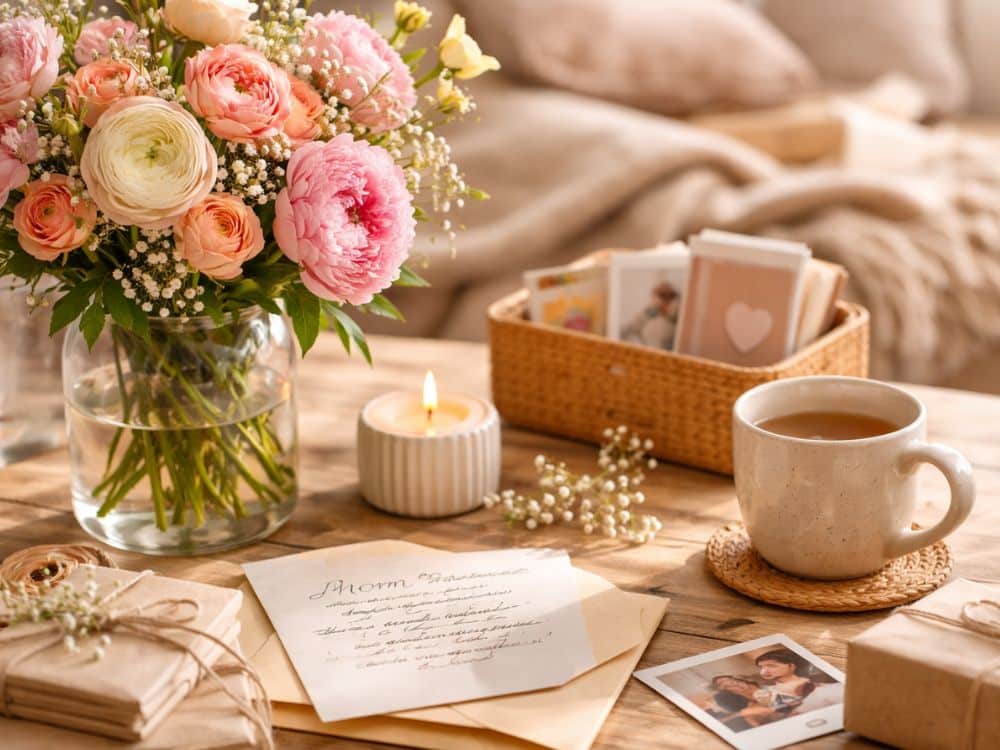
You look at the calendar and realize Mother’s Day is too close for comfort. At that point, the stress is not just that you are late. It is the fear that whatever you do now will feel rushed, generic, or like something you picked just to have a gift.
But last-minute does not have to mean careless. A thoughtful Mother’s Day can still come together late when it is built around the right kind of gesture – something personal, something calming, or something that makes the day feel a little lighter for her.
Even simple Mother’s Day rituals at home can still feel meaningful when they are chosen with care.
This guide is not just about what to buy at the last minute. It is about what still works when time is short: what still feels warm, intentional, and genuinely thoughtful today.
What still feels thoughtful when you are short on time?
When people are running late for Mother’s Day, they often start equating thoughtfulness with scale. The gift has to look substantial. The plan has to feel impressive. There has to be something visible enough to make up for the lack of time. But that is not actually what makes a gesture feel thoughtful.
Thoughtful does not have to mean elaborate. When time is short, the things that still work best are usually much simpler than that. They feel personal. They make something easier for her. They say something clearly instead of trying to distract with quantity.
And just as importantly, they are easy to receive. A thoughtful gesture should not create more clutter, more decisions, or more emotional work.
A gift can still feel generic if there is no real reason behind it. And a very small gesture can feel surprisingly deep when it touches the exact thing she needs that day – rest, comfort, recognition, quiet, or relief.
At this point, the better question is not “what can I get fastest?” but “what would still make her feel cared for today?”
Quick last-minute picks, depending on what you can do today
- Only have one hour – write a real note and set up one calm moment at home.
- Can still make something – choose a simple breakfast, dessert, or memory page.
- Can still order something – get one useful item with a clear reason behind it.
- Staying home – create one ritual instead of chasing a full plan.
- Want it to feel personal – add one detail that clearly belongs to her.
- Working with almost no budget – give attention, relief, and effort instead of stuff.
Last-minute Mother’s Day ideas that still feel thoughtful
When time is short, it helps to stop thinking in terms of “the perfect gift” and start thinking in terms of what can still change the feeling of the day. A slower morning, a more personal gesture, or one thing that clearly makes life easier can still feel deeply thoughtful even when the plan comes together late.
What matters most here is not doing a lot. It is choosing the kind of idea that still carries care when there is no time for performance.
Things you can do at home today
When the clock is against you, changing the atmosphere of the day is often more powerful than buying one more thing. A calmer meal, one protected hour, or a gesture that quietly removes pressure can do more than a rushed gift ever could.
Set up a slow brunch or tea moment
You do not need to host an event for this to work. You just need one part of the day to feel softer than usual. A warm drink, something she already enjoys, one small detail on the table, and enough time to actually sit down can be more than enough.
A slower table can do a lot with very little, especially if you are borrowing the softer tone of Mother’s Day rituals at home.
- Keep the menu easy.
- Let the pace do the work.
Take over the invisible tasks for the day
Sometimes the most thoughtful thing is not what you add, but what you remove.
A lot of Mother’s Day disappointment does not come from a lack of gifts. It comes from the fact that she is still carrying the hidden logistics of the day while everyone else is trying to make it feel special. Relief is a real form of care, and often a more meaningful one than a last-minute purchase.
That might look like:
- cleaning the kitchen before she notices it needs doing
- handling the children’s logistics
- taking care of the meal and cleanup
- answering the small practical questions before they reach her
A day can still feel deeply thoughtful when it becomes noticeably lighter for her to move through.
Create one quiet rest hour
Being at home is not the same as getting to rest there.
Rest only really happens when someone protects the space for it. One uninterrupted hour, with no decisions to make and no one calling her back into responsibility, can feel more generous than a generic gift she never asked for.
Tea, a chair by the window, a blanket, a bath, a robe, real silence – it does not need much, but it does need to be held.
Even a temporary setup can help, especially if you borrow a few ideas from cozy corners at home or a quiet sitting corner for rest and reflection.
Gather family notes or one simple memory ritual
When time is short, sincerity beats scale.
A few handwritten notes, a handful of memory cards, or one or two printed photos can shift the emotional temperature of the day very quickly. This does not need to become a craft project. It works because it makes appreciation visible in a way that everyday life often does not.
A simple version is enough:
- one note from each person
- one favorite memory
- one thing she always does that matters
- one photo that carries real history
The power here is not in presentation. It is in recognition.
Things you can make quickly
Making something yourself changes the tone immediately. It does not have to be impressive. It just has to feel unmistakably yours. A homemade gesture often works so well at the last minute because it carries attention, not just completion.
Write one honest letter instead of a generic card
A lot of people freeze here because they think they need to write something beautiful. They do not. A good letter does not need to sound polished. It just needs to sound real.
Five true sentences will land more deeply than twenty lines that could have been written for anyone. If you are stuck, begin with specifics:
- one thing you appreciate
- one memory you still carry
- one way she makes home feel like home
- one thing you hope she gets more of this year
That is usually enough to turn a last-minute card into something she may actually keep.
Make a simple coupon book, but only if it is specific
This idea only works when it feels concrete.
A vague coupon book can feel decorative instead of caring, especially if the promises are the kind that never become real. But when the offers are specific, useful, and believable, this can become a genuinely thoughtful gesture because it points toward actual relief.
Better examples look like this:
- I’ll take bedtime tomorrow
- I’ll handle the kitchen this evening
- I’ll set up your reading corner this weekend
- I’ll take care of breakfast on Sunday morning
If the promise is vague, it will feel decorative instead of caring.
Put together a mini memory page
This is the fast, low-pressure version of something more elaborate, and that is exactly why it works.
One photo, one sentence, one small detail – that can be enough. A printed picture, a folded note, a date, and one line explaining why that moment stayed with you can create something that feels intimate without needing hours of effort.
The beauty of this idea is that it stays small. It feels personal because it is restrained, not because it is full.
Make one easy dessert or family favorite
Do not choose the ambitious recipe. Choose the familiar one.
A last-minute dessert works best when it already belongs to your home rhythm in some way. The cookies she always likes, one simple cake, a breakfast item that already feels known, or a dessert the family has made before will usually feel warmer than something complicated that exists only to impress.
- A simple cake
- One familiar dessert
- The cookies she always likes
- A breakfast item that already belongs to your home rhythm
Familiarity can feel more loving than ambition.
Things you can still order without making it feel generic
Ordering something is not the problem. What makes a last-minute purchase feel weak is randomness. A bought item can still feel thoughtful when it clearly belongs to her life, her taste, or the kind of moment you are trying to create.
Same-day flowers, but with a real note
Flowers on their own can feel generic very quickly. But flowers paired with a real note, and tied to the way you want the day to feel at home, become something else entirely. The note is what gives the bouquet a person inside it.
Flowers feel far less last-minute when they arrive with language that could only have come from you.
A digital gift card for something she would actually use
A digital gift card is not automatically impersonal. It only feels that way when it could have been sent to anyone.
What works better:
- a local spa
- her favorite bookstore
- a café she already loves
- an experience she would say yes to on her own
Specificity is what saves this idea from feeling impersonal.
One comfort item with a clear reason behind it
A comfort item only becomes thoughtful when there is a clear “because” behind it. The object matters less than the reason it was chosen.
A mug feels different when it is the kind she would use for the tea she always makes late at night. A throw feels more personal when it belongs to the chair she curls up in every evening. A journal lands better when it connects to the fact that she keeps saying she misses quiet time.
If you need more ideas in that same direction, these self-care gifts for moms who need rest focus on useful comfort, better rest, and practical gifts that do not feel like clutter.
What gives the gift its emotional weight is not the item itself, but the fact that it clearly came from paying attention.
Delivery that supports an at-home moment
Ordering something works best when it supports a moment rather than trying to replace one. The delivery is not the whole gesture. It is the thing that helps the ritual come together more easily at home.
For example, if you are building a simple morning table around one delivered item, this cozy Mother’s Day brunch at home guide can help you turn it into a fuller at-home moment.
That might be:
- pastries for a tea setup
- flowers for the table
- dessert for the evening
- one small add-on for a brunch or bath ritual
When it is used this way, delivery feels less like a shortcut and more like practical support for something caring.
What to avoid when you are planning at the last minute
When people panic, they start compensating. They buy faster, add more, and try to make up for lost time with quantity or cost.
That is usually when things start to feel off. The plan becomes more about the appearance of care than the feeling of it, and what was supposed to feel thoughtful starts feeling random, crowded, or strangely impersonal.
- Don’t buy something random just to have a gift.
- Don’t confuse expensive with thoughtful.
- Don’t overcompensate with too many ideas at once.
- Don’t choose something that creates more work at home.
- Don’t let urgency turn into thoughtlessness.
A few useful last-minute items that can still feel thoughtful
A product only helps when it supports a real moment, a real preference, or a real kind of comfort she would actually enjoy. That is what makes these items worth considering. They are meant to make a calm hour, a personal gesture, or an at-home ritual feel a little easier to step into.
For a calm at-home moment
These are not “big gifts.” They work best as quiet supports for an hour that already has a purpose behind it.
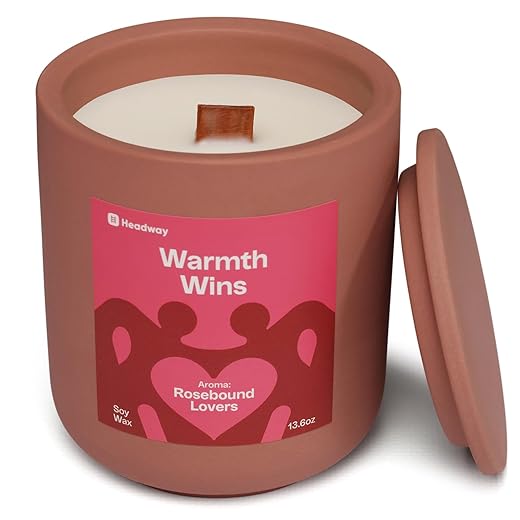
- A candle can help a bath, tea break, or evening wind-down feel more intentional, especially when the goal is to soften the atmosphere quickly. On its own, though, it can feel generic. It works best when it is clearly part of a calmer moment you have already made room for.

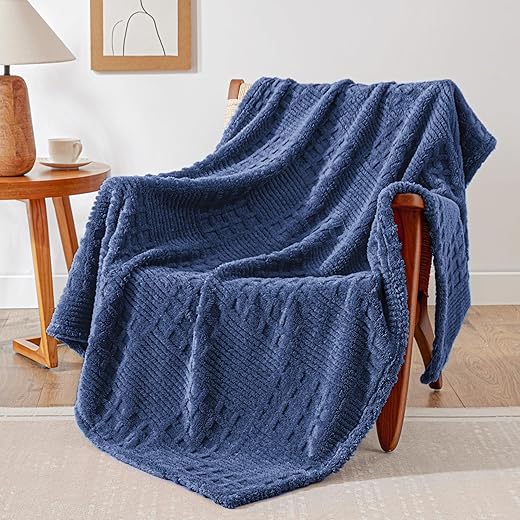
- A throw blanket is useful when you want to make one chair, one corner, or one reading hour feel a little more inviting. It works because comfort becomes visible. On its own, it can still feel a bit random unless it clearly belongs to the way she actually rests.

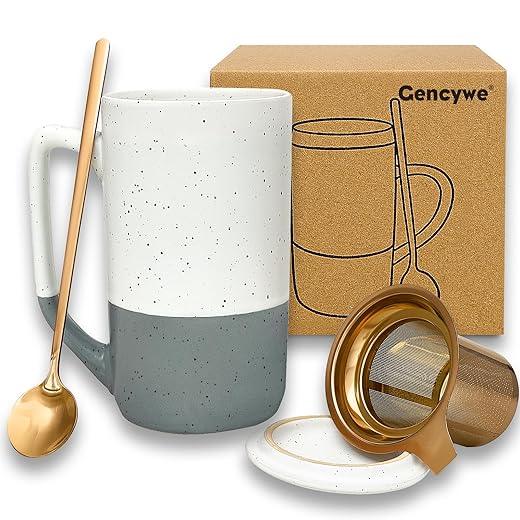
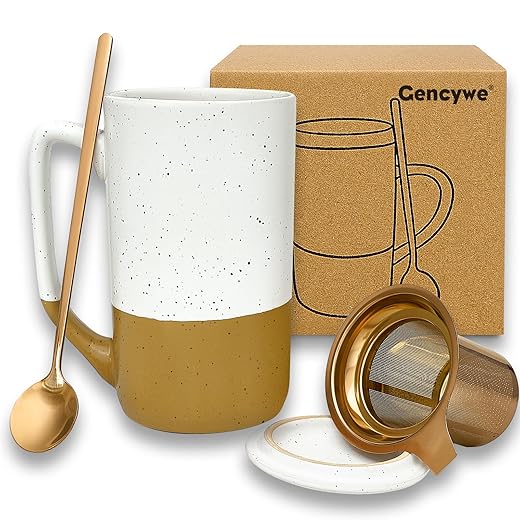
- A tea mug can be thoughtful when it connects to a real habit – late-night tea, a quiet afternoon break, or a slower start to the day. It works because it feels personal when the routine behind it is real. It is less effective if it is just another object without context.
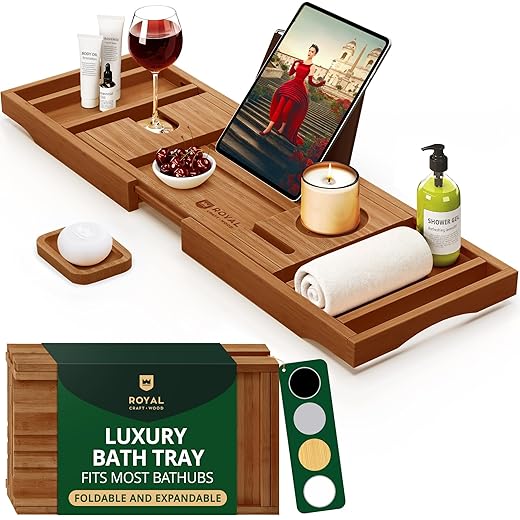
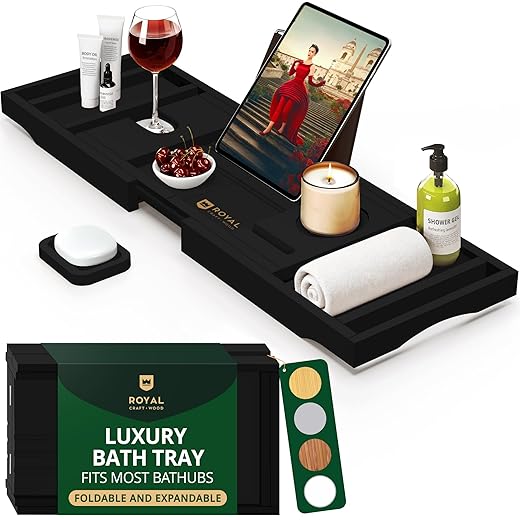
- A bath caddy helps when the ritual is about creating one uninterrupted pocket of calm. It works by making rest easier to receive, not by looking luxurious. It is not enough on its own if no one is actually protecting the time around it.
- A simple journal can be a lovely add-on when she has been wanting more quiet, more reflection, or a little more space to gather her thoughts. It works best when it feels like an invitation, not an assignment. If she is not someone who journals, it may not land the way you hope.


For a more personal add-on
This group works best when you already have the main gesture in place and want to add one more layer of meaning to it.
- Note cards are useful because they give shape to words that might otherwise stay unspoken. They work especially well when each note says something specific – a memory, an observation, a thank you she would immediately recognize as true. Without that specificity, they can feel more decorative than moving.


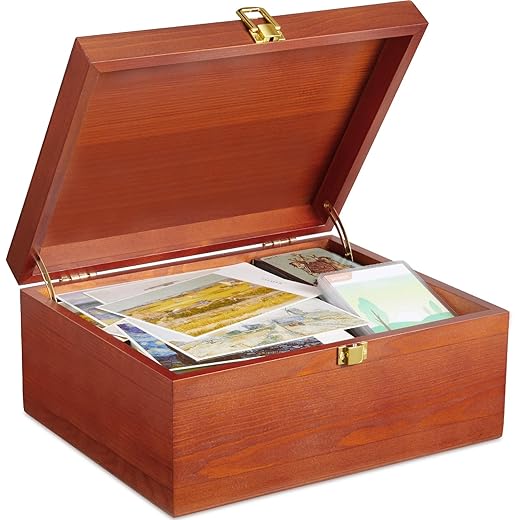
- A keepsake box becomes meaningful when there is something inside it that belongs to your relationship: a note, a photo, a child’s drawing, a small object that carries a real memory. It works because it gives personal history a place to live. On its own, empty, it is just a container.

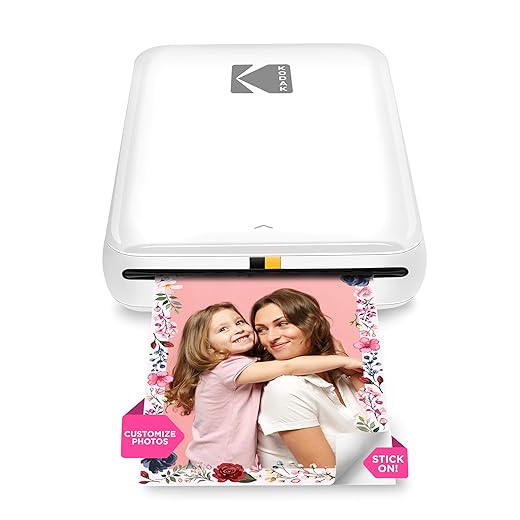
- A mini photo printer is helpful when you want to turn a phone memory into something she can actually hold the same day. It works because immediacy matters here. A printed image paired with one sentence can feel far more personal than a rushed store-bought gift.

- A simple frame works best when the photo already means something. It can help a single image feel finished, chosen, and worth keeping in sight. But the frame is not the thoughtful part. The photo, and the reason you picked it, have to carry that.


For a same-day or digital backup plan
These are the options that help when time is extremely short, but they still need context to feel considered.
A digital gift card works best when it is highly specific. It feels better when it points to a bookstore she already loves, a spa she would actually book, or a café she would choose on her own. Generic spending money feels generic for a reason.
Flower delivery can still work, especially when the flowers are paired with a real note or arrive as part of a table, tea moment, or calmer evening at home. Without that added layer, they can feel a little too easy.
Dessert delivery is most useful when it helps complete a moment you are already creating – something sweet after dinner, something for an afternoon tea break, or a small ending to the day that feels warm rather than rushed. It works best as part of a scene, not as the whole plan.
Printable cards or digital video message tools are often overlooked, but they can be surprisingly effective when the message itself is sincere. They help most when distance, timing, or logistics are getting in the way and you still want your words to arrive with some shape and care.
Used well, these are not shortcuts. They are backup options that still leave room for care.
FAQ
What if I cannot be there in person for Mother’s Day?
Yes – you can still make Mother’s Day feel personal even from a distance.
A short video message, a voice note, or a delivery with a handwritten note usually feels much warmer than sending something on its own. Distance matters less when the gesture still sounds like you.
How do you make a last-minute gift feel less generic?
Add a specific reason – that’s what makes a gift feel personal, even at the last minute.
Instead of just “I thought of you,” explain why this gift fits her, her habits, or something she mentioned. Personal meaning matters more than timing.
Is it better to give an experience or a physical gift at the last minute?
It depends – the better choice is the one she can actually enjoy right away.
An experience works if it’s realistic and easy to use, while a physical gift works better when it brings immediate comfort or relief. Practicality usually matters more than impressiveness.
What can I do for Mother’s Day at the last minute with almost no money?
You can still create a meaningful moment without spending much.
A handwritten note, helping with practical tasks, printing a meaningful photo, or creating a calm hour at home can feel deeply thoughtful. Effort and attention often matter more than cost.
Can a last-minute plan still feel meaningful?
Yes – a meaningful gesture depends more on sincerity than timing.
Even a late idea can feel thoughtful when it reflects what she actually needs or enjoys, instead of trying to cover the lateness with something random.
Should I apologize for it being last-minute?
A simple, honest apology is enough – but don’t make it the focus.
Over-apologizing can shift attention away from her. What matters more is making the moment feel warm, thoughtful, and genuine.